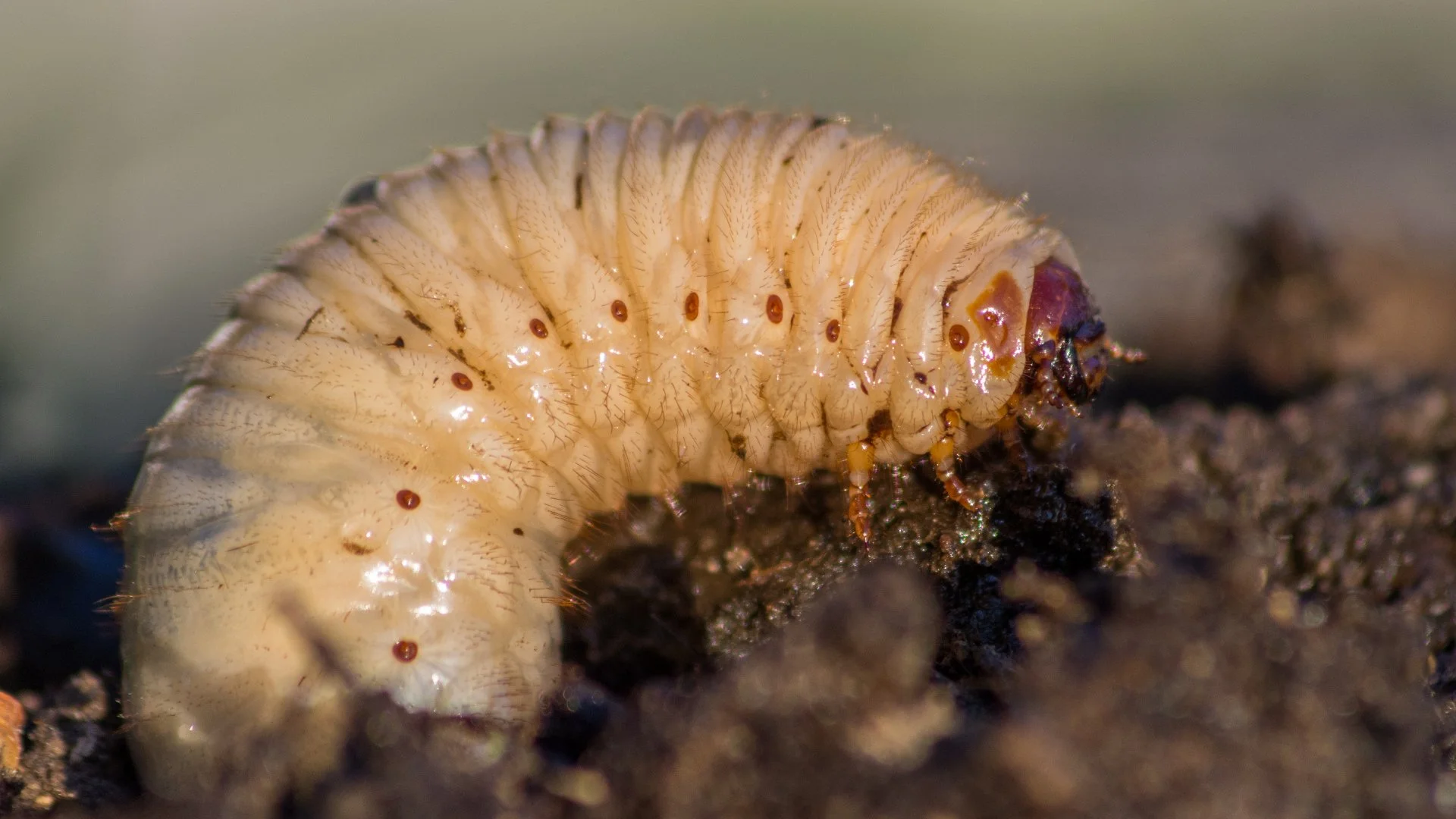
White grubs are beetle larvae that live in the soil and eat grass roots. Japanese beetles, masked chafers, and European chafers are among the species that cause damage in Indiana lawns. You don't see them until the damage shows up, usually as brown, wilted patches between August and November.
By then the roots underneath are gone. The turf peels up like a loose carpet, and skunks and raccoons start tearing up the yard to get at the grubs. We stop grubs before that happens, and we treat active infestations when they've already started.
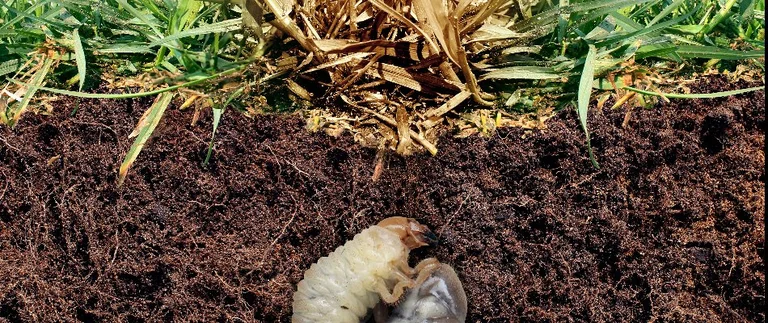
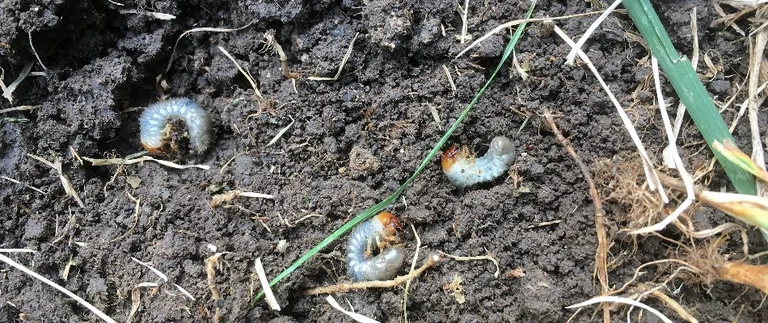
Purdue Extension's guide to managing white grubs in turfgrass describes the symptoms: patches of wilting or discolored turf, sometimes with a blue or purple cast, that collapse into dead or thin areas. Sod pulls up easily because nothing is holding it down. Animals digging in the lawn is another common sign.
Check it yourself. At the edge of a brown patch, cut a wedge of sod about 3 inches deep with a shovel and break the soil apart. Grubs are white, C-shaped, and easy to see. Count them over about a square foot, the method University of Illinois Extension recommends.
Know the threshold. Purdue says it usually takes 5 to 10 grubs per square foot to cause significant damage, and under 5 per square foot rarely needs treatment. A few grubs in a healthy lawn are normal.
Grub control only works when it reaches the grubs while they're feeding near the surface. In Indiana, beetles lay eggs in early to mid summer, eggs hatch by the end of July, and large grubs are feeding by September. That cycle sets our timing.
Preventive treatment (summer). Purdue says early to mid July is almost always the best timing for preventive products, because they work best against young grubs right after they hatch. This is the right choice for lawns with a history of grub damage.
Curative treatment (late summer and fall). When grubs are already active, we apply a curative product from August into September, and possibly as late as early October, according to Purdue's yard care guide. It has to be watered in with at least a quarter inch of water to reach the grubs in the soil.
What we don't sell: spring grub treatments. Purdue's turf entomologist says spring grub control is usually wasted, because the grubs are large and about to stop feeding. If someone offers you a spring grub application, ask why.
Protecting pollinators. Following Purdue's pollinator guidance for turf, we mow flowering weeds like clover and dandelions before applying insecticide, and we keep a buffer from landscape beds.

Look for brown or wilted patches in late summer or fall that don't green up after watering. Pull on the edge of a damaged patch. If the turf peels back like a loose carpet, grubs have eaten the roots. Purdue also lists skunks, raccoons, and wild turkeys digging in the lawn as a common sign.
Purdue Extension says it usually takes 5 to 10 grubs per square foot to cause significant damage, and lawns with fewer than 5 per square foot rarely need treatment. European chafer grubs can do damage at the low end of that range.
For prevention, Purdue says early to mid July is almost always the best timing, right around when eggs hatch. Curative treatments for active grubs go on from August into September, and possibly as late as early October.
Not well. Purdue's turf entomologist says grub treatments in spring are greatly diminished in effectiveness and usually wasted, and that killing spring grubs has little effect on the grubs that damage lawns later that summer and fall.
Not always. Purdue recommends checking grub numbers first. Properties that have had grub damage before are the ones most likely to benefit from a preventive application each summer.
Once the grubs are controlled, thin or dead patches need to be reseeded or sodded because the roots are gone. Fall aeration and overseeding is the most common repair in Hamilton County.
Grub control is priced the same as one round of our fertilization and weed control program, starting at $60 per application depending on lawn size.
"The crews are professional and do an awesome job. Faith the owner will answer any questions you have and make sure you are happy with their services. They have been taking care of me for over 3 years."
Cyndi W.
Google Review
"A wonderful company. The team works hard, they are efficient, thorough and they do a great job. They are also kind and considerate."
Becky H.
Google Review
Don't wait for the damage to spread. Contact us for an assessment and treatment plan. We serve residential and commercial properties across Noblesville, Carmel, Westfield, Fishers, Geist, and surrounding Hamilton County communities.