April 28, 2026 · Lawn Care · By Mike Harmon, Owner & Licensed Applicator
May is the month your lawn either gets ahead for the year or falls behind for the rest of the season. Hamilton County weather wakes everything up at once. The grass is growing aggressively, weeds are germinating, mosquitoes are about to show up, and most homeowners are still running last summer's playbook.
This is the checklist we work off at Sprout Lawn & Landscape for our properties in Noblesville, Carmel, Westfield, Fishers, and across Hamilton County. If you're doing your own lawn care, this is what should be on your radar in May. If you've already hired a crew, this is what you should expect them to be doing.
1. Mow Weekly at the Right Height
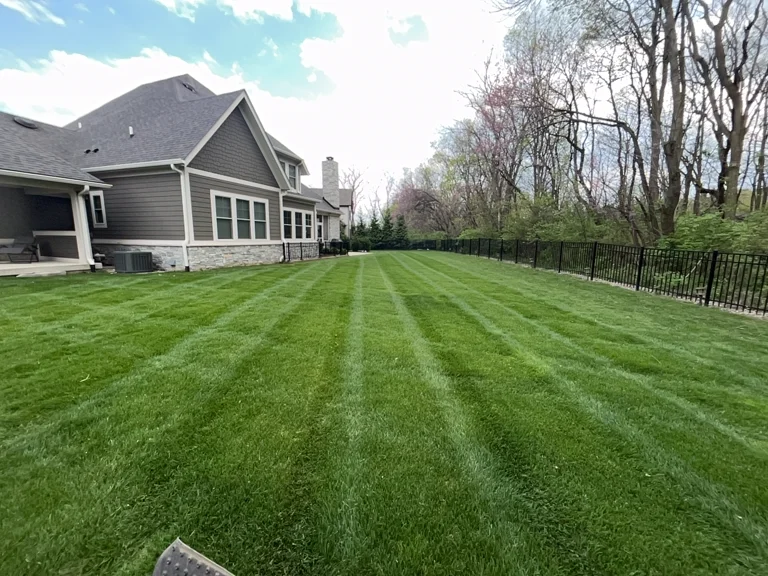
In May, we mow weekly. Not every other week. The grass is growing aggressively in the spring, so if you wait two weeks between cuts you end up taking off too much grass at once, which stresses the plant and creates an unhealthy environment for the lawn.
Our standard mowing height is around four inches. The shorter you cut your grass going into summer, the less healthy the root system. Purdue Extension (AY-8-W) documents the direct relationship between blade height and root depth: shallower mowing means shallower roots, which means a lawn that can't reach moisture in July heat. If you scalp it now, right before high-stress summer, you're setting yourself up for a bad-looking lawn in July and August.
One exception: the first mow of the season. We typically drop the deck slightly lower for the first cut to clean up the dead, matted winter growth and give the lawn a fresh starting point. After that, it's back to four inches every week.
And sharpen your blade. We sharpen ours every day. Blade health is critically important. You want a clean cut on the grass, not a ripping effect. A dull blade tears the grass blade instead of slicing it cleanly, and that ragged tear makes your lawn more susceptible to fungal diseases and stress.
More on this: Are you killing your lawn by cutting it too short?

2. Apply Your Second Round of Pre-Emergent + Fertilizer
This is one application, not two. The product we use is a combined pre-emergent and fertilizer in a single bag, so the same pass that prevents crabgrass and other annual weeds from germinating also feeds the lawn during its active spring growth.
We do two rounds in Hamilton County: the first in late March or early April, and the second in late April or early May. Two rounds gives you significantly higher weed control than one. A single round leaves a gap that crabgrass takes advantage of by midsummer. Two rounds, properly timed, give you near-complete prevention through the season. More on that here: Why we apply pre-emergent twice (Purdue study).
The fertilizer side of the application is matched to what the lawn is actually doing in May. The spring blend supports active growth without pushing the lawn so hard that it can't handle the summer heat coming next month. The bigger principle: fertilizer is not a one-size-fits-all bag. What's right for May is wrong for July, and what's right for July is wrong for October. Each application is matched to soil temperature and the weather pattern ahead. Purdue Extension AY-22-W (Fertilizing Established Cool-season Lawns) walks through Indiana-specific timing and rates.
If you skipped pre-emergent entirely this spring or only got one round down, you're not cooked. We can apply post-emergent treatments to deal with weeds that have already germinated. It's slower to look right than prevention, but the lawn will recover.
One note on hardware-store pre-emergent: the active ingredients are often the same ones pros use, but at lower concentrations. The bigger problem is application. Most homeowners use uncalibrated broadcast spreaders and end up with skipped strips and overlap stripes that show up as crabgrass lines in July. If you're going to DIY it from a single bag of Scotts applied at the same rate three times a year, you're going to be off for at least two of the three seasonal windows. Slow down, calibrate your spreader, and apply at the exact rate on the bag.
Learn more: Sprout's fertilization & weed control program.
3. Refresh (or Install) Your Mulch
May is a great month for mulch in Hamilton County. You can absolutely still get it done now without missing the window.
The catch: weeds will have started growing in your beds by now. Pulling weeds before mulching usually doesn't fix the problem because you don't get the root, and they come back fast. We recommend an herbicide application to kill the root before fresh mulch goes down. We can also apply a pre-emergent specifically for landscape beds to prevent new weeds from germinating through the new mulch.
Most of what we do is mulch refreshes: adding new mulch on top of existing beds to replenish what has decayed over the year. Fresh installs are different. That's when you're establishing a new bed, switching from rock to mulch, or removing old mulch you don't like (wrong color, too far gone) and starting over.
On depth, two to three inches is the sweet spot. Less than that and weeds push through, soil dries out fast, and the bed loses its insulation. More than four inches and you suffocate the roots, water can't penetrate, and the soil goes anaerobic. The classic homeowner mistake is the "mulch volcano" piled up around tree trunks. Don't do this. Mulch should look like a donut around a tree, not a volcano. Keep it pulled back a couple inches from the bark or you'll trap moisture against the trunk and slowly rot the tree.
We offer natural, black, brown, and reddish-brown mulch. Most of our customers choose black.
More on this: Why fresh mulch every spring is worth the investment.

4. Clean Up the Landscape Beds
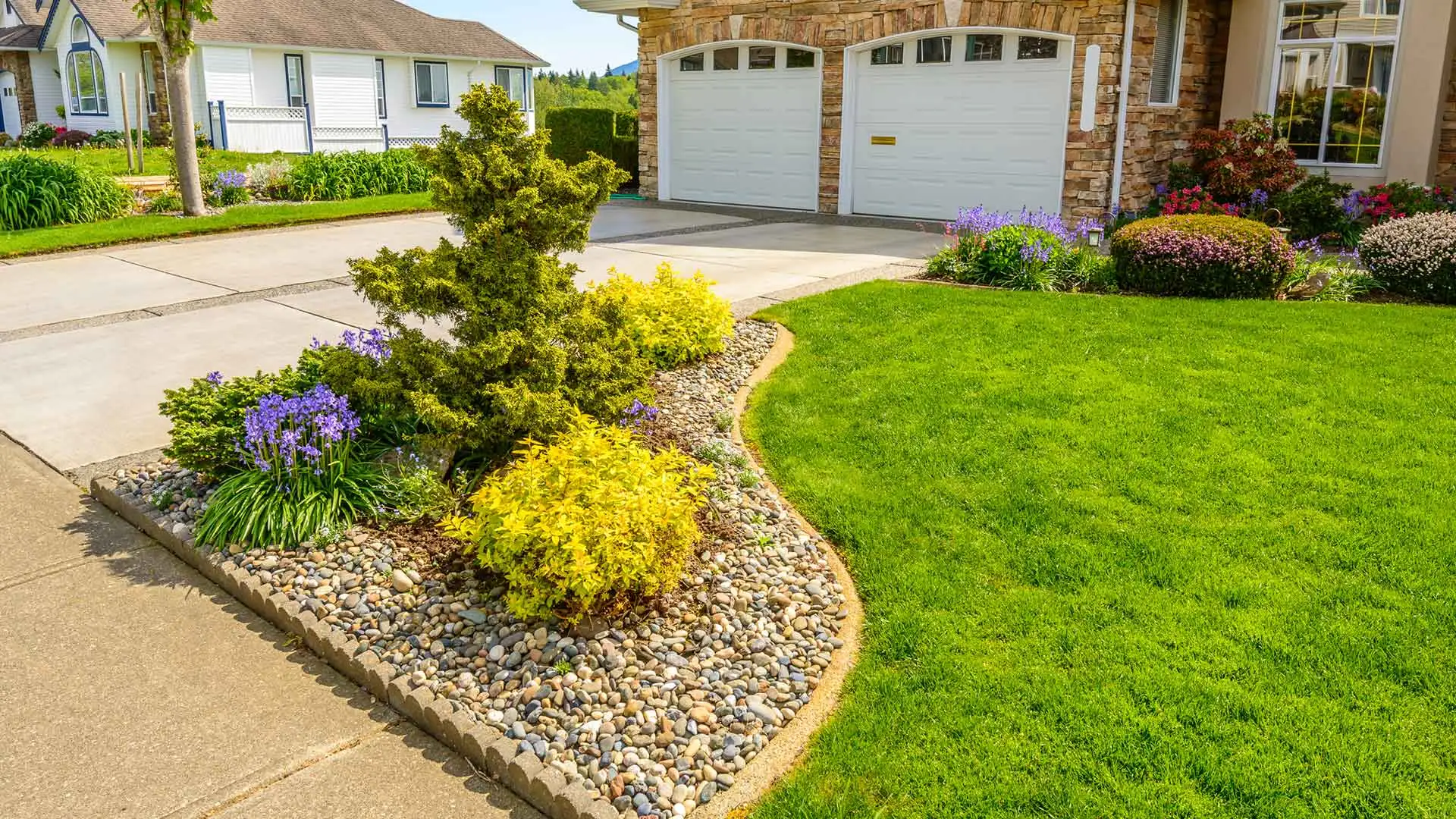
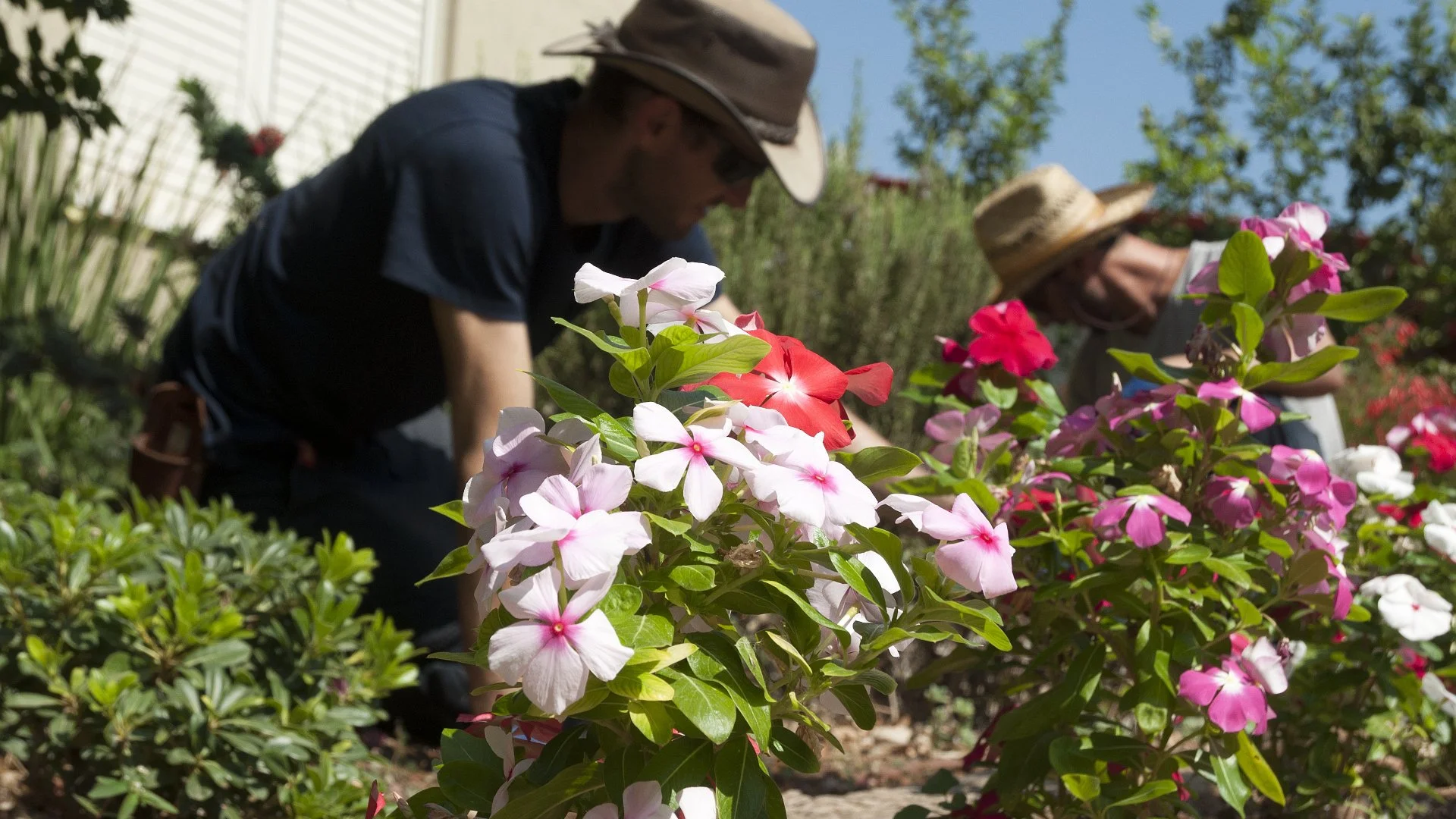
Bed cleanup is more than weeding. A proper job includes spraying the weeds first to kill the root, removing all winter debris and leaves, trimming back overgrown shrubs and removing the clippings, and then re-edging the beds before any new mulch goes down.
On edging, you have two real options. Power edging gives you a clean line quickly. The cut is shallower, so the line typically holds for most of the season but may need a mid-season refresh. Hand-cut spade edging is deeper and more labor-intensive, but the line will hold the entire season.
If you're doing this yourself, two pieces of advice. First, spray the weeds with a post-emergent herbicide and give it a few days to kill the root before you mulch. If you skip that step, the weeds will push right back through the new mulch within weeks. Second, take the time to edge. Edging is what separates a bed that looks maintained from a bed that looks transformed. Without it, the mulch and the lawn blur together, mulch spills out into the grass, and the grass tries to grow into the bed. With a sharp, defined edge, the whole property looks more expensive.
Beyond edging, the small details that make a real difference: consistent mulch depth across the whole bed (not thick in some spots and bare in others), mulch pulled back from plant crowns and tree trunks, smooth bed shapes that follow the architecture of the house instead of random scallops, and dead branches pruned out of shrubs rather than just trimmed flat.
5. Start Mosquito Control
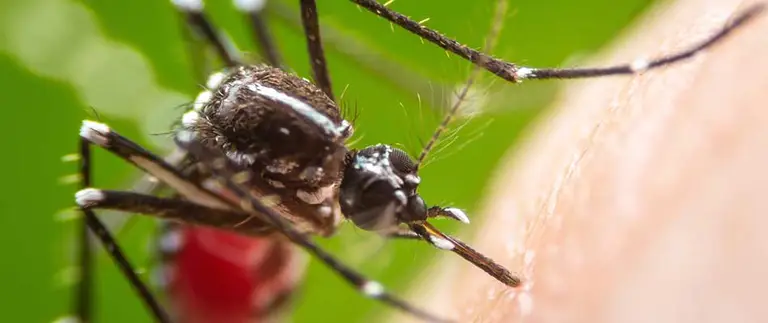
Mosquito treatments typically start in May for us. Once temperatures are consistently above 60 degrees, mosquito volume picks up fast. We run treatments every three to four weeks from May through September or early October.
What the treatment does: a barrier spray applied to the dense shrubs, foliage undersides, fence lines, decks, and shaded resting spots where mosquitoes hide during the day. As adults land on those treated surfaces over the next 3 to 4 weeks, they die. The treatment doesn't really stop breeding directly. That's a separate job, and it's mostly the homeowner's job: walk your property and dump out anything that holds standing water for more than a few days. Bird baths, plant saucers, kid toys left out, low spots, tarp folds, clogged gutters. That's where mosquitoes lay eggs.
A few things to skip:
- Bug zappers. Research has shown they kill mostly moths and beneficial insects. Mosquitoes aren't even attracted to UV light.
- Ultrasonic repellent devices. Multiple studies have found they don't work.
- Citronella candles. Only effective within a couple feet of the flame.
- Mosquito-repelling plants in pots. The oils only release when leaves are crushed. A plant sitting there does nothing.
- Backyard foggers from the hardware store. Kill on contact for a few minutes, then mosquitoes return. No residual.
What actually works: a professional barrier treatment, a box fan running on the patio (mosquitoes can't fly against even a light breeze), DEET or picaridin spray on skin when you're outside, and removing standing water weekly.
More: Sprout's mosquito control program.
6. Don't Over-Water Yet
You typically don't need to water much in May. We're targeting about one to one-and-a-quarter inches per week, and that includes rain. Purdue Extension AY-7-W (Irrigation Practices for Homelawns) documents the same range and adds the important detail that you should apply that water in one or two soakings per week rather than light daily sprinkles, which only encourage shallow roots and crabgrass. If May is wet (which it often is in Hamilton County), you may not need to run the sprinklers at all. The need really kicks in late May and into June as we get into the early summer pattern.
In peak summer, you bump up to roughly one-and-a-quarter to one-and-a-half inches per week, again including rainfall.
Time of day matters more than people realize. Always water in the early morning. The longer your lawn stays wet, the more susceptible it is to fungal diseases like brown patch and dollar spot. If you water at night, the lawn stays wet for ten to twelve hours through the overnight dew, which is exactly the environment lawn diseases want. If you water early in the morning, the sun comes up shortly after and dries the lawn quickly, minimizing the window of moisture exposure.
If you have a sprinkler system, May is the time to do a full startup check, not just turn it on:
- Adjust run times for the season. The same run time you use in July is way too much for May. Cut May run times by roughly a third compared to peak summer.
- Walk every zone with the system running. Look for broken or misaligned heads watering the sidewalk, driveway, or side of the house. Look for heads misting in the air instead of throwing water (that means pressure is too high, which wastes water and feeds disease).
- Measure actual output. Put a few flat-bottom containers (tuna cans work) around a zone, run it 15 minutes, and measure what's in each. You'll find some zones putting down twice as much water as others. That's why some parts of your lawn are thriving and others are struggling.
- Test your rain sensor by holding it under the hose for 30 seconds and confirming the system shuts off. They fail more often than people realize.
More: How to water your lawn the right way in Indiana.
7. Get on the Schedule for Grub Control
You don't apply grub control in May. The application window for preventative grub control in Hamilton County is roughly mid-June through mid-July, when adult beetles are laying eggs and before grubs hatch and start feeding on roots. Purdue Extension E-271 (Managing White Grubs in Turfgrass) covers identification, biology, and the full management toolkit for Indiana lawns.
The reason we're mentioning it now: the time to book grub control is May, not the day you notice damage in August. Once you can pull up sections of turf like loose carpet, see irregular brown patches that don't respond to water, or notice raccoons and skunks digging up your yard at night looking for grubs, the damage is already done. Curative treatments at that point are expensive and slow.
Preventative treatment in June or July is far cheaper and more effective than reacting to a grub-damaged lawn in late summer. Talk to your lawn care company about adding it to your program now while there's still room on the calendar.
More: How to tell if your lawn has grubs.
8. What NOT to Do in May
Almost as important as what to do: what to skip. A few things people try in May that backfire:
- Don't aerate. Spring aeration creates open holes for weed seeds (especially crabgrass) right when they're most actively germinating. Fall is the right window for core aeration in Indiana.
- Don't overseed. Spring-seeded grass struggles to establish before summer heat stress hits. Fall overseeding has dramatically better results.
- Don't dethatch aggressively. Heavy spring dethatching pulls up healthy turf along with the thatch and stresses the lawn at exactly the wrong time of year.
- Don't double-up your fertilizer rate. More fertilizer does not equal a greener lawn. It usually equals burned grass, excessive top growth at the expense of roots, and a lawn that crashes the first week of July heat.
- Don't scalp the lawn before vacation. Cutting low so you can skip a week of mowing while you're out of town is the single most damaging thing most homeowners do. Hire someone to mow it once at the right height instead.
The Short Version
May, in order: mow weekly at four inches, get the second round of pre-emergent down, apply a spring fertilizer blend, refresh your mulch, clean up your beds, start mosquito control, hold off on heavy watering, book grub prevention for June, and skip aeration, overseeding, and dethatching until fall.
If reading this list made you tired, that's understandable. There's a lot to track. We do this every day across Noblesville, Carmel, Westfield, Fishers, McCordsville, Cicero, Geist, and the rest of Hamilton County. If you'd rather hand it off to a crew that already knows what your lawn needs in May, get instant pricing online or call us at (317) 900-7151.