August 15, 2024 · Aeration & Seeding · By Mike Harmon, Owner & Licensed Applicator
If you only do one thing for your lawn beyond mowing it, aerate it. Aeration is the single most impactful service for Indiana lawns, and the timing of when you do it matters more than most people realize. Do it at the wrong time and you're wasting money. Do it at the right time and you'll see the difference by next spring.
Here's when to aerate, why that window matters, and what to expect from the process if you live in Noblesville, Carmel, Westfield, Fishers, or anywhere in Hamilton County.
Reading this in late summer? Here is the booking timeline.
Aeration and overseeding happen in a narrow window, and every lawn care company in Hamilton County is working the same few weeks. Schedules fill from the top down.
- Late July through August: book your slot
- September into early October: the work happens
- Mid October: soil cools past reliable germination and the window closes
Aeration is one of the services you can price yourself online in about a minute. No sales call, no waiting on a callback.
Or see what is included on our aeration and overseeding service page.
The Short Answer: Early Fall
The ideal aeration window in central Indiana is late August through mid-October. That's when soil temperatures are still warm enough for grass seed to germinate (if you're overseeding at the same time, which you should be), air temperatures are cooling down so seedlings don't fry, and fall rains help with establishment.
Most of our aeration jobs happen in September and early October, a timeline consistent with Purdue University's aerification checklist. By mid-October, soil temperatures start dropping below the threshold for reliable germination, so the window starts closing.
Why Fall Beats Spring for Aeration
Some companies will sell you spring aeration. It's not useless, but it's not ideal either, and here's why.
Spring aeration opens the door for weeds. When you punch thousands of holes in your lawn in April, you're creating perfect germination spots for crabgrass and other annual weeds right as they're waking up. Your pre-emergent weed control works by creating a barrier in the top layer of soil. Aeration breaks that barrier. So you're choosing between aeration and weed prevention, and in spring, weed prevention usually wins.
Fall aeration has no such conflict. Crabgrass is dying off, annual weeds are done germinating for the year, and the cool-season grasses in your lawn are entering their strongest growth period. Aerate in fall, overseed at the same time, and you get the double benefit of reduced compaction plus fresh grass seed filling in every thin spot.
What Core Aeration Actually Does
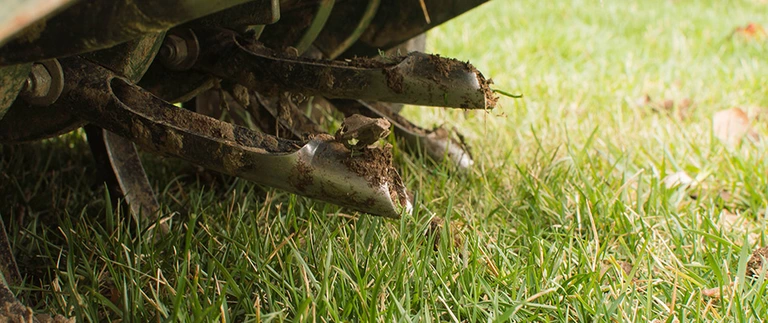
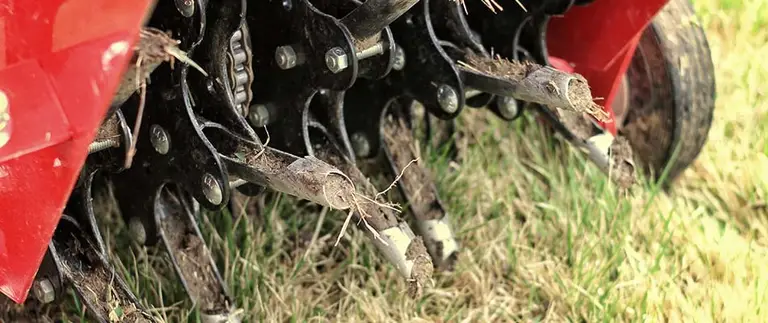
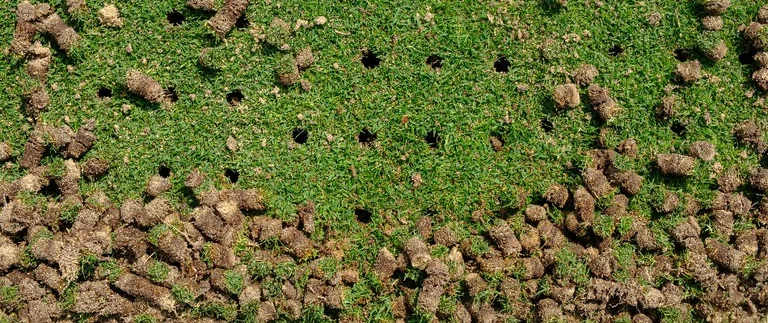
A core aerator pulls small plugs of soil out of your lawn, roughly 2 to 3 inches deep. (If you are wondering how this differs from dethatching, we broke that down in dethatching vs aeration.) These plugs break down on the surface over a week or two. The holes left behind allow oxygen, water, and fertilizer to penetrate into the root zone instead of running off the surface or sitting in a compacted layer where roots can't access them.
Hamilton County soil is predominantly clay, which compacts harder and faster than sandy or loamy soils. Our explainer on what core aeration is and why your lawn needs it goes deeper on the mechanics. Foot traffic, mowing, and the weight of the clay itself compress the soil over the course of a growing season. By August, most lawns are sitting on a layer of compacted ground that's choking the root system. Aeration breaks that up.
Aeration + Overseeding: the Power Combo
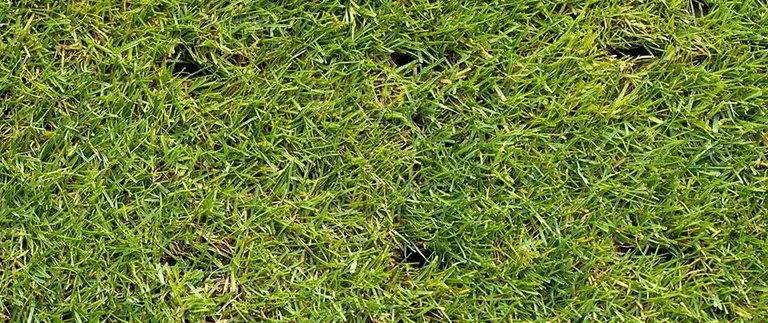
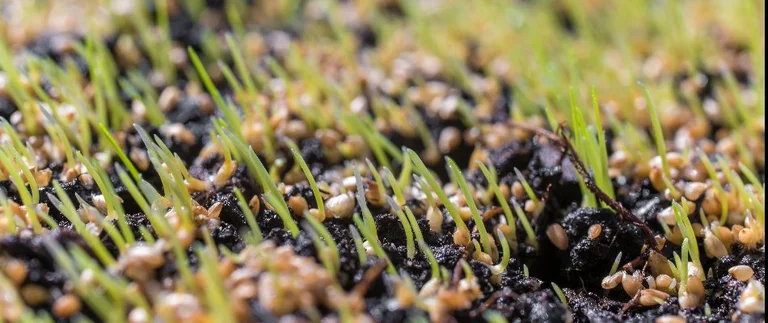
We always recommend pairing aeration with overseeding. The freshly punched holes create ideal seed-to-soil contact, which is the number one factor in germination success. The seed falls into the holes and sits right against moist soil instead of sitting on top of a thatch layer where it dries out and dies. We wrote more about that result in how overseeding transforms a thin lawn.
We use a blend of cool-season grasses suited for Indiana: Kentucky Bluegrass for density, Tall Fescue for drought tolerance, and Perennial Ryegrass for fast germination. The exact mix depends on your property's sun and shade conditions. More on that in our guide to choosing the right grass seed for an Indiana lawn.
What to Expect on Aeration Day
Most homeowners have never watched an aeration and have no idea what the lawn looks like afterward, so here is the honest version.
Before we arrive: water the lawn a day or two ahead if there has not been rain. Aerators pull much better cores out of slightly moist soil than out of concrete-hard August clay. Mark any shallow irrigation heads, invisible dog fence lines, or cable runs so we can steer around them.
During: the machine makes multiple passes across the property, pulling plugs roughly two to three inches deep. A typical Hamilton County residential lawn takes under an hour. If you are overseeding at the same time, seed goes down right after the aeration pass so it drops into the open holes.
Right after: your lawn will be covered in soil plugs and will look, frankly, a little rough. That is normal and it is supposed to happen. Leave the plugs alone. They break down on their own in one to two weeks and return that soil and organic matter to the surface. Raking them up removes the benefit.
The next two to three weeks: if you overseeded, keep the surface consistently damp with light, frequent watering until the new seedlings are up. This is the opposite of our normal deep-and-infrequent advice, and it only applies while seed is germinating. Hold off on mowing until the new grass reaches about three inches, and skip any weed control until the seedlings have been mowed two or three times.
The following spring: this is when you actually see what you paid for. The lawn comes out of winter noticeably thicker, and the thin spots you were staring at last summer have filled in.
How Often Should You Aerate?
For most residential lawns in Hamilton County, once per year in the fall is the right frequency. If your soil is especially heavy clay, your lawn gets heavy foot traffic, or you're recovering from damage, twice a year (spring and fall) can help accelerate improvement. But for the average Noblesville, Carmel, or Fishers yard, annual fall aeration paired with overseeding will keep your lawn getting thicker and healthier every year.
Aeration FAQ
Can I aerate and overseed at the same time?
Yes, and you should. The holes left by the aerator give seed direct contact with moist soil, which is the single biggest factor in whether seed germinates. Seed broadcast onto an un-aerated lawn largely sits on top of the thatch and dries out.
Should I aerate in spring instead?
Generally no. Spring aeration breaks the pre-emergent barrier that keeps crabgrass out, and it opens fresh soil right as annual weeds are germinating. Fall has no such conflict, and cool season grass is in its strongest growth period.
Do I have to rake up the plugs?
No. Leave them. The plugs break down within one to two weeks and return soil and organic matter to the lawn surface. Removing them throws away part of the benefit you paid for.
How long does it take to see results?
The lawn looks rough for a week or two, then normal. The real payoff shows the following spring, when the turf comes out of winter thicker and the thin areas have filled in. Heavily compacted clay lawns often need two or three consecutive years of fall aeration to fully turn around.
How much does aeration cost in Hamilton County?
For a typical residential lawn, aeration with overseeding generally runs in the $150 to $350 range depending on lot size and the seed blend. Instant pricing for aeration is available online.
If you're ready to get on the schedule, see our aeration and overseeding service for what is included, get instant pricing online, or call and text us at (317) 900-7151. We serve Noblesville, Carmel, Westfield, Fishers, and the rest of Hamilton County. September fills up fast, so late summer is the time to claim a slot.