March 5, 2026 · Mulch & Rock · By Mike Harmon, Owner & Licensed Applicator
It's April. You walk your property and the landscape beds look faded, thin, and tired. Last year's mulch has broken down to almost nothing. Weeds are already poking through. The beds around the mailbox, the front walkway, the foundation plantings, they all look like they've been neglected even though the rest of the yard is fine.
Every spring, homeowners across Noblesville, Carmel, and Fishers debate whether to refresh the mulch or save the money for something else. Here's why skipping it costs more than you think.
Mulch Suppresses Weeds
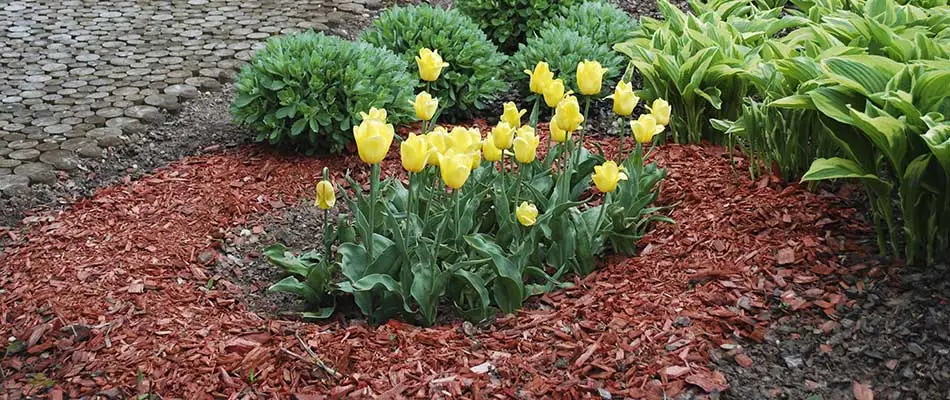
A fresh 2 to 3 inch layer of mulch blocks sunlight from reaching weed seeds in the soil. That's the primary mechanism. No sunlight, no germination, fewer weeds. As mulch breaks down over the course of a season, that layer gets thinner and less effective. By the following spring, it's often less than an inch thick, which isn't enough to stop much of anything.
Without that mulch barrier, you're either pulling weeds by hand every couple of weeks, paying for a bed weed control program, or watching the beds get overrun. The cost of annual mulch is comparable to what you'd spend fighting weeds all season, and it looks a whole lot better.
It Retains Moisture When It Counts
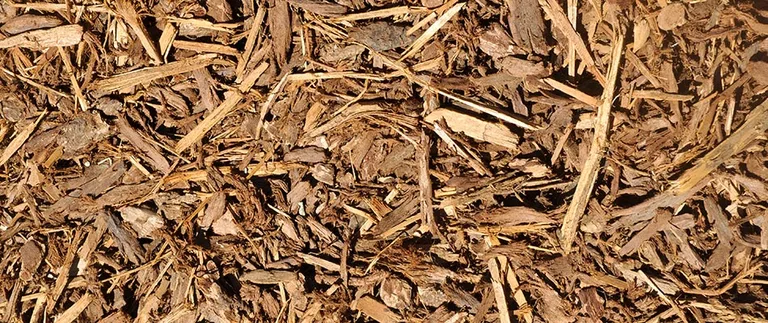
Indiana's summer dry spells hit landscape plants hard, especially shallow-rooted shrubs and perennials. Mulch acts as insulation over the soil, slowing evaporation and keeping the root zone cooler during July and August heat. A well-mulched bed can retain moisture for significantly longer between rain events compared to bare soil.
This is especially important for properties with new plantings. First-year shrubs and perennials haven't developed deep root systems yet, so they depend on consistent soil moisture to establish. Mulch gives them that buffer during their most vulnerable growing season.
It Feeds the Soil as It Breaks Down
Organic mulch, whether it's shredded hardwood, bark chips, or double-ground, decomposes over time. That decomposition adds organic matter back into the soil. For Hamilton County's heavy clay, this is a significant benefit. Clay soil is naturally low in organic content, which means it drains poorly and compacts easily. Each year's mulch application contributes to gradually improving the soil structure in your beds.
This is one advantage mulch has over decorative rock. Rock doesn't decompose, which means it doesn't improve the soil. For beds with active plantings, mulch is almost always the better choice.
The Visual Impact Is Immediate
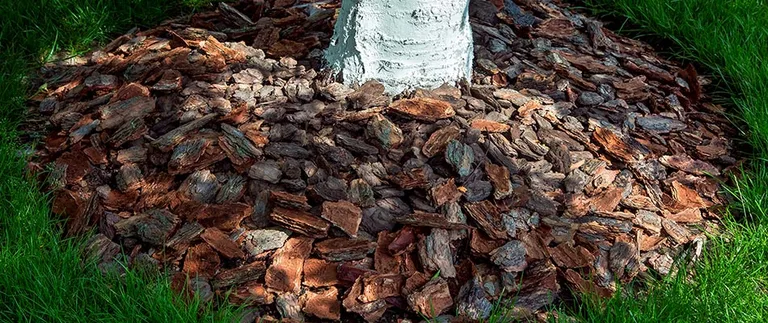
Nothing changes the look of a property faster than fresh mulch. It takes a few hours to install and the difference is dramatic. Faded, patchy beds become clean, uniform, and sharp. The contrast between fresh dark mulch and green plants makes everything look more intentional and cared for. Properties in Westfield and McCordsville with annual mulch consistently look better than neighboring properties that skip years.
For homeowners considering selling, fresh mulch is one of the highest-return improvements you can make. Real estate agents consistently recommend it because buyers notice it immediately, even if they can't articulate why the property looks "well-maintained."
What a Fresh Mulch Refresh Actually Looks Like
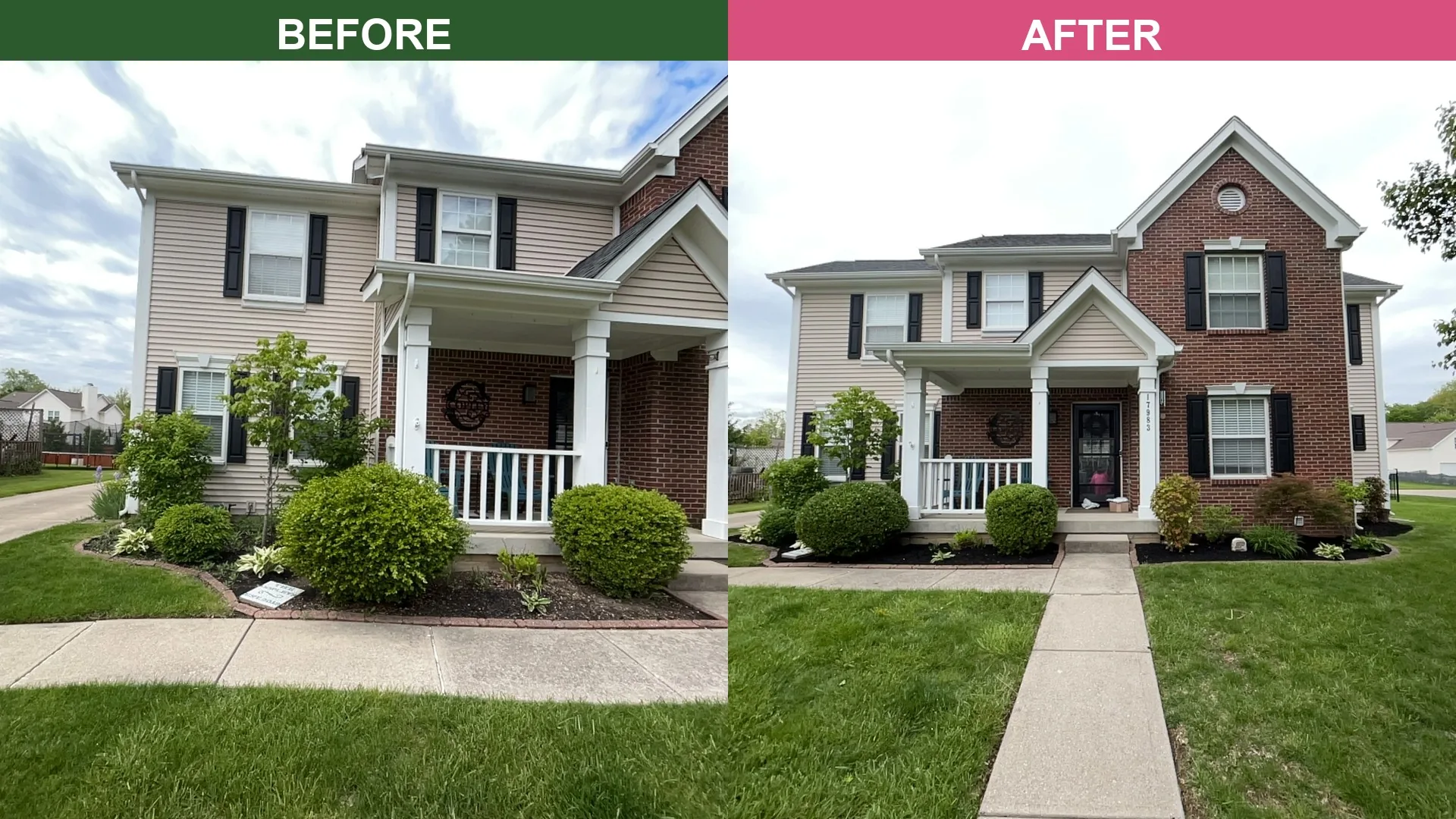
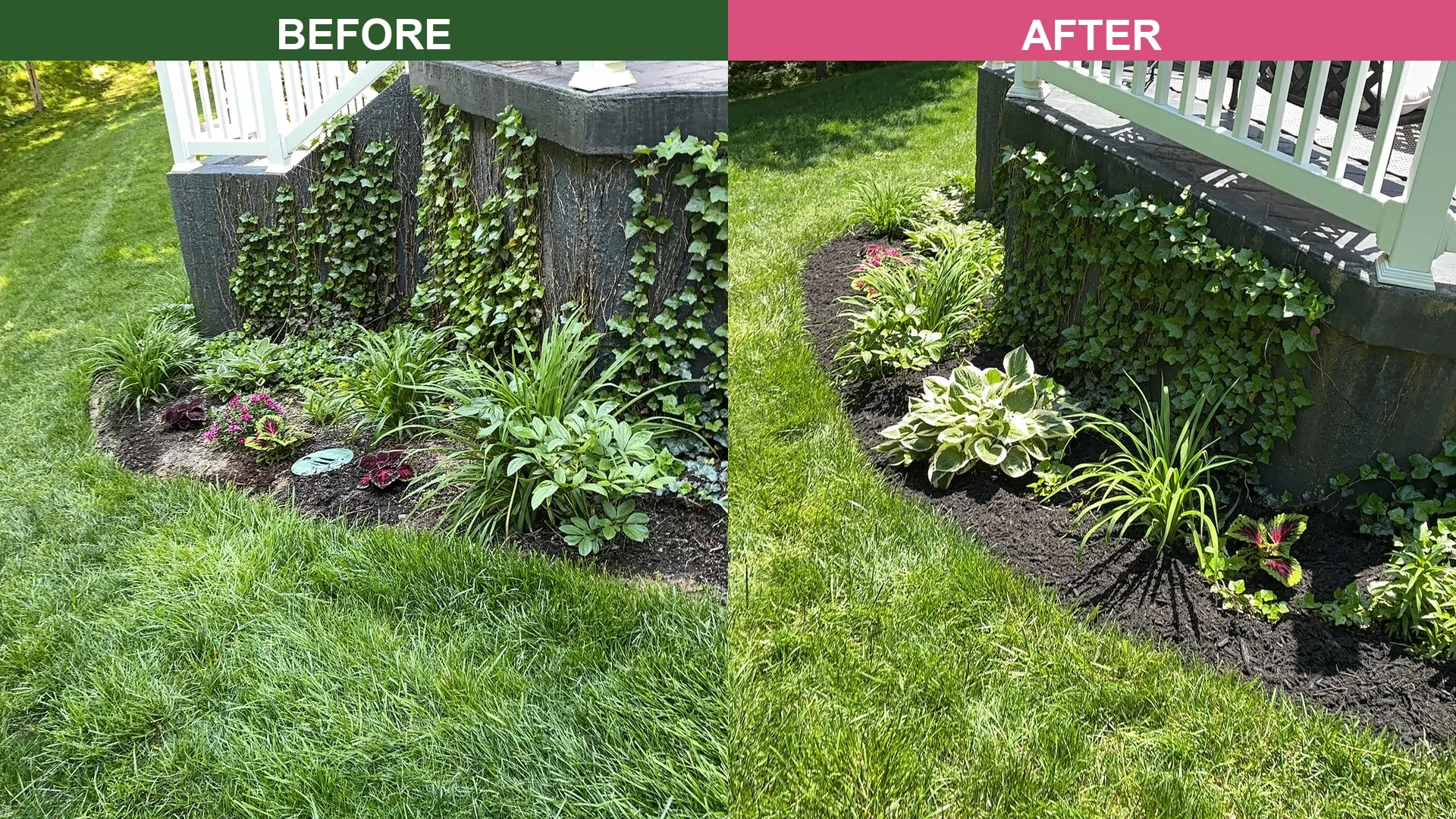
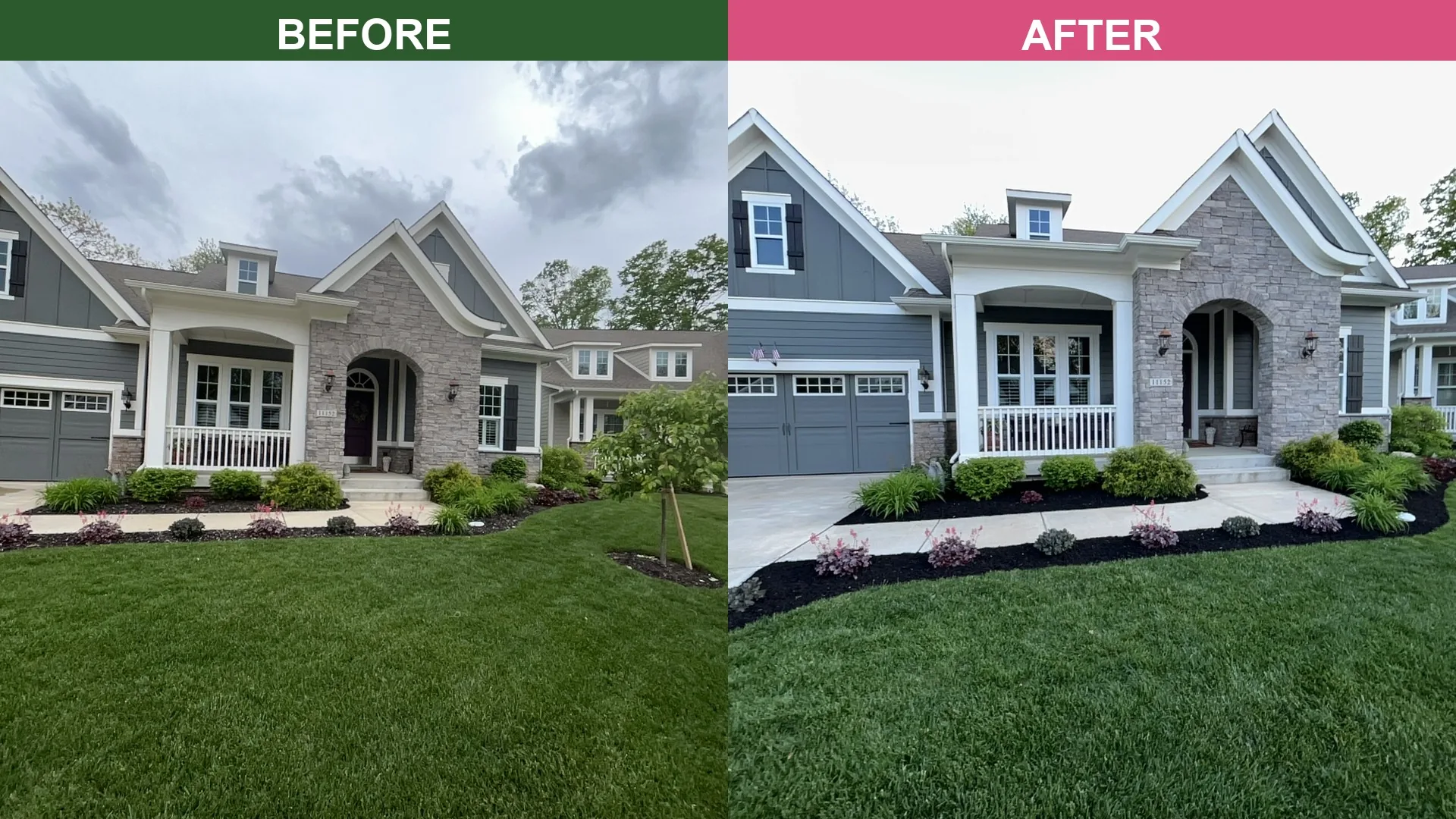
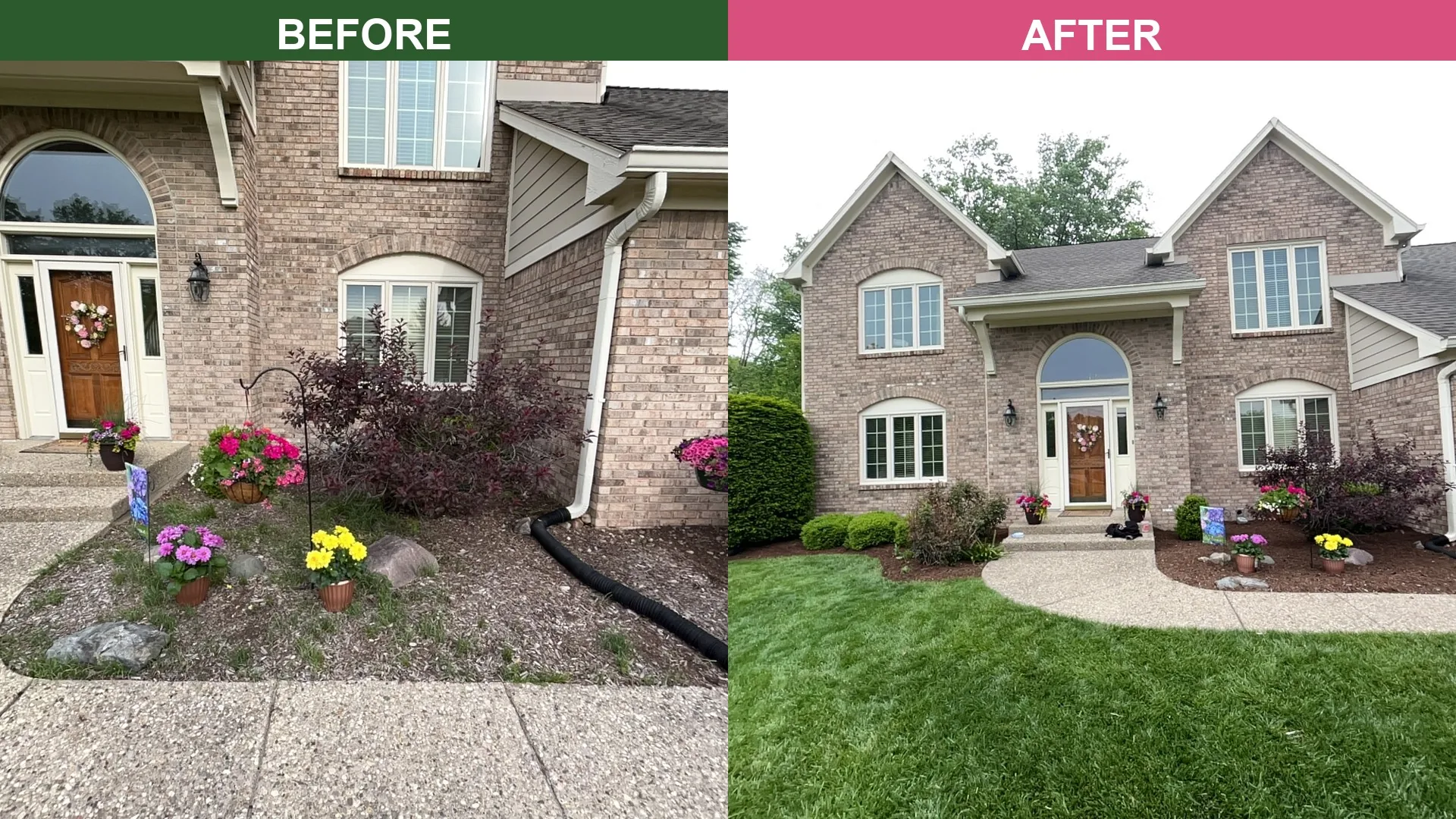
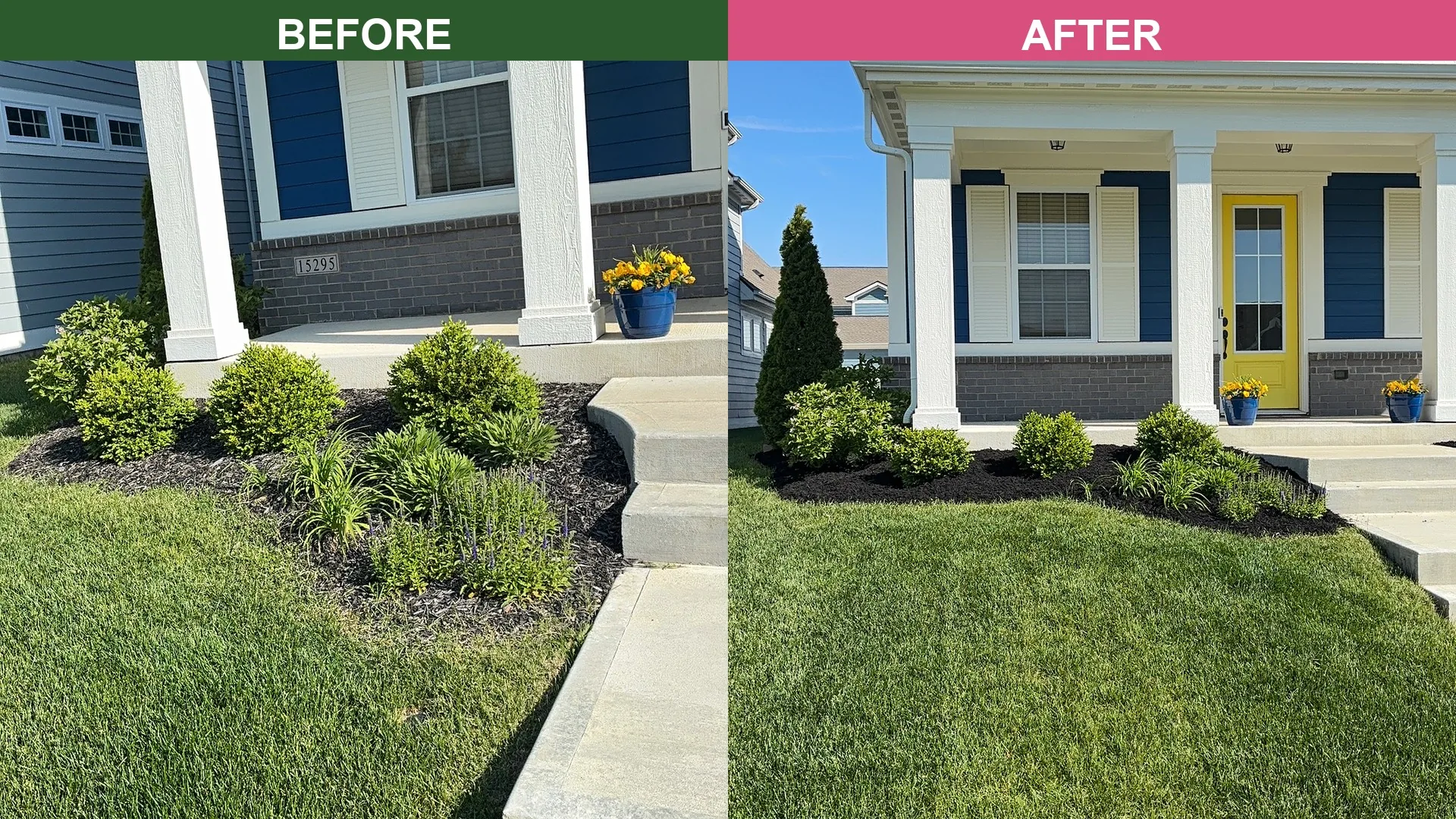
Words only do so much. Here are five real Hamilton County properties we refreshed this spring. Each before shot shows what most beds look like by April after a winter of weather and sun fade. Each after shows the same beds with fresh black mulch installed, edges re-cut, and weeds killed at the root before application.
Noblesville — Fresh black mulch around a tan and brick two-story, with bushes shaped and beds re-edged.
Carmel — Backyard deck-side bed with established hostas, coleus, and ivy on the wall. Faded brown mulch replaced with fresh black, beds redefined.
Westfield — Craftsman home where the front beds had washed out to gray. Fresh dark mulch and a clean edge brought the whole front of the house back to life.
Fishers — Larger brick home with weedy beds and stray rocks scattered through the existing mulch. We pulled the rocks, killed the weeds at the root, and installed fresh mulch across the entire front.
McCordsville — Beds around a yellow-door home where the old mulch had thinned and shrubs needed shaping. Fresh black mulch and tightened bushes pulled it all together.
None of these took a full overhaul. Each was a one-day refresh: spray weeds first to kill at the root, edge the beds clean, install 2 to 3 inches of fresh mulch on top of the existing material. The transformation is what most homeowners are paying for when they hire a landscape company in the spring.
Timing and Application
The best time to mulch in central Indiana is mid-April through May, after the last freeze risk but before summer heat sets in. Apply 2 to 3 inches — the depth Purdue Extension’s mulching guide recommends for optimal weed suppression and moisture retention of mulch, keeping it pulled 2 to 3 inches away from the base of shrubs and trees to prevent moisture rot against the bark. If your existing mulch is still an inch thick, you only need an inch or two of fresh material on top.
We supply, deliver, and install mulch and decorative rock across Hamilton County. If your beds are due for a refresh, call (317) 900-7151 or request an estimate.