July 27, 2026 · Weed Control · By Mike Harmon, Owner & Licensed Applicator
Prostrate spurge is the weed that shows up in the worst part of summer, in the worst part of your lawn. It grows flat against the ground in dense circular mats, it favors hot bare spots and pavement cracks, and it seems to thrive in exactly the conditions that have the rest of your lawn struggling.
Spurge coming back every summer?
Properly timed pre-emergent is what keeps it out, and it's part of our fertilization and weed control program.
How to Identify Prostrate Spurge
Prostrate spurge (Euphorbia maculata) grows completely flat. The stems radiate outward from one central taproot and press down against the soil, forming a mat that can spread a foot or more across. It does not stand up at all, which is why mowing barely touches it.
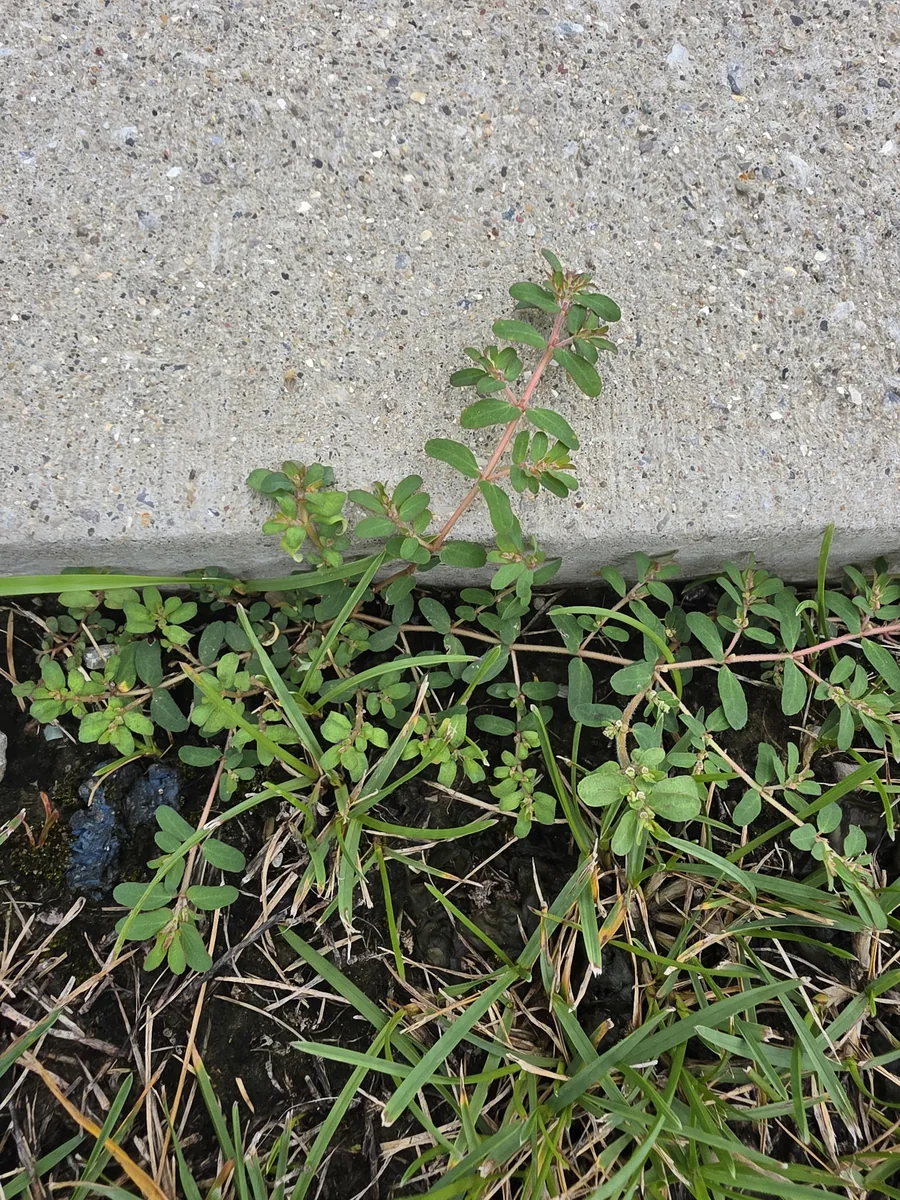
The leaves are small, oval, and arranged in pairs along the stem. Many plants carry a dark maroon or purple blotch in the center of each leaf, which is a useful confirmation when you see it. The stems themselves often have a reddish cast. The flowers are so small that most people never notice them.
Look for it where the lawn is thinnest and the ground gets hottest: driveway and sidewalk cracks, curb strips, the bare patches under play equipment, and anywhere the turf has already been lost to summer stress.
A Warning About the Sap
Break a spurge stem and it bleeds a milky white sap. That sap is an irritant. It causes skin rashes in a lot of people, and it is genuinely painful if it gets in your eyes.
If you are going to pull spurge by hand, wear gloves and keep your hands away from your face until you have washed up. It is also worth discouraging pets from chewing on it. This is not a dangerous plant to have in your yard, but it is one to handle with a little care.
Why Prostrate Spurge Shows Up
Spurge is a summer annual that needs genuinely warm soil to germinate, somewhere around 75 to 80 degrees. That is much warmer than crabgrass needs, which is why spurge arrives later in the season and peaks in the July and August heat.
That timing matters for control. A pre-emergent applied in early spring for crabgrass may be weakening by the time spurge starts germinating, which is one reason a lawn can be clean of crabgrass and still pick up spurge in August.
Beyond timing, spurge needs open ground. It is a colonizer of bare, compacted, sun-baked soil. A thick lawn simply does not give it a place to land, which is why you see it at the pavement edge and in the worn strip by the gate rather than in the middle of healthy turf.
What Gets Rid of It
A selective broadleaf herbicide controls prostrate spurge without harming the grass, and timing makes a real difference. Young plants go down easily. A thick established mat late in the season is considerably tougher and may take repeat applications. Purdue's broadleaf weed control guide for home lawns covers appropriate products and timing.
We handle spurge as part of our regular fertilization and weed control program, along with the other broadleaf weeds that come with an Indiana summer. For the mats that set up in driveway and sidewalk cracks, our bed and hardscape weed control covers the areas outside the turf.
Hand pulling works well on individual plants, especially early, since the whole mat comes from a single taproot. Gloves, and pull before the plant sets seed.
Keeping It From Coming Back
Spurge only takes ground that the lawn has already given up. The durable fix is the same one that solves most summer weed problems: make sure there is no bare ground for it to claim.
Fall aeration and overseeding is the biggest lever, because it relieves the compaction spurge favors and puts new turf into the thin areas before next summer. Mowing tall, around four inches, shades the soil surface so seed does not get the heat and light it needs. And a steady fertilization program keeps the turf dense enough through summer that the openings never form.
FAQ
What is the flat weed spreading in my driveway cracks?
Almost certainly prostrate spurge. It grows in a flat circular mat pressed against the ground, with small paired oval leaves along reddish stems, and it thrives in hot bare spots like driveway cracks, sidewalk edges, and thin areas of turf.
Does spurge have poisonous sap?
Prostrate spurge releases a milky white sap when a stem is broken. It is a skin and eye irritant for many people and can cause a rash. Wear gloves if you are pulling it, and keep the sap away from your face. Pets should not be encouraged to chew on it either.
When does prostrate spurge germinate?
Much later than crabgrass. Spurge needs warm soil, roughly 75 to 80 degrees, so it typically germinates from late spring into early summer and peaks in the heat of July and August. That later timing is why a spring pre-emergent sometimes fades before spurge season arrives.
How do you get rid of prostrate spurge?
A selective broadleaf herbicide controls it, and it is easiest to kill while plants are young. Established mats are tougher and may need repeat treatment. Because spurge only colonizes bare and thin ground, thickening the lawn through fertilization and fall overseeding is what keeps it from returning.
Get Ahead of It
If this weed is spreading through your lawn in Noblesville, Carmel, Westfield, Fishers, or anywhere in Hamilton County, we can take care of it and fix the conditions that let it in. Call us at (317) 900-7151 or get instant pricing online.
For the full rundown of the weeds we see most often around here, see our Hamilton County weed identification guide.