May 5, 2026 · Weed Control · By Mike Harmon, Owner & Licensed Applicator
If you've ever stared at something growing in your lawn and asked "is that a weed or is it just the grass?", you're not alone. Hamilton County's clay soil, hot summers, and cold winters create the perfect environment for a specific set of weeds that show up in Noblesville, Carmel, Westfield, and Fishers lawns year after year.
This is the field guide we use ourselves. It covers the 9 weeds we treat most often, when each one shows up, what it looks like, and how to deal with it. Each weed has a brief overview here. The full deep-dive guides will be linked below as we publish them through the season.
If you'd rather skip the identification work and just have us handle it, our fertilization & weed control program takes care of all of these as part of the regular schedule. Or call us at (317) 900-7151 for a quick property walk.
The 9 Most Common Hamilton County Lawn Weeds
How to Use This Guide
Each weed below shows up in a specific window of the year. The "When You'll See It" line tells you when to start watching for it. If you're trying to identify something in your lawn right now, scroll to the weeds whose timing matches the current month. That'll narrow your options fast.
"Why It Shows Up" explains what's happening with your lawn that's letting the weed in. Most lawn weeds are symptoms, not causes. Compacted soil, mowing too short, overwatering, underwatering, low fertility, and shade all create openings that specific weeds exploit. Fixing the underlying condition is half the battle.
1. Crabgrass Read the full guide
When you'll see it: Late May through October. Germinates when soil temperatures hit 55°F at a 4-inch depth, usually mid-April in Hamilton County.
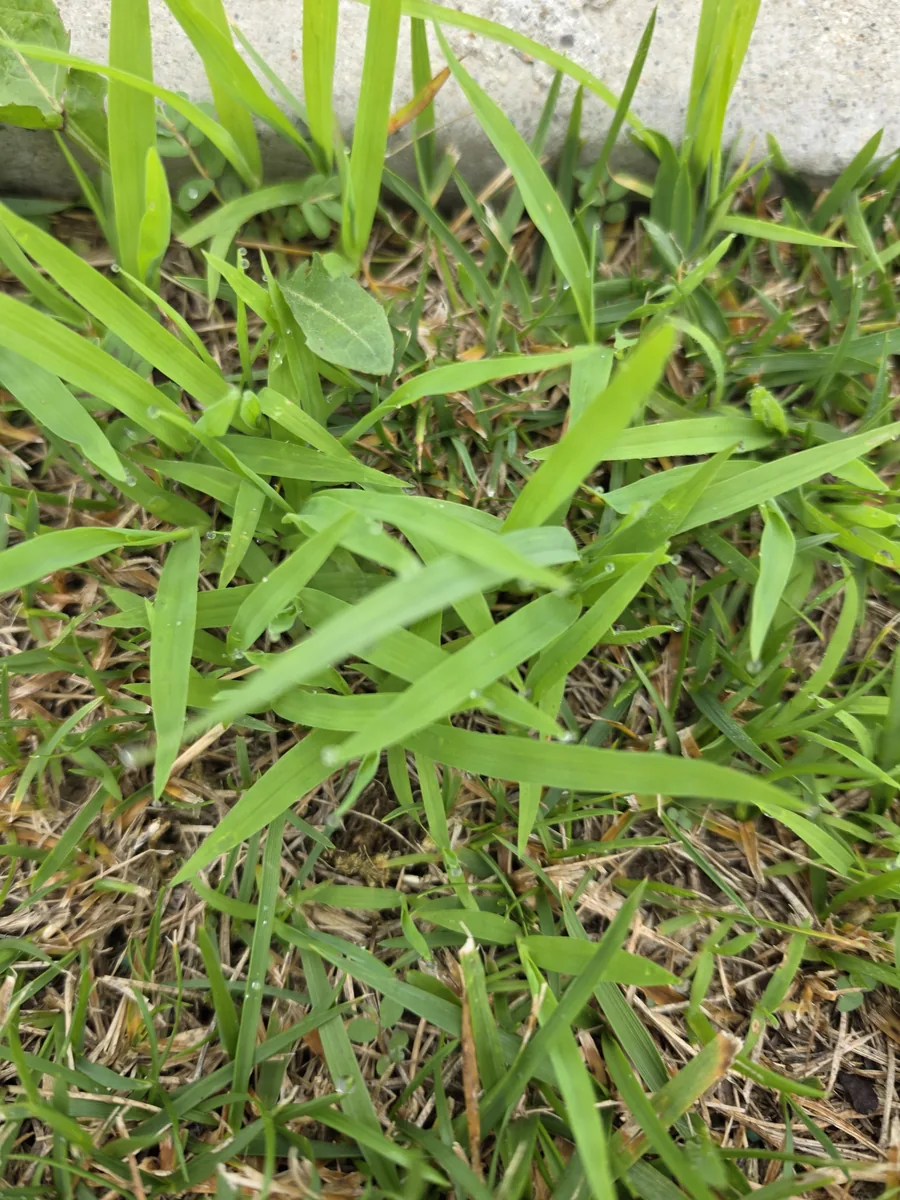
What it looks like: Light green, low-growing clumps with finger-like seed heads radiating out from the center. Blades are wider than turf grass. Spreads outward from a central crown like a spider.
Why it shows up: Crabgrass loves bare soil, thin turf, and lawns mowed too short. It germinates in any spot where sunlight hits the ground. Hot driveway and sidewalk edges are classic crabgrass zones because the heat warms the soil faster.
How we handle it: Pre-emergent applied in two rounds (late March/early April and late April/early May) prevents germination. See our full crabgrass guide for identification photos and the full plan. Once it's already growing, post-emergent treatments are needed. The best long-term fix is a thicker, taller lawn that crowds it out. More on why we apply pre-emergent twice.
2. Dandelion Read the full guide
When you'll see it: April through October, with the heaviest bloom in April-May and a second flush in September.
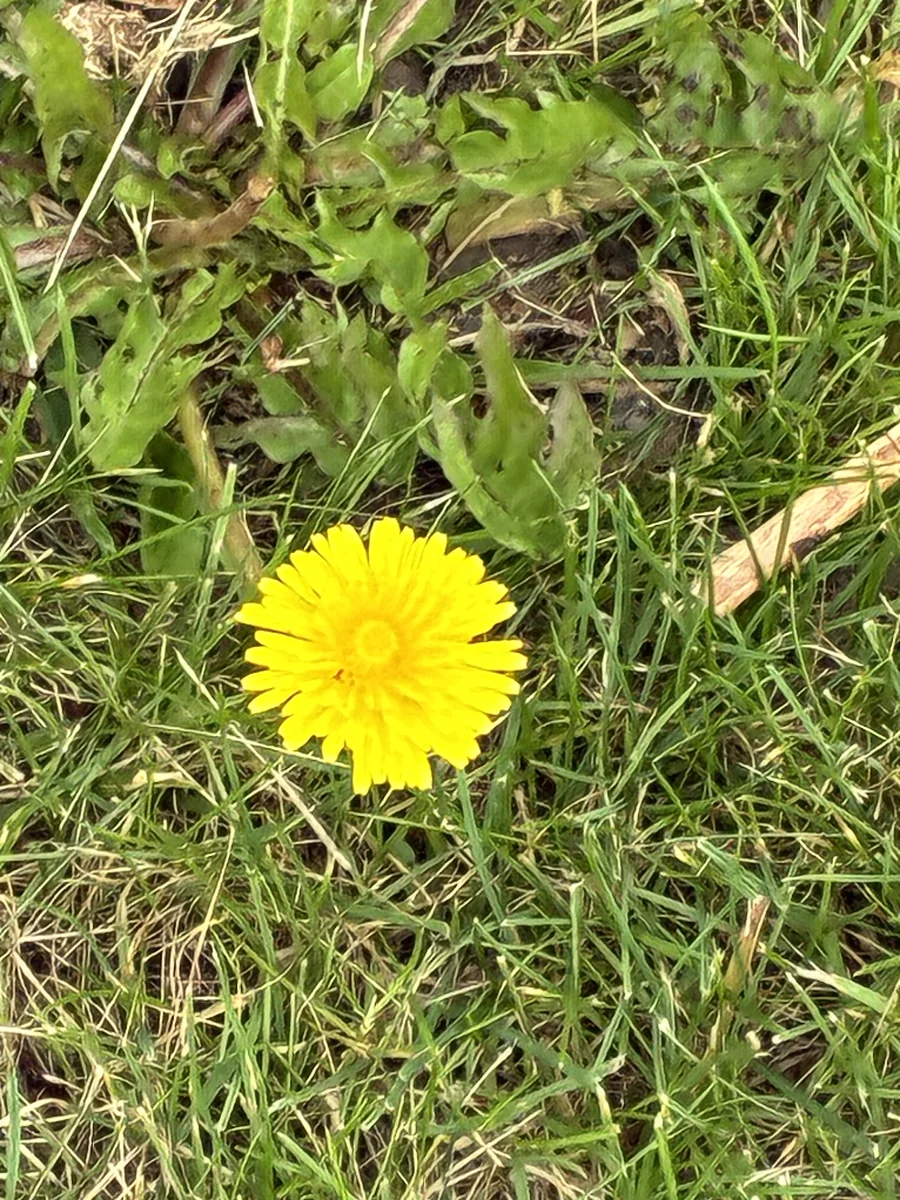
What it looks like: Everyone knows the yellow flower and the white seed puff. Leaves form a flat rosette at the base, deeply lobed and toothed (the name comes from the French "dent de lion", lion's tooth). Long, thick taproot that snaps off when you try to pull it.
Why it shows up: Dandelions tolerate just about anything: poor soil, compaction, drought, shade. They thrive in lawns that are thin, mowed short, or never fertilized. The taproot reaches deep so they survive when other weeds give up.
How we handle it: Selective post-emergent broadleaf herbicide kills the plant down to the root in one or two applications. Spot-spraying works for a few. Lawn-wide treatment is needed for serious infestations. A healthy, thick lawn prevents most of them from establishing in the first place. See our full dandelion guide for identification photos and the complete treatment plan, or learn about our fertilization & weed control program.
3. White Clover Read the full guide
When you'll see it: May through September. Most visible during dry summer stretches when the lawn thins out.
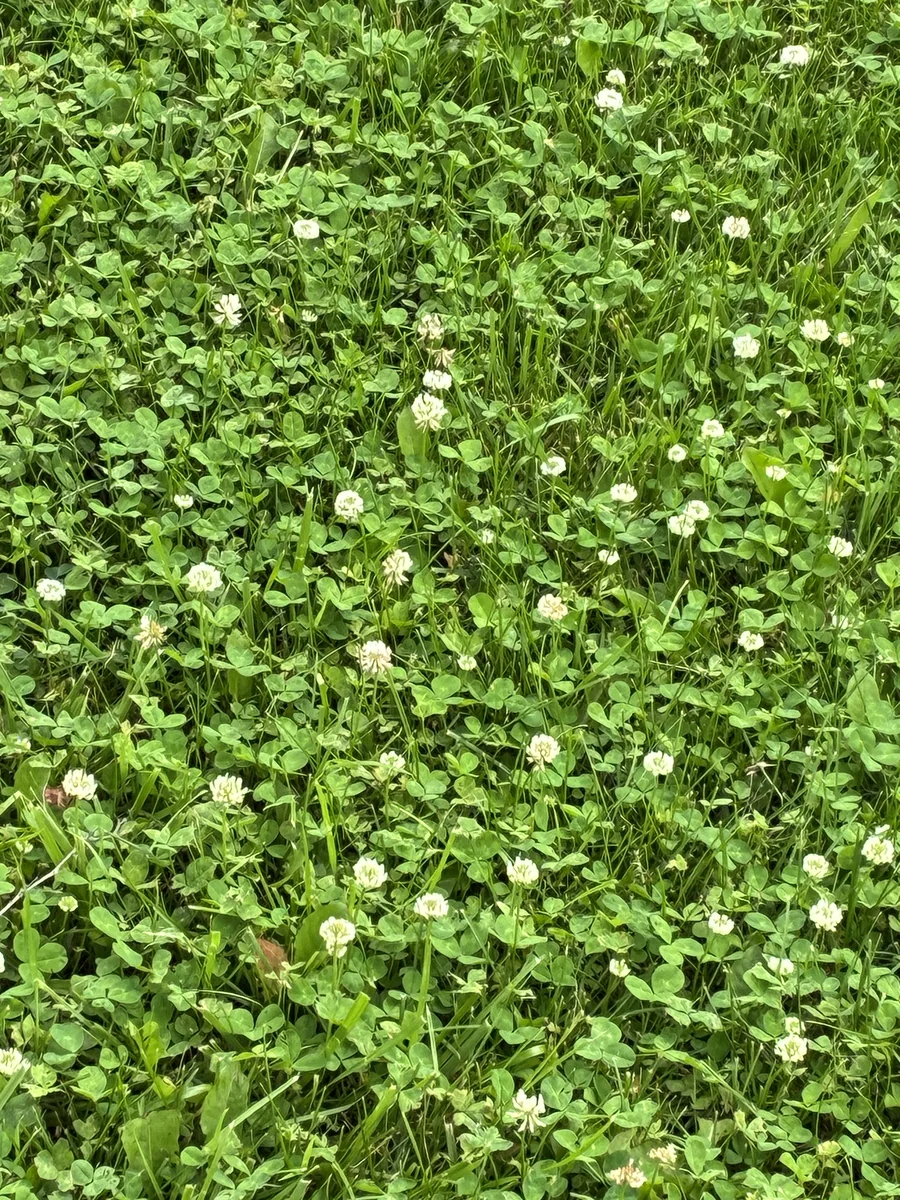
What it looks like: Three-leaflet clover (occasionally four if you're lucky). Round white flower heads sit slightly above the leaves on thin stalks. Spreads by stolons that creep along the ground and root at the nodes.
Why it shows up: Clover is a nitrogen fixer, which means it actually thrives in low-nitrogen soils where the lawn struggles. If you have a clover problem, your lawn is probably under-fertilized. It also tolerates compaction and drought better than most turf.
How we handle it: We treat clover as a weed and control it with selective broadleaf herbicide as part of our standard fertilization and weed control program. Heavy patches may take more than one application. The lasting fix is feeding the lawn so the turf outcompetes it. See our full clover guide for identification photos and the complete treatment plan.
4. Wild Violets Full guide coming this fall
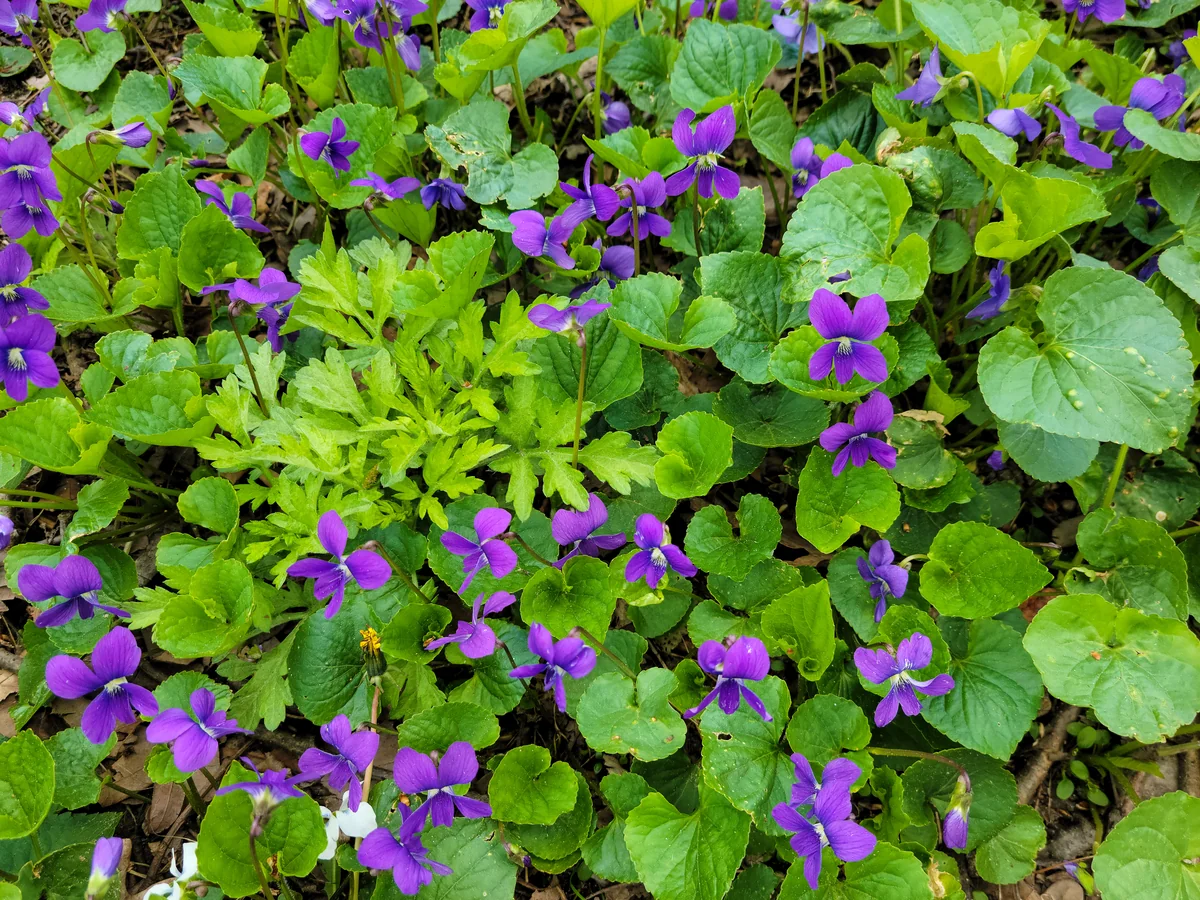
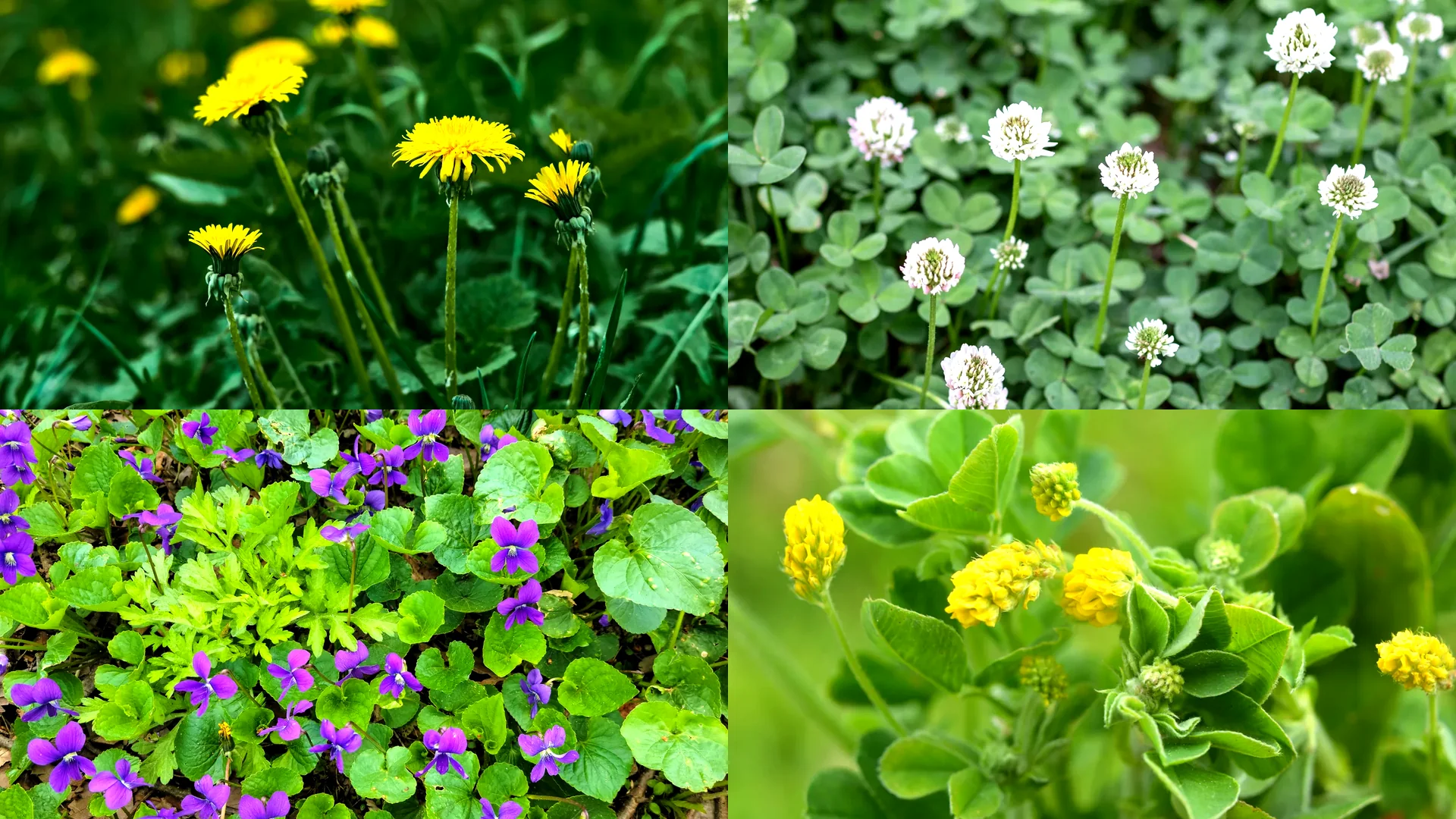
When you'll see it: April through May for the visible purple flowers. The plant itself stays in your lawn year-round and is hardest to identify in mid-summer when it's not blooming.
What it looks like: Heart-shaped leaves, glossy and dark green, low to the ground. Small purple (sometimes white) five-petaled flowers in spring. Spreads through underground rhizomes that form dense mats over time.
Why it shows up: Wild violets love shade, moist soil, and acidic conditions. North-facing yards and areas under tree canopies are classic violet zones. Once established, they're one of the hardest lawn weeds to kill because the rhizomes regenerate.
How we handle it: Standard broadleaf herbicides barely touch wild violets. They require specialized post-emergent products with active ingredients like triclopyr, applied 2-3 times during active spring growth. Even then, complete control often takes two seasons. This is one we set realistic expectations on with customers.
5. Yellow Nutsedge Full guide coming this summer
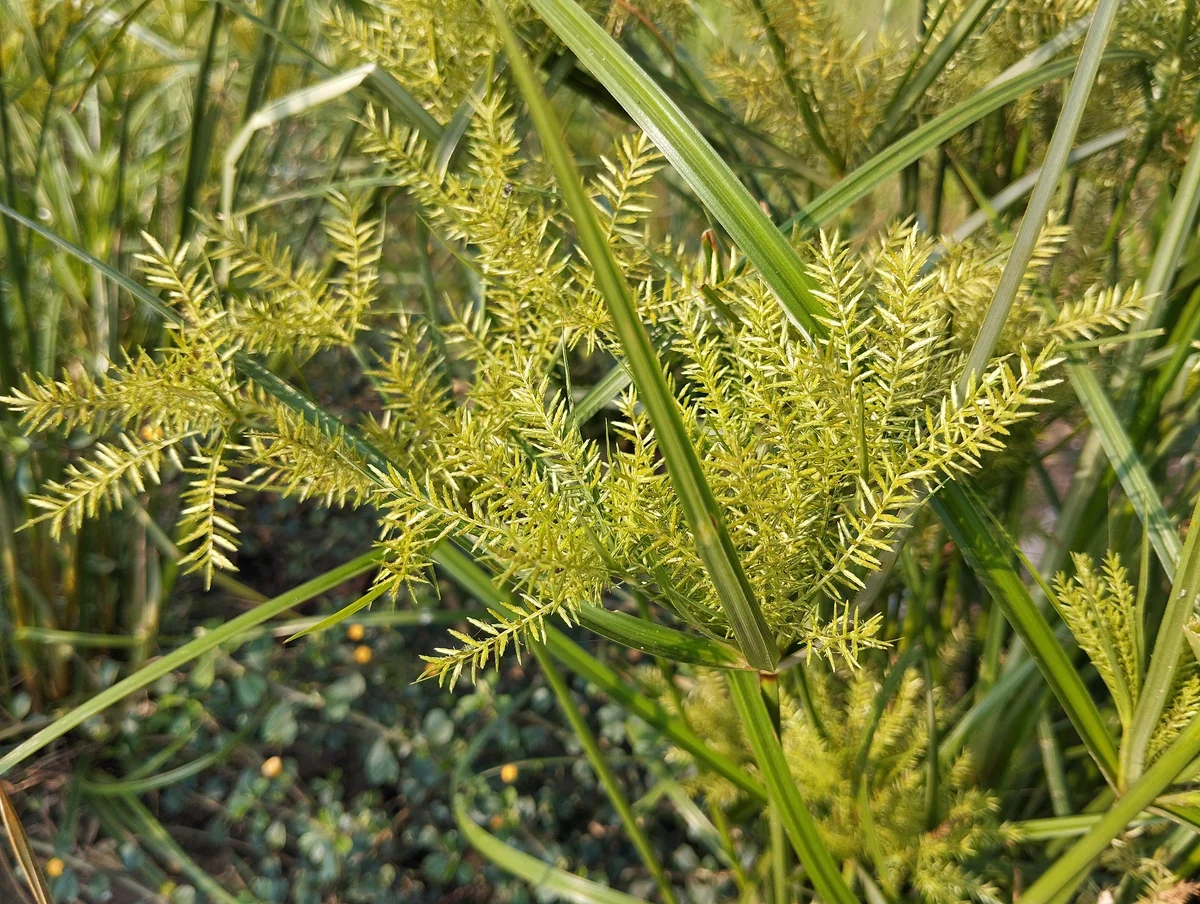
When you'll see it: June through September. Grows fastest in hot, wet weather. Often appears in lawns 2-3 days after a heavy rain.
What it looks like: Looks like grass but isn't. Light yellow-green color, much brighter than your turf. Stems are triangular when you roll them between your fingers (true grasses have round stems). Grows noticeably faster than your lawn, so it sticks up between mowings.
Why it shows up: Yellow nutsedge thrives in poorly-drained soil. If you have nutsedge, you have a drainage problem somewhere. Common in low spots, near downspouts, and along irrigation overspray zones. The plant produces underground "nutlets" that survive in the soil for years.
How we handle it: Standard weed control products do not work on nutsedge because it's a sedge, not a broadleaf or a grass. Specialty herbicides like halosulfuron (Sedgehammer) are required, applied during active growth in summer. Fixing the underlying drainage problem is the real long-term solution.
6. Henbit Full guide coming this fall
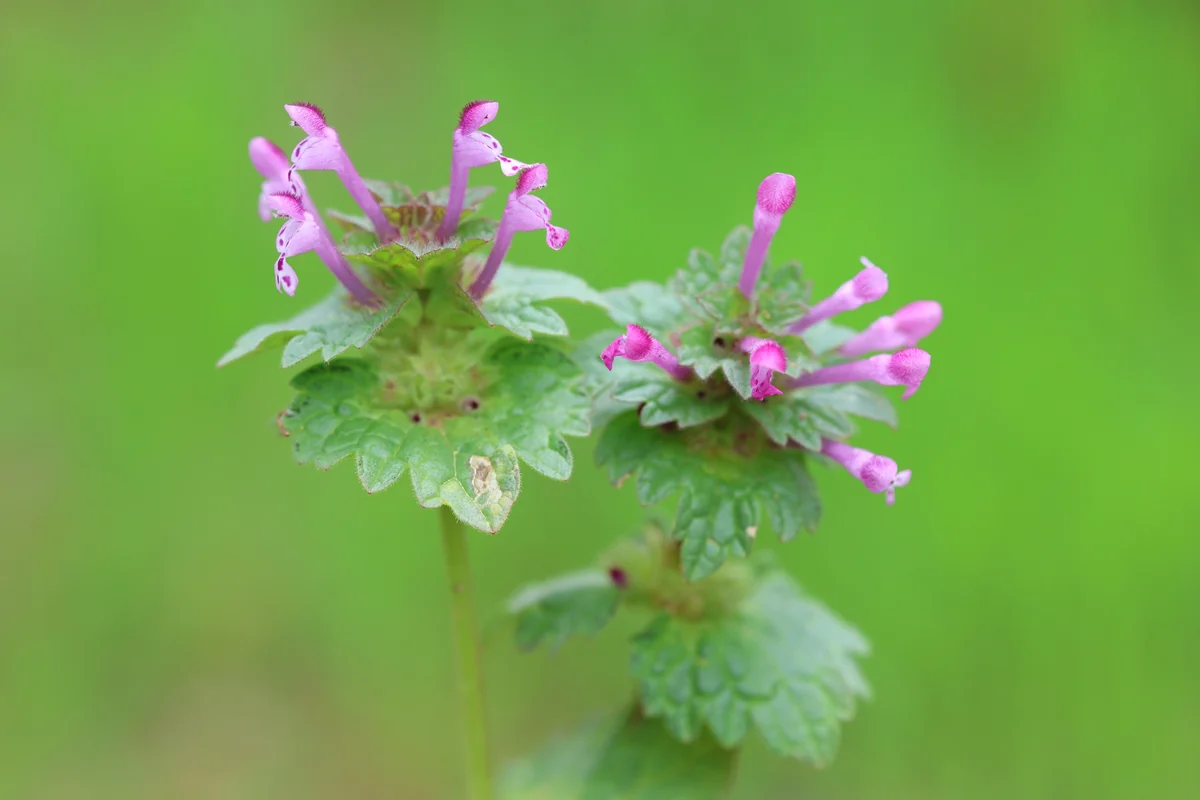
When you'll see it: March through May. Henbit germinates in fall, overwinters, then explodes into bloom in early spring before most lawns even green up.
What it looks like: Square stems (it's a member of the mint family). Rounded, scalloped leaves stacked in pairs. Small purple-pink tubular flowers clustered at the top of each stem. Often forms purple "carpets" in lawns and bare areas in April.
Why it shows up: Henbit fills bare patches that opened up during fall and winter. Lawns that went into winter thin or stressed are prime henbit targets in spring. It's especially common after a wet fall.
How we handle it: Fall-applied pre-emergent prevents germination. Post-emergent broadleaf herbicide in spring controls existing plants quickly. The best long-term defense is a thick, healthy turf going into fall so there's nowhere for henbit to germinate.
7. Chickweed Full guide coming this fall
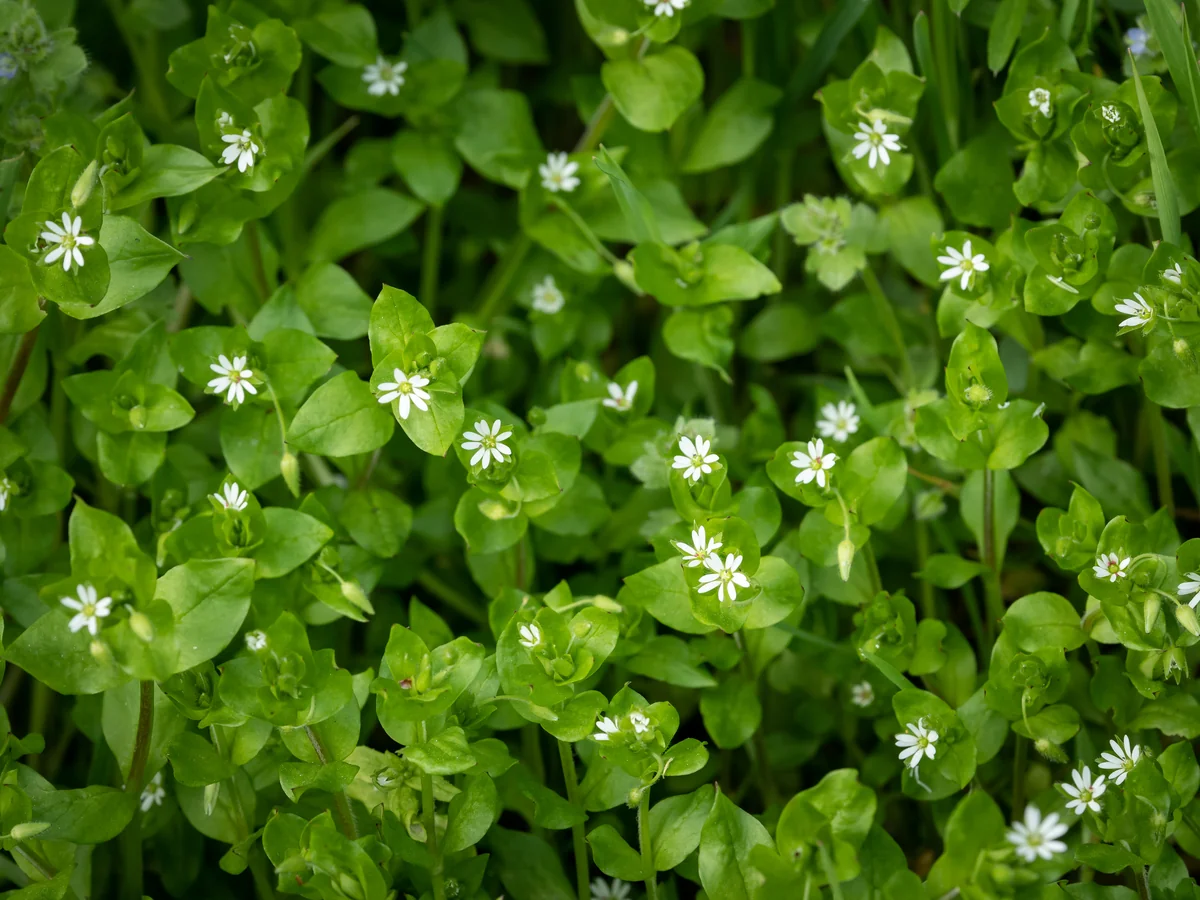
When you'll see it: Cool seasons, especially March through May and again in September-October. Common chickweed prefers cool, moist conditions.
What it looks like: Low-growing, sprawling mat of small oval leaves arranged opposite each other on weak stems. Tiny white star-shaped flowers with five deeply-cleft petals (so they look like 10 petals). Easy to pull out by hand because the roots are shallow.
Why it shows up: Chickweed loves cool, moist soil and shaded areas. Common in lawns that are over-watered or in spots that hold moisture from spring snowmelt. Often appears alongside henbit in early-spring "weed carpets."
How we handle it: Pre-emergent applied in fall controls germination. Post-emergent broadleaf herbicides knock out established plants. Cultural fixes (mow taller, water less frequently but deeper, address drainage) make chickweed less likely to return.
8. Black Medic Read the full guide
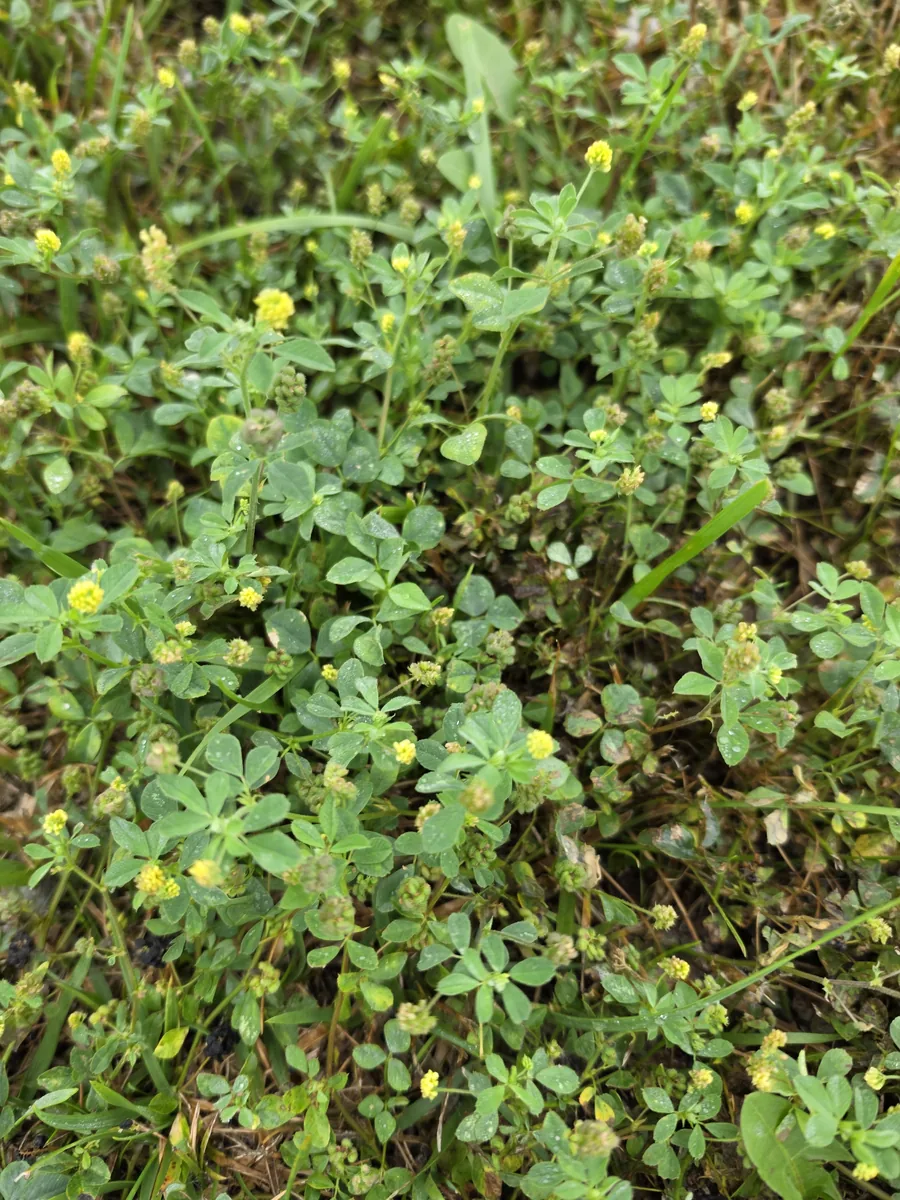
When you'll see it: May through October. Most visible during summer drought when other lawn growth slows.
What it looks like: Often confused with clover. Three small oval leaves like clover, but the middle leaflet sits on a longer stalk than the side two (in clover, all three are equal). Small bright yellow flower clusters. Dark, kidney-shaped seed pods (the "black" in black medic).
Why it shows up: Like clover, black medic is a legume that fixes its own nitrogen, so it thrives where the lawn is starved for nitrogen. It also handles drought and compacted soil better than turf grass. Black medic showing up is your lawn telling you it's hungry.
How we handle it: Broadleaf herbicide kills it but the underlying issue is fertility. Lawns on a regular fertilization program rarely have black medic problems. We treat the symptom and fix the cause at the same time.
9. Prostrate Spurge Read the full guide
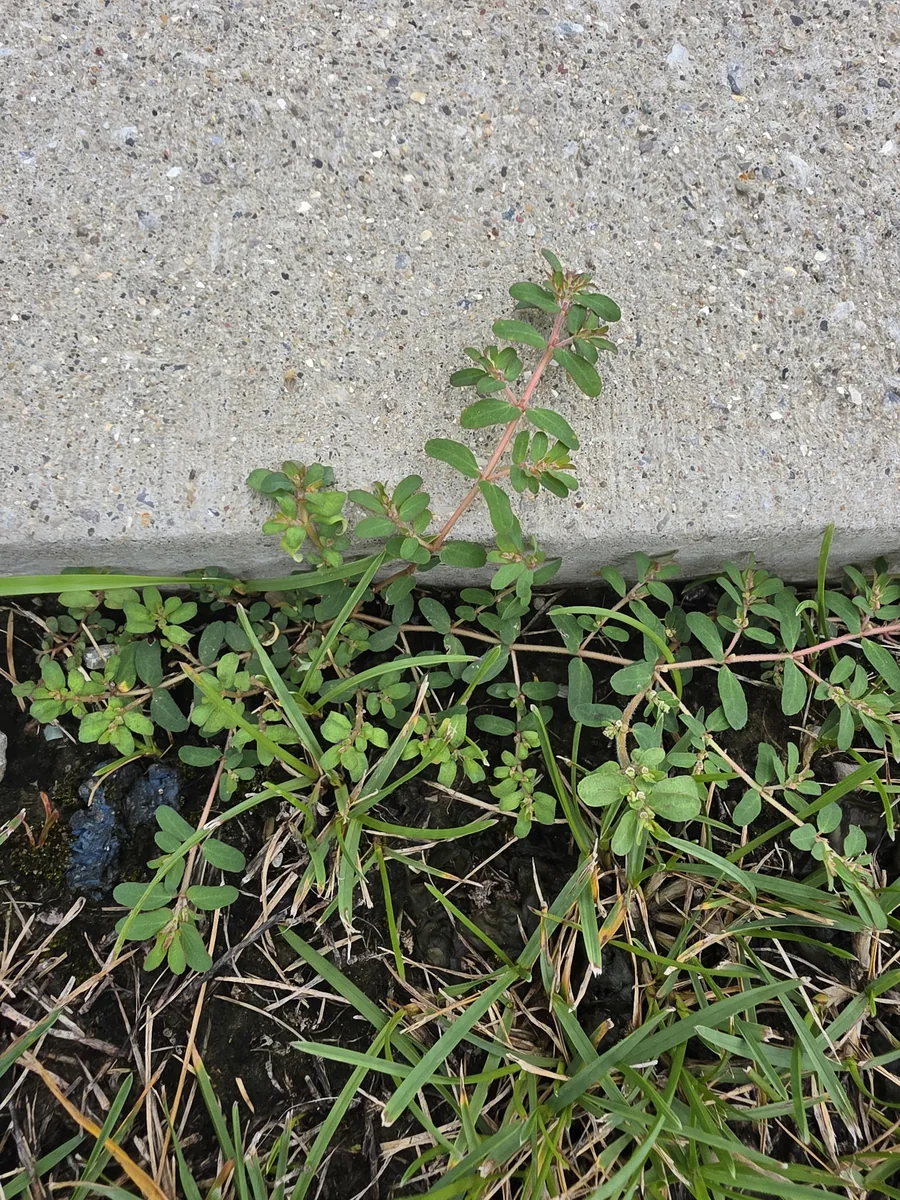
When you'll see it: July through September. A true heat-lover that germinates when soil temperatures climb into the 70s and 80s.
What it looks like: Hugs the ground in a flat circular mat that radiates out from a central taproot. Small oval leaves, often with a maroon spot in the center. Stems and leaves ooze a milky-white sap when broken (skin-irritating, wear gloves). Tiny pinkish flowers.
Why it shows up: Spurge loves bare, hot, compacted ground. It's the weed that takes over driveway cracks, sidewalk edges, and any thin spot in the lawn during peak summer. Newly-installed sod and aerated lawns are vulnerable until turf fills back in.
How we handle it: Pre-emergent applied in late spring catches it before germination. Post-emergent broadleaf herbicides work on young plants but established spurge is harder to kill. Hand-pulling works for small infestations (with gloves). Thicker turf prevents most of it.
How Sprout Handles Weeds in Hamilton County
Most of these weeds are addressed proactively in our standard fertilization & weed control program. Two rounds of pre-emergent in spring catch crabgrass, henbit, chickweed, and prostrate spurge before they germinate. Spot post-emergent treatments handle dandelions, clover, and other broadleaf weeds during the season.
The weeds that need specialty treatment, like wild violets and yellow nutsedge, get targeted product applied at the right time of year. We don't blanket-spray every weed with the same product, because they don't all respond to the same chemistry.
The bigger picture: weeds are usually a symptom of an underlying lawn condition. Compacted soil, low fertility, mowing too short, drainage issues, shade. We treat the visible weeds and address the underlying issues at the same time. That's the difference between a lawn that needs constant weed treatment and one that gradually needs less.
If you've been fighting any of these weeds and losing, give us a call at (317) 900-7151 or get instant pricing. We service Noblesville, Carmel, Westfield, Fishers, McCordsville, Cicero, Geist, and the rest of Hamilton County.