July 27, 2026 · Weed Control · By Mike Harmon, Owner & Licensed Applicator
Crabgrass is the weed our phone rings about most in July. It shows up as coarse, light green clumps sprawling through the lawn, worst along driveways and sidewalks, and it seems to appear overnight even though it has actually been growing since April.
Here is how to recognize it, why it took hold, and the honest answer about what you can and cannot do about it this late in the season.
How to Identify Crabgrass
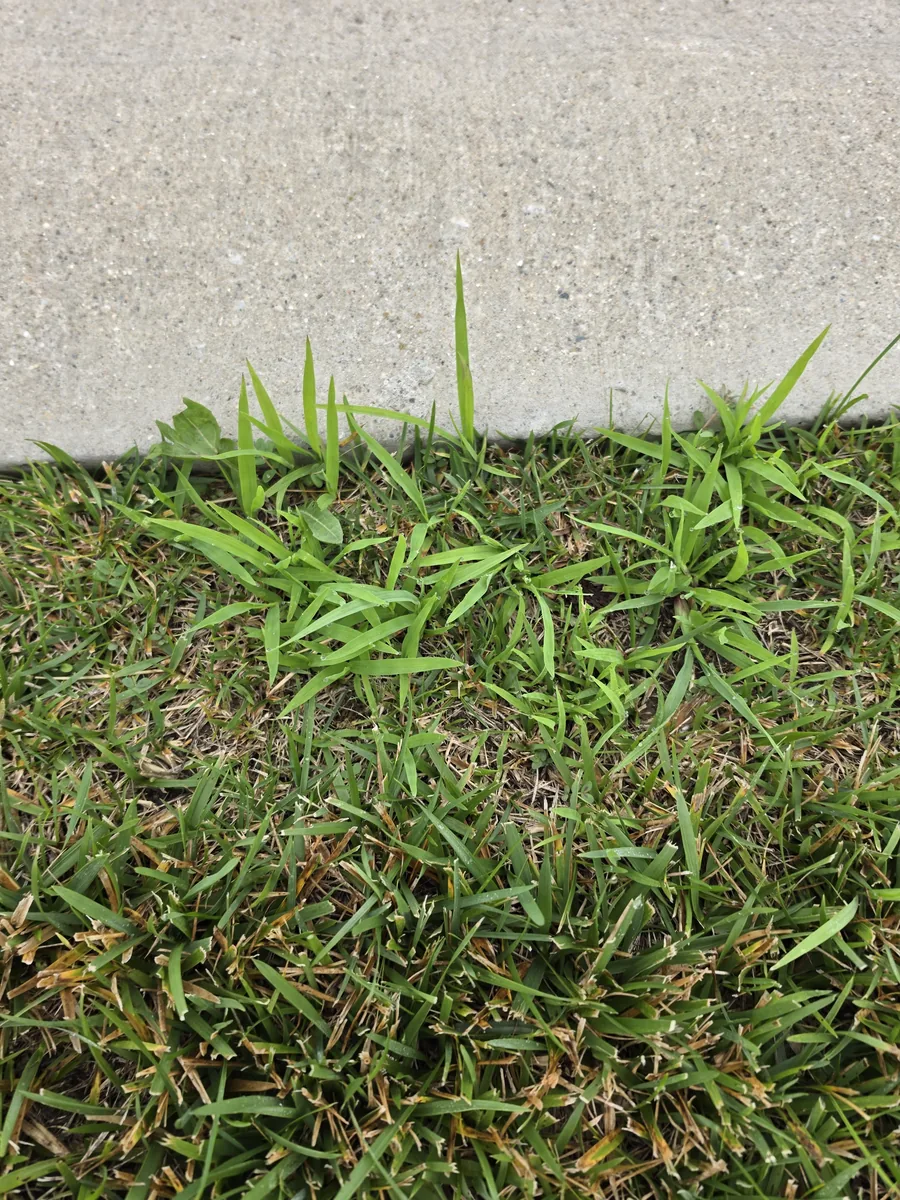
Crabgrass (Digitaria sanguinalis) grows low and flat, spreading outward from a single crown at ground level. The blades radiate in every direction like a star, which is where the name comes from. They are noticeably wider and lighter green than Kentucky bluegrass or fescue, and instead of standing upright they lay over across the turf around them.
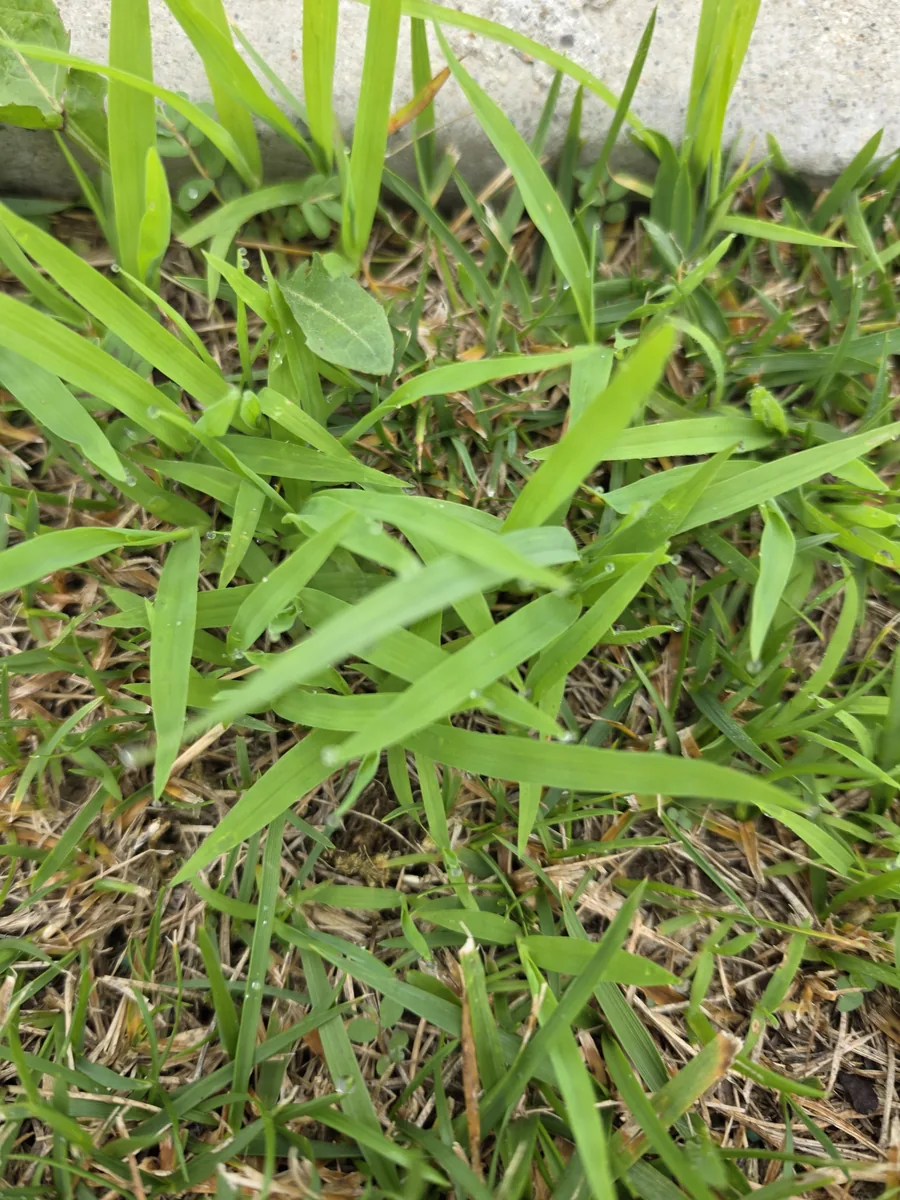
The place to look first is the edge of your driveway, sidewalk, or curb. Concrete absorbs heat and warms the soil next to it faster than the middle of the lawn, so that strip is where crabgrass germinates first and grows thickest. If you have crabgrass anywhere, you almost certainly have it along the pavement.
Later in summer it sends up seed stalks topped with several finger-like spikes spreading from one point. Once you see those, the plant is producing the seed that becomes next year's problem.
Why Crabgrass Showed Up in Your Lawn
Crabgrass is a summer annual. It germinates from seed every spring once soil temperatures hold around 55 degrees at a two to three inch depth, which in Hamilton County usually lands in mid April. It needs two things to get started: sunlight reaching the soil, and space to grow.
That is why it concentrates in thin turf, along hot pavement edges, in compacted strips where people walk, and anywhere the lawn was scalped short. A dense lawn mowed tall shades the soil surface, and crabgrass seed sitting in the dark mostly does not germinate. Mowing height matters more than most homeowners realize for exactly this reason.
The Honest Truth About Killing Crabgrass in July
This is where we tell customers something they do not always want to hear. Crabgrass is much harder to kill once it is mature, and by late July it is mature.
Post-emergent products designed for crabgrass work well on young plants with only a few blades. On a full grown clump in the middle of summer, control is inconsistent, it often takes repeat applications, and the dead clump leaves a bare patch behind that has to be filled in later anyway. Purdue's turfgrass guidance on crabgrass control is direct about the same point: prevention is where the real control happens.
So we will treat it when a customer wants it treated, and we set the expectation honestly. What we would rather do is make sure it does not come back.
What Actually Works: Pre-Emergent, Applied Early
Pre-emergent is a barrier that stops crabgrass seed from successfully germinating. It has to be down before the soil warms up, because once the seed sprouts, the window has closed.
We apply it in two rounds across Hamilton County: the first in late March or early April, the second in late April or early May. Two rounds give substantially better season-long control than one, because a single application can break down before the germination window fully closes. We wrote up the research behind that approach here: why we apply pre-emergent twice.
The lawns we treat on that schedule are the ones with clean pavement edges in July while the neighbors have a strip of crabgrass down the whole driveway.
What To Do Right Now
If you are looking at crabgrass today, here is the realistic plan for the rest of this season:
- Keep mowing tall. We mow around four inches. Taller turf shades the soil and slows further crabgrass development, and it will not spread the existing plants.
- Do not scalp it short to make it less visible. That exposes more soil and makes next spring worse.
- Hand pull isolated clumps before the seed heads mature, if you only have a few.
- Plan fall aeration and overseeding. Crabgrass dies at the first hard frost and leaves gaps. Filling those gaps with new turf in September is how you take the space back. See our aeration and overseeding service.
- Get on the pre-emergent schedule for spring. This is the one that actually solves it.
The Long Game
Crabgrass is an opportunist. It does not out-compete healthy turf, it moves into the openings that healthy turf is not filling. Every year that the lawn gets thicker, there is less room for it.
That means the pre-emergent is only half the program. The other half is a lawn fed well enough to grow dense, mowed tall enough to shade the ground, and overseeded in fall to close the thin spots. Our fertilization and weed control program covers the applications, and fall aeration and overseeding handles the density.
FAQ
What does crabgrass look like?
Crabgrass grows in low, flattened clumps that spread outward from a central crown, a bit like a star or a spider. The blades are wider and a lighter green than the surrounding turf, and they lay over rather than standing up. By late summer it puts up seed heads with several finger-like spikes at the tip of a stem.
Can you kill crabgrass in July?
Partly. Post-emergent products work best on young crabgrass with only a few blades. By July the plants are mature and much harder to kill, and results are inconsistent. It can be suppressed, but the real control for crabgrass is pre-emergent applied the following spring before it germinates.
Will crabgrass come back next year?
The plants you have now die with the first hard frost, but each one drops thousands of seeds into your soil first. Those seeds germinate the following spring. That is why crabgrass returns every year unless pre-emergent is applied to stop germination.
Should I pull crabgrass out by hand?
For a few isolated clumps, yes. Pull before the seed heads form so you are not scattering seed. Just know that pulling leaves a bare spot, and bare soil is exactly where the next crabgrass seed germinates, so fill the gap with seed in fall.
Get Ahead of It
If this weed is spreading through your lawn in Noblesville, Carmel, Westfield, Fishers, or anywhere in Hamilton County, we can take care of it and fix the conditions that let it in. Call us at (317) 900-7151 or get instant pricing online.
For the full rundown of the weeds we see most often around here, see our Hamilton County weed identification guide.