July 27, 2026 · Weed Control · By Mike Harmon, Owner & Licensed Applicator
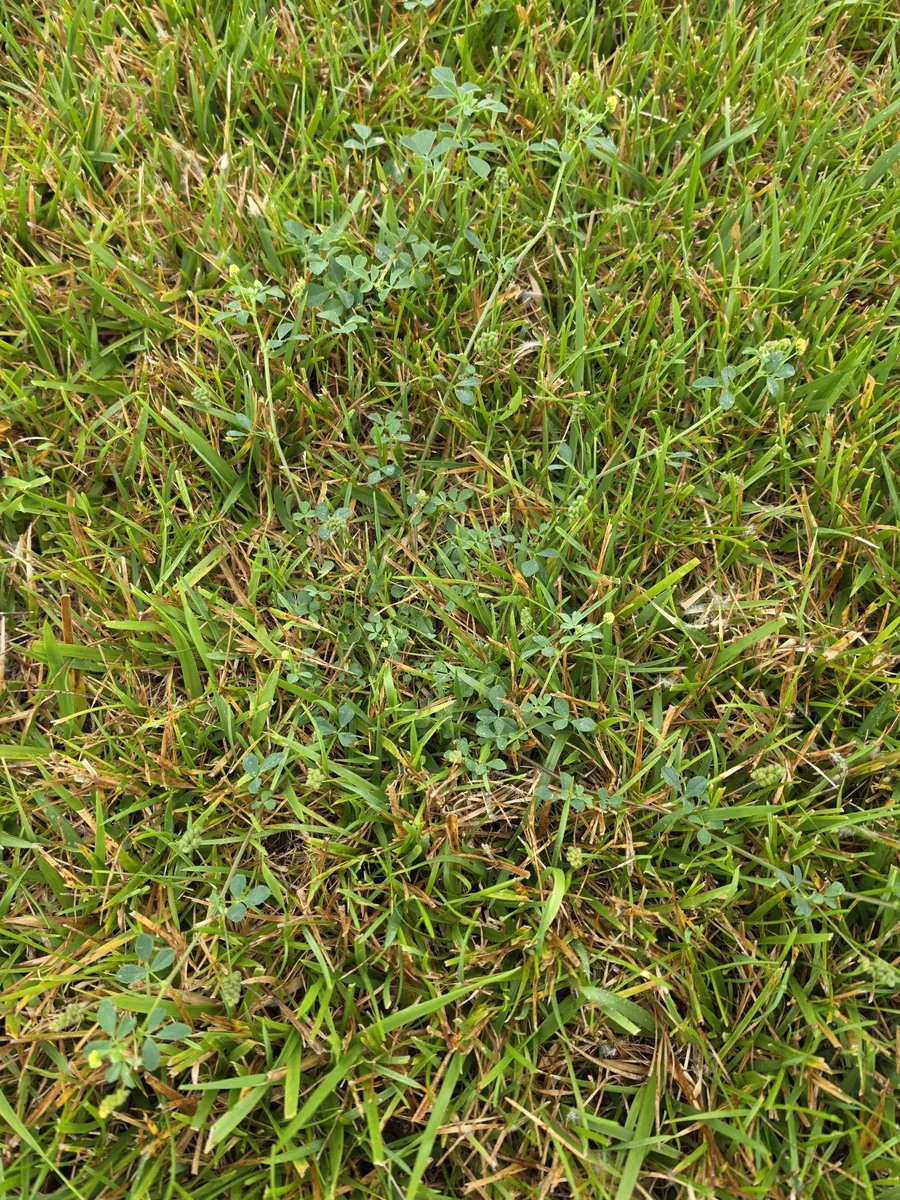
If you have small yellow flowers scattered through thin patches of your lawn and the leaves look sort of like clover, you are almost certainly looking at black medic. It shows up in July and August in Hamilton County, it spreads fast across dry compacted ground, and it is telling you something specific about your soil.
How to Identify Black Medic
Black medic (Medicago lupulina) has three leaflets per leaf, which is what makes people call it clover. The detail that separates the two is worth learning: on black medic, the middle leaflet sits on its own short stalk while the two side leaflets attach directly to the stem. On white clover, all three attach at the same point.
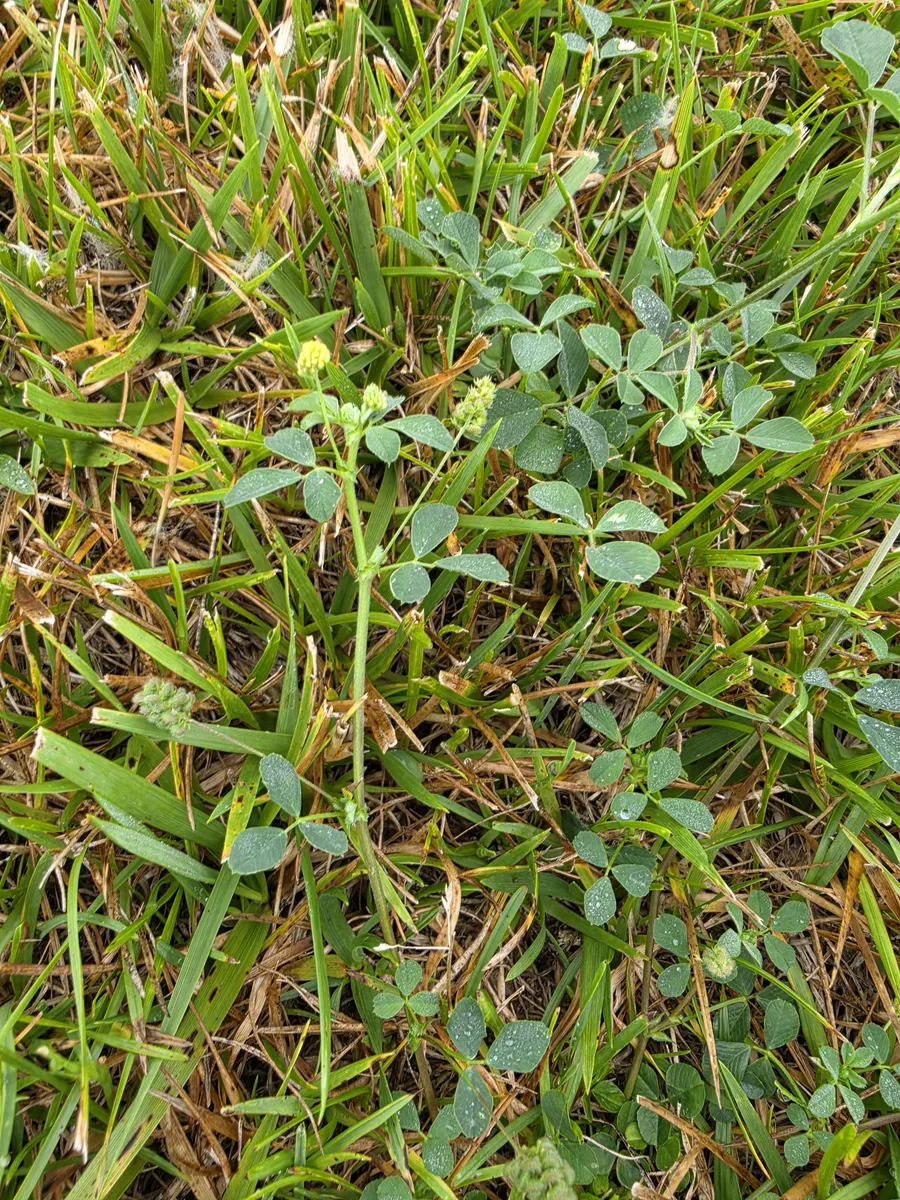
The flowers settle it completely. Black medic produces tight round clusters of tiny bright yellow flowers, roughly pea sized, sitting just above the foliage. White clover flowers are round and white. Nothing else common in a Hamilton County lawn looks quite like a dense mat of little yellow pom-poms.
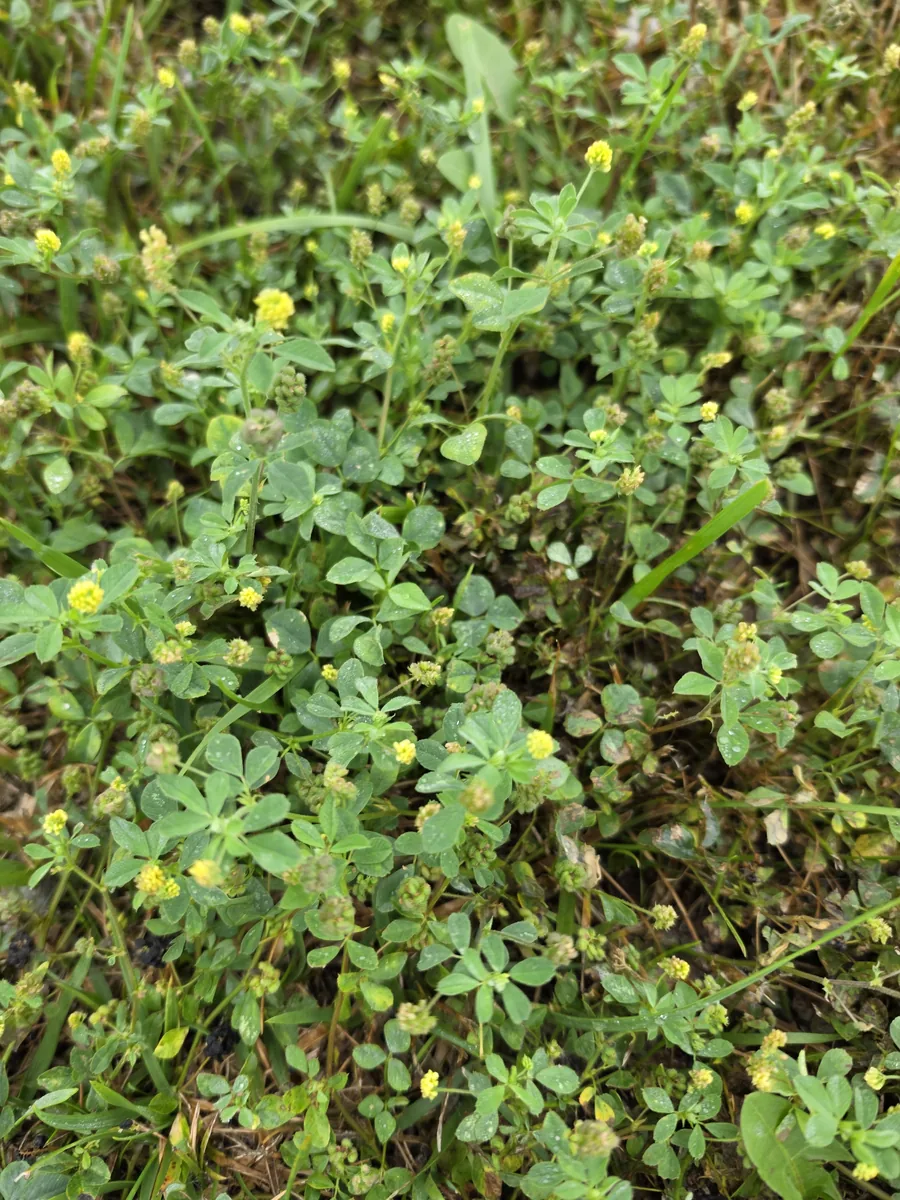
The plant grows in wiry, sprawling stems that run along the ground rather than standing upright, and it holds on through heat that has the surrounding turf going pale. Later in the season the spent flowers turn into small tightly coiled seed pods that darken to black as they mature, which is where the name comes from.
Why You Have Black Medic
Black medic is a legume, the same family as clover, peas, and beans. Legumes pull nitrogen out of the air and convert it into a form the plant can use. That single fact explains everything about where it grows.
Your grass needs nitrogen from the soil. Black medic does not. So in a lawn that is underfed, the turf thins out while the black medic keeps right on going, and it takes over the gaps. Add in that it tolerates compacted soil and summer drought better than cool season turf, and a hot dry July in a hungry lawn is close to ideal conditions for it.
Black medic showing up in numbers is a fertility problem announcing itself. That is genuinely useful information, because it tells you the fix.
What Gets Rid of Black Medic
A selective broadleaf herbicide kills black medic while leaving the grass alone. It responds reasonably well compared to some of the tougher lawn weeds, though a heavy established mat can need more than one application. Purdue's guide to broadleaf weed control in home lawns covers product selection and timing in detail.
We treat black medic as part of our standard fertilization and weed control program, in the same visit that handles dandelions, clover, plantain, and the rest of the broadleaf weeds. It is not a separate service you need to think about.
Hand pulling works on a few plants if you get the taproot, but it is not realistic once the mat is spreading, and every bare spot you open up is somewhere new for seed to land.
The Real Fix: Feed the Lawn
Killing the black medic you have is the easy half. The reason it moved in was that your lawn was not dense enough or well fed enough to hold the ground, and unless that changes, it comes right back.
Three things close the door on it. A consistent fertilization program removes the nitrogen advantage that let black medic outcompete the grass in the first place. Proper mowing height, around four inches, keeps the turf canopy thick and shades the soil. And fall aeration and overseeding relieves the compaction it loves and fills the thin areas with new grass.
Do those, and black medic stops finding room.
FAQ
What is the weed with small yellow flowers that looks like clover?
That is almost always black medic. It has three leaflets like clover, but the middle leaflet sits on a short stalk of its own while the two side leaflets attach directly. The flowers are small, bright yellow, and packed into tight round clusters about the size of a pea.
Is black medic the same as clover?
No. They are both legumes and they look similar at a glance, but white clover has round white flower heads and all three leaflets attach at the same point. Black medic has yellow flowers and a stalked middle leaflet. Black medic also tends to sprawl in wiry runners across thin, dry ground.
Why do I have black medic in my lawn?
Black medic makes its own nitrogen, so it thrives in soil that is too low in nitrogen for grass to compete. It also handles compaction and summer drought better than turf. Heavy black medic almost always means the lawn is underfed, compacted, or both.
How do you get rid of black medic?
A selective broadleaf herbicide controls it without harming the grass, and it is included in a standard weed control program. The lasting fix is feeding the lawn so the turf grows dense enough to crowd it out, since black medic loses its nitrogen advantage once the soil is properly fertilized.
Get Ahead of It
If this weed is spreading through your lawn in Noblesville, Carmel, Westfield, Fishers, or anywhere in Hamilton County, we can take care of it and fix the conditions that let it in. Call us at (317) 900-7151 or get instant pricing online.
For the full rundown of the weeds we see most often around here, see our Hamilton County weed identification guide.