October 25, 2026 · Annual Flowers · By Mike Harmon, Owner & Licensed Applicator
The best annual flowers to plant in the fall in Indiana are pansies and violas, garden mums, and ornamental kale and cabbage. Snapdragons, sweet alyssum, dianthus, and dusty miller also handle cool weather well. Plant them from mid-September through mid-October. In Indianapolis, the average first frost comes around October 26 and the first hard freeze around November 5, so earlier planting gives roots more time to settle in before the cold arrives.
Want fall color without the work?
We plant fall annuals in beds and containers across Hamilton County and pull them out when the season ends.
When to Plant Fall Annuals in Indiana
The National Weather Service tracks average first frost and freeze dates for central Indiana (1991 to 2020 normals). Noblesville and the rest of Hamilton County usually fall between these two stations:
| Average first fall date | Indianapolis | Anderson |
|---|---|---|
| 36°F (frost possible) | October 17 | October 6 |
| 32°F (freeze) | October 26 | October 18 |
| 28°F (hard freeze) | November 5 | October 31 |
The plants in this guide all handle frost, so they keep going after summer annuals like petunias and begonias are finished. Mid-September through mid-October is the best window. Pansies and ornamental kale planted later than that still give you several weeks of color, but mums planted late should be treated as annuals for the year.
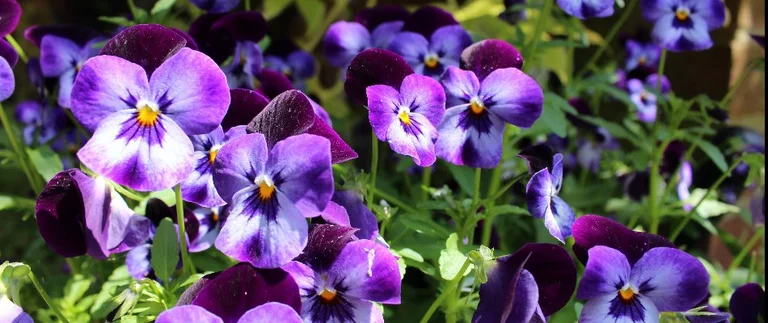
Pansies and Violas
Pansies are the most reliable fall flower for Indiana. Iowa State Extension says they tolerate light freezes very well and that pansies planted in early September give color until it snows. Purdue Extension notes that pansies planted in fall also bloom again in early spring, so one planting covers two seasons.
Expect blooms off and on until around Christmas, then again from late February into spring once the weather warms. If the winter has little snow cover, a two-inch layer of straw over the plants helps them through the coldest weeks. Violas have smaller flowers than pansies, but they often hold up better during the coldest stretches of winter.
Garden Mums
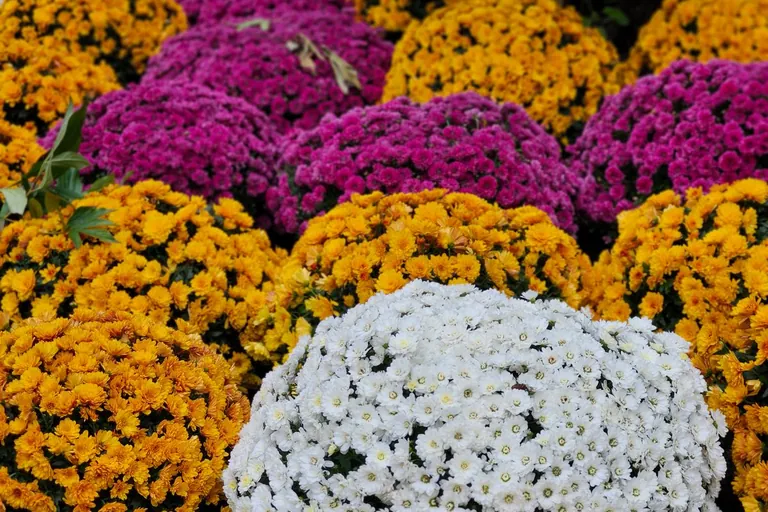
Mums are the classic fall flower, but there are two kinds. Garden mums, also called hardy mums, are bred to grow outdoors. Florist mums are bred for pots and gift displays. Purdue notes that florist types, and even some garden types, are not dependably hardy in Indiana, so check the tag before you buy.
Most mums bought in fall are best treated as annuals. If you want to try to keep yours for next year, plant them in the ground as soon as you get them and keep them watered. University of Illinois Extension says drought-stressed mums are less likely to survive the winter than well-watered ones. Don't cut them back after they go dormant, because the old stems help protect the crown. Once the ground starts to freeze, cover them with about 4 inches of mulch, then cut the dead stems off in spring before new growth starts.
Ornamental Kale and Cabbage
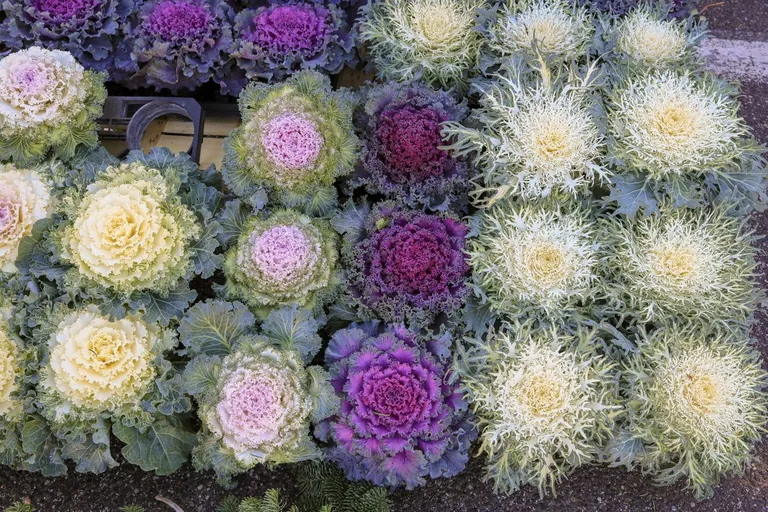
Ornamental kale and cabbage get better as the weather gets colder. Their centers turn pink, purple, or white once nights drop into the 50s. North Dakota State University Extension says the vivid colors show up below 50°F. University of Illinois Extension says they keep thriving down to about 20°F, and some varieties stay hardy into the single digits.
That cold tolerance means kale and cabbage are often still looking good in December, long after the mums have turned brown. Cabbage has smooth, rounded leaves. Kale has ruffled or fringed leaves. They look good together, and both work in beds and containers.
Other Cool-Season Plants for Fall
Iowa State Extension says many cool-season annuals survive down to 28°F, and sometimes 25°F, with little damage to the flowers or leaves. Good choices for fall in Indiana include:
- Snapdragons for height and color at the back of a bed or the center of a pot
- Sweet alyssum for a low, white or purple edge
- Dianthus for small pink, red, and white flowers
- Dusty miller for silver leaves that make other colors stand out
- Swiss chard for bright red and yellow stems in containers
- Heuchera (coral bells) for leaf color in purple, lime, and bronze
How to Put Together a Fall Bed or Porch Display
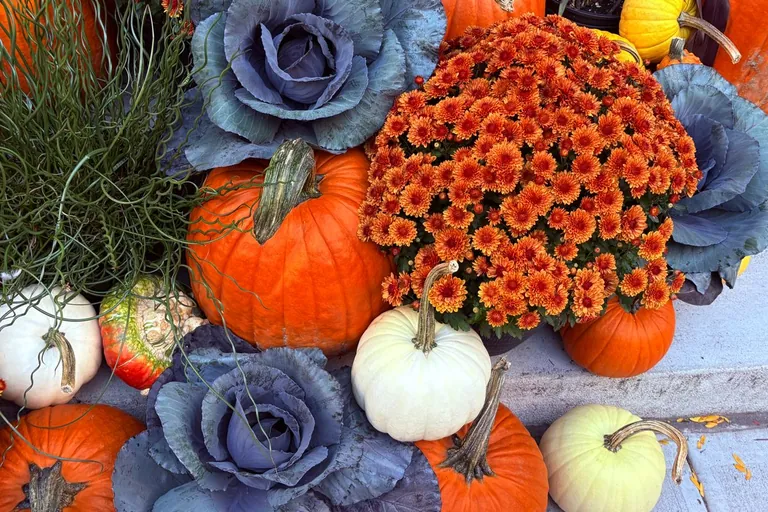
Put the tallest plants in the back and the shortest along the front. In a bed, that usually means mums or snapdragons in the back, ornamental kale and cabbage in the middle, and pansies, violas, or alyssum along the edge. In containers, use the same idea from the center out: one tall plant in the middle, mid-size plants around it, and trailing or low plants at the rim.
Pumpkins, gourds, and straw bales fill the gaps on a porch or front step and last well into November. When the mums fade, pull them and leave the kale and pansies in place, and the display keeps going.
How to Care for Fall Annuals
- Water: Purdue recommends one deep watering of about 1 inch a week. Keep watering through dry spells in fall, especially new plantings and mums.
- Mulch: A layer of mulch holds moisture in the soil and keeps weeds down.
- Deadheading: Pinch off faded flowers every 5 to 7 days. Purdue lists pansies as one of the plants that respond especially well, and they'll keep blooming longer.
Plant Spring Bulbs at the Same Time
Fall is also when spring bulbs go in. Purdue says to plant bulbs from late September through mid-October in most of Indiana, though they keep growing roots as long as the soil stays above 40°F. Plant each bulb about two to three times as deep as the bulb is tall. Tulips and daffodils planted under your pansies come up through them in spring, so the same bed blooms twice.
Fall Annual Flowers FAQ
What are good annual flowers to plant in the fall in Indiana?
Pansies and violas, garden mums, and ornamental kale and cabbage are the most reliable. Snapdragons, sweet alyssum, dianthus, dusty miller, and Swiss chard also handle cool weather and light frost.
When should I plant fall flowers in Indiana?
Mid-September through mid-October is the best window. In Indianapolis the average first frost is around October 26 and the first hard freeze is around November 5, so earlier planting gives roots more time to settle in.
Is it too late to plant fall annuals in late October?
Not for pansies, violas, and ornamental kale and cabbage. They tolerate frost and will still give you several weeks of color. Mums planted this late are best treated as annuals for the year.
Do mums come back every year in Indiana?
Garden mums can, but many don't. Florist mums usually don't survive an Indiana winter. To give garden mums the best chance, plant them early, keep them watered, leave the stems standing over winter, and mulch them once the ground starts to freeze.
Will pansies survive the winter in Indiana?
Often, yes. Pansies tolerate light freezes well and usually bloom again in early spring. A two-inch layer of straw helps in winters without much snow cover.
When does ornamental kale change color?
The color comes in once nights get cool, generally in the 50s or below. The colder it gets, the brighter the centers turn.
Sprout Lawn & Landscape plants spring and fall annual flowers and handles landscaping and fall cleanups in Noblesville, Carmel, Westfield, Fishers, and surrounding Hamilton County communities. For spring ideas, see the most popular spring annual flowers in Noblesville. Request a quote or call (317) 900-7151.