January 18, 2026 · Aeration & Seeding
Homeowners use the terms interchangeably all the time. "My lawn needs dethatched" when they really mean aerated. "I need aeration" when they actually have a thatch problem. They're two different services that solve two different problems, and getting them mixed up means you might pay for something your lawn doesn't need while ignoring something it does.
Here's the breakdown.
What Thatch Actually Is
Thatch is a layer of dead and living organic material, mostly stems, roots, and runners, that builds up between the grass blades and the soil surface. A thin layer of thatch, about half an inch, is actually beneficial. It insulates the soil, retains some moisture, and cushions foot traffic. The problem starts when thatch gets thicker than three-quarters of an inch.
Thick thatch acts like a sponge sitting on top of the soil. Water hits the thatch layer and stays there instead of reaching the roots. Fertilizer gets trapped in the thatch instead of feeding the grass. Disease organisms thrive in the warm, moist thatch layer. And new grass seed dropped on top of thick thatch never makes contact with soil, so it doesn't germinate.
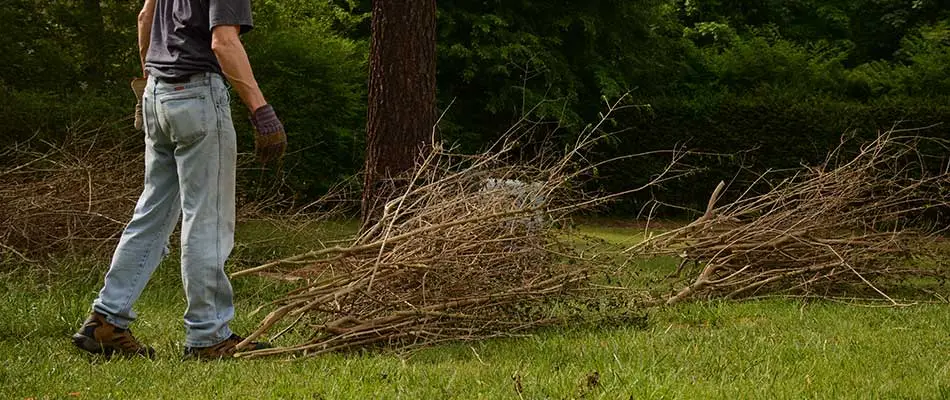
Dethatching physically removes that excess layer using a power rake or vertical mower with blades that slice into the thatch and pull it to the surface. It's aggressive work, and it leaves a mess of debris that needs to be cleaned up afterward. The lawn looks rough for a couple of weeks, but the results are worth it when thatch was genuinely the problem.
What Aeration Does
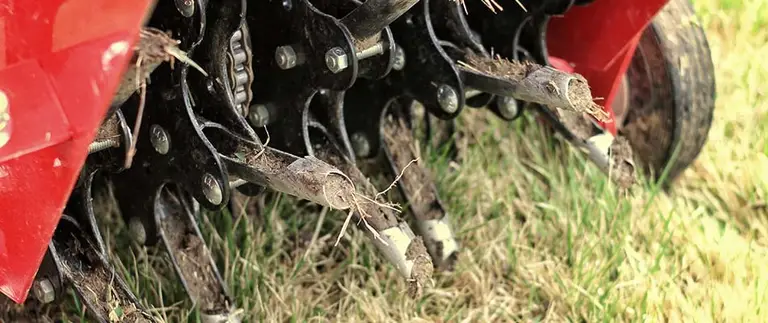
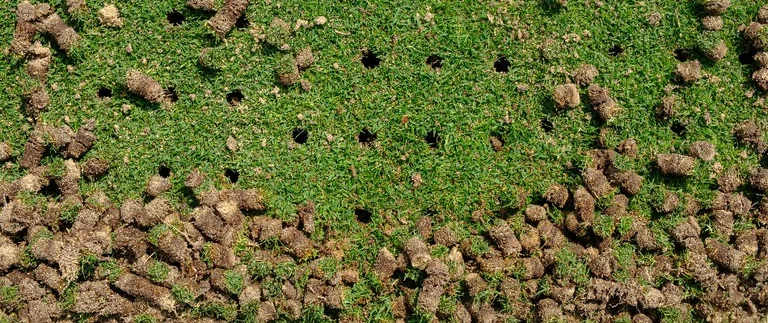
Aeration is about the soil, not the surface. A core aerator pulls small plugs of soil out of the ground, typically 2 to 3 inches deep, and deposits them on the lawn. Those holes relieve compaction, allow water and air to reach the root zone, and create space for roots to expand.
For the heavy clay soil across Noblesville, Carmel, Westfield, and the rest of Hamilton County, aeration is one of the most important things you can do for your lawn. Clay compacts easily, especially in high-traffic areas and along mower paths. Compacted clay blocks water infiltration, suffocates roots, and creates shallow root systems that can't survive summer heat. Annual aeration keeps the soil open and gives your grass a fighting chance against Indiana's tough growing conditions.
Aeration also breaks down thatch naturally. Those soil plugs deposited on the surface contain microorganisms that decompose thatch over time. So while aeration doesn't remove thatch mechanically, it helps manage it biologically.
So Which Does Your Lawn Need?
You need aeration if: your soil is compacted (test this by pushing a screwdriver into the ground, and if it's difficult the soil is compacted), water pools on the surface after rain, the lawn thins out every summer despite fertilization, or it's been more than a year since your last aeration. Most Indiana lawns benefit from annual aeration in the fall.
You need dethatching if: the thatch layer is thicker than three-quarters of an inch (pull back the grass and measure the brown, spongy layer between the green blades and the soil), the lawn feels bouncy when you walk on it, water runs off instead of soaking in, or you can't push a finger through to the soil easily. Dethatching is typically only needed every few years, not annually.
Most lawns need aeration, not dethatching. We see far more compaction problems than thatch problems across Hamilton County. The clay soil is the main culprit, and core aeration paired with overseeding in the fall is the single best investment you can make in your lawn's long-term health.
Not sure which one your property needs? Call (317) 900-7151 or request an estimate and we'll take a look.