Updated October 4, 2026 · Paver Patios · By Mike Harmon, Owner & Licensed Applicator
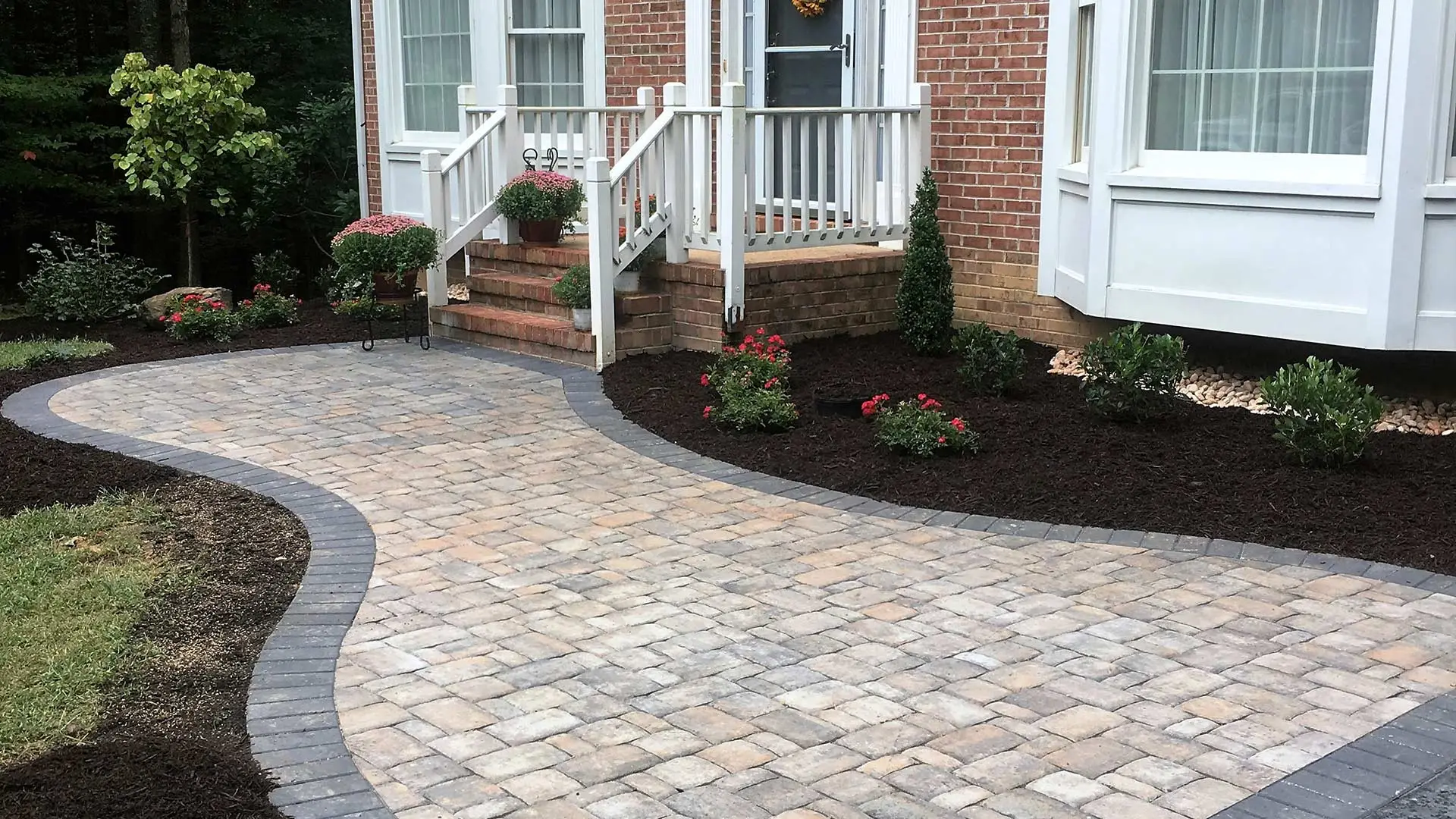
If you're adding a patio in Noblesville, Carmel, Westfield, or Fishers, you're probably choosing between poured concrete and pavers. For most Hamilton County yards we recommend pavers. Here's why, what a paver patio costs, and the one part of the job that decides whether it lasts.
Planning a patio for next spring?
Paver installs run May through October here. Winter is a good time to plan the design and get on the schedule.
Pavers Handle Indiana Winters Better
Central Indiana goes through a lot of freeze and thaw every winter. Water gets into cracks and under slabs, freezes, expands, and thaws again. A poured concrete patio is one rigid slab. When the ground under it moves, it cracks, and once a crack opens, water gets in and makes it worse each winter.
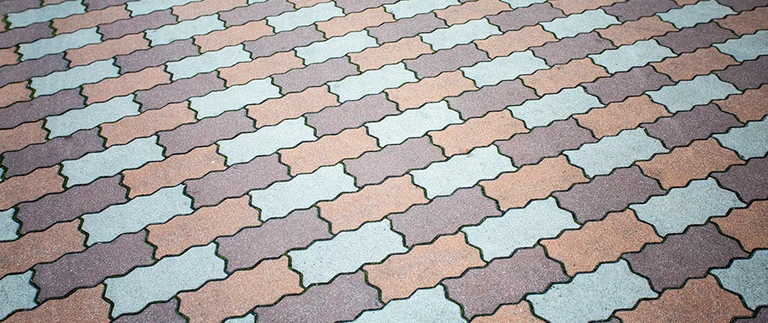
Pavers work differently. The Interlocking Concrete Pavement Institute's application guide describes them as a flexible pavement: individual units on a compacted base and a layer of bedding sand, with sand swept into the joints so the pavers interlock and spread the load. When the ground shifts a little, the joints take the movement instead of the surface cracking.
Strong Units, Easy Repairs
Concrete pavers sold in the U.S. are typically made to the ASTM C936 standard, which requires an average compressive strength of at least 8,000 psi. The units themselves are rarely the weak point.
When one does get damaged, you pull that paver and set a new one. The same goes for getting to a pipe or a cable underneath: lift the pavers, do the work, and put them back. With a concrete slab, a crack stays a crack, and a repair means cutting out a section and pouring a patch that won't match.
The Base Matters More Than the Pavers
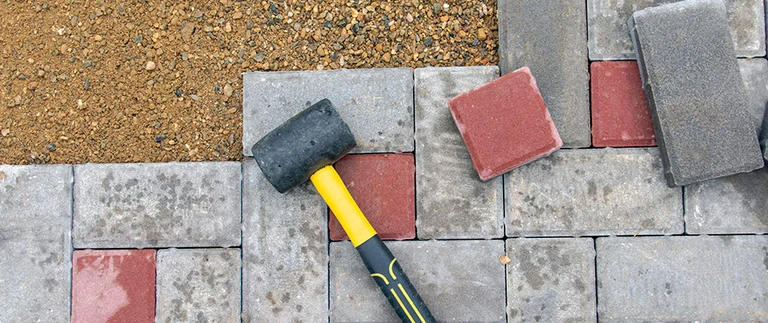
Most paver patios that fail do it because of what's underneath. The ICPI guide sets a minimum compacted aggregate base of 4 to 6 inches for walks and patios and 6 to 8 inches for driveways. It also says the base may need to be thicker depending on the soil, drainage, and freezing temperatures. Hamilton County's heavy clay drains slowly, and our winters freeze hard.
Here's how we build it:
- Excavate and compact the soil. The ground underneath has to be firm before anything goes on it.
- Compacted gravel base, typically 6 to 8 inches in our clay. It goes in and gets compacted in layers, not dumped in one pass.
- About an inch of bedding sand screeded smooth, which matches the ICPI guide.
- Pavers set, then compacted. Joint sand goes in so the pavers lock together.
- Slope for drainage so water runs away from the house instead of pooling.
Skip a step and the patio settles, shifts, or holds water within a couple of years.
Design Options
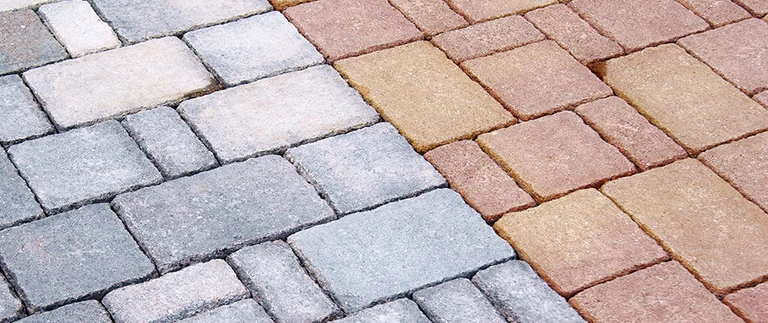
A concrete slab is gray unless you stamp or stain it, and stamped finishes need resealing to keep their look. Pavers come in a wide range of colors, textures, and shapes. Common patterns include herringbone, running bond, and circular designs, and you can add a contrasting border or curves to match the house. New plantings and fresh mulch around the edges give it a finished look.
What It Costs and What It Takes
Cost. Paver patios in Noblesville and Hamilton County typically start around $20 per square foot, depending on the paver style, the pattern, and the site. A standard 300 square foot patio usually starts around $6,000. Concrete costs less upfront, but it doesn't flex, and repairs never match.
Upkeep. Pavers are low maintenance, not zero maintenance. Plan on topping up the joint sand every 2 to 3 years as rain and freeze-thaw wash it out. Keeping the joints full also helps keep weeds out. Our post on keeping weeds out of your paver patio covers that.
Paver Patio FAQ
Are pavers better than poured concrete in Indiana?
For most patios, yes. Pavers are a flexible pavement, so the joints absorb ground movement from freeze and thaw instead of cracking. Damaged pavers can be replaced one at a time. Concrete costs less upfront but is hard to repair invisibly.
How deep should the base be for a paver patio?
The ICPI application guide sets a minimum of 4 to 6 inches of compacted aggregate base for walks and patios and 6 to 8 inches for driveways, and more depending on soil and freezing temperatures. In Hamilton County's clay we typically build patio bases 6 to 8 inches deep.
How much does a paver patio cost in Hamilton County?
Paver patios typically start around $20 per square foot. A standard 300 square foot patio usually starts around $6,000, depending on paver style, pattern, and site conditions.
When is the best time to install pavers in Indiana?
May through October, when the ground is thawed and dry enough to excavate and compact properly. Late spring and early fall are ideal.
Do paver patios need maintenance?
A little. Expect to add joint sand every 2 to 3 years as it washes out. Full joints keep the pavers locked together and help keep weeds out.
Sprout Lawn & Landscape builds paver patios, walkways, and driveways in Noblesville, Carmel, Westfield, Fishers, Fortville, McCordsville, Cicero, and Geist. Request a quote or call (317) 900-7151.