July 3, 2026 · Weed Control · By Mike Harmon, Owner & Licensed Applicator
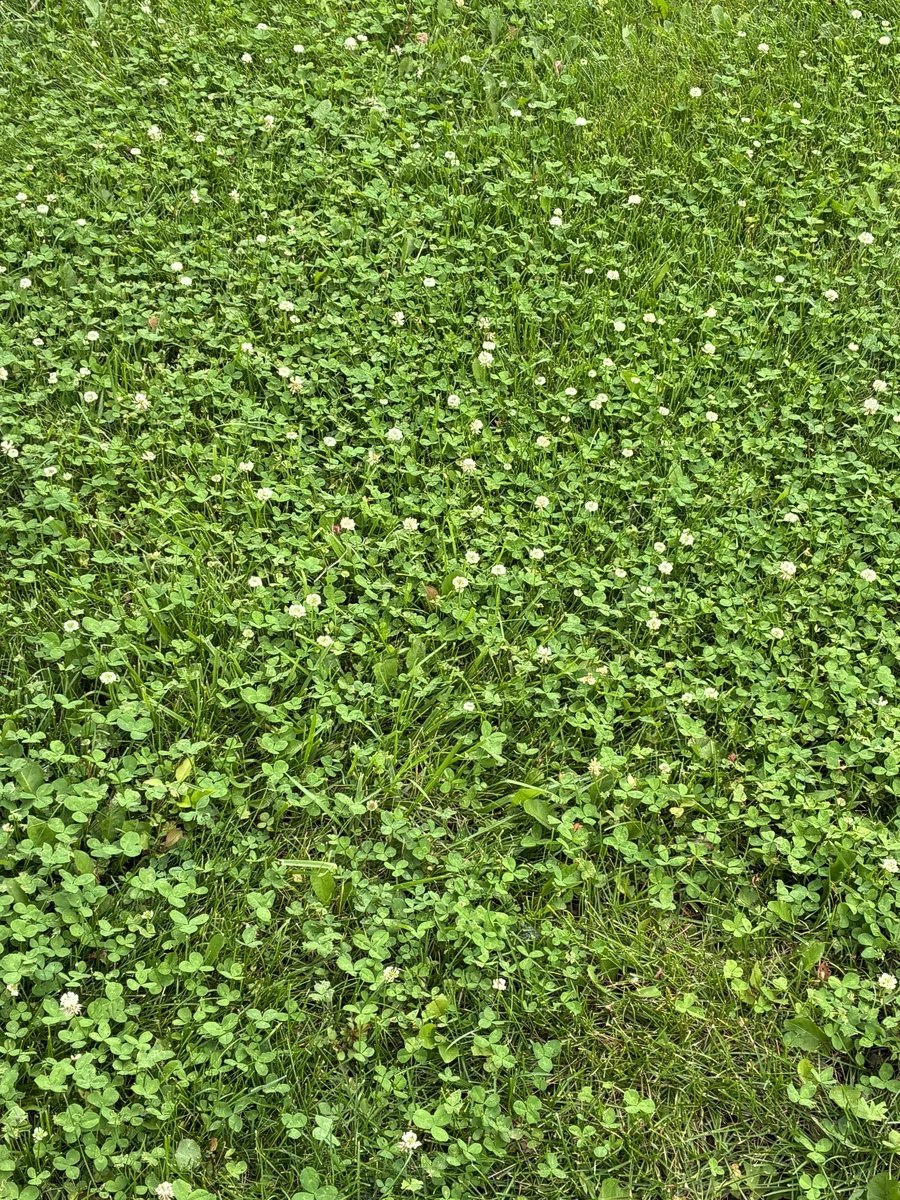
White clover is one of the most common weeds we treat in Hamilton County, and it usually shows up the same way: a few soft, dark green patches in early summer, then round white flowers, and before long it has spread across whole sections of the lawn. By the time the flowers appear, the clover is already well established and creeping outward.
Here's how to recognize it, why it took hold in your lawn, and what actually gets rid of it.
How to Identify Clover
White clover (Trifolium repens) is easy to spot once you know what you're looking at. Each leaf is made of three small, rounded leaflets, often with a faint pale crescent or watermark across each one. The plant grows low and spreads sideways rather than up, so clover patches feel softer underfoot and look a shade darker green than the grass around them.
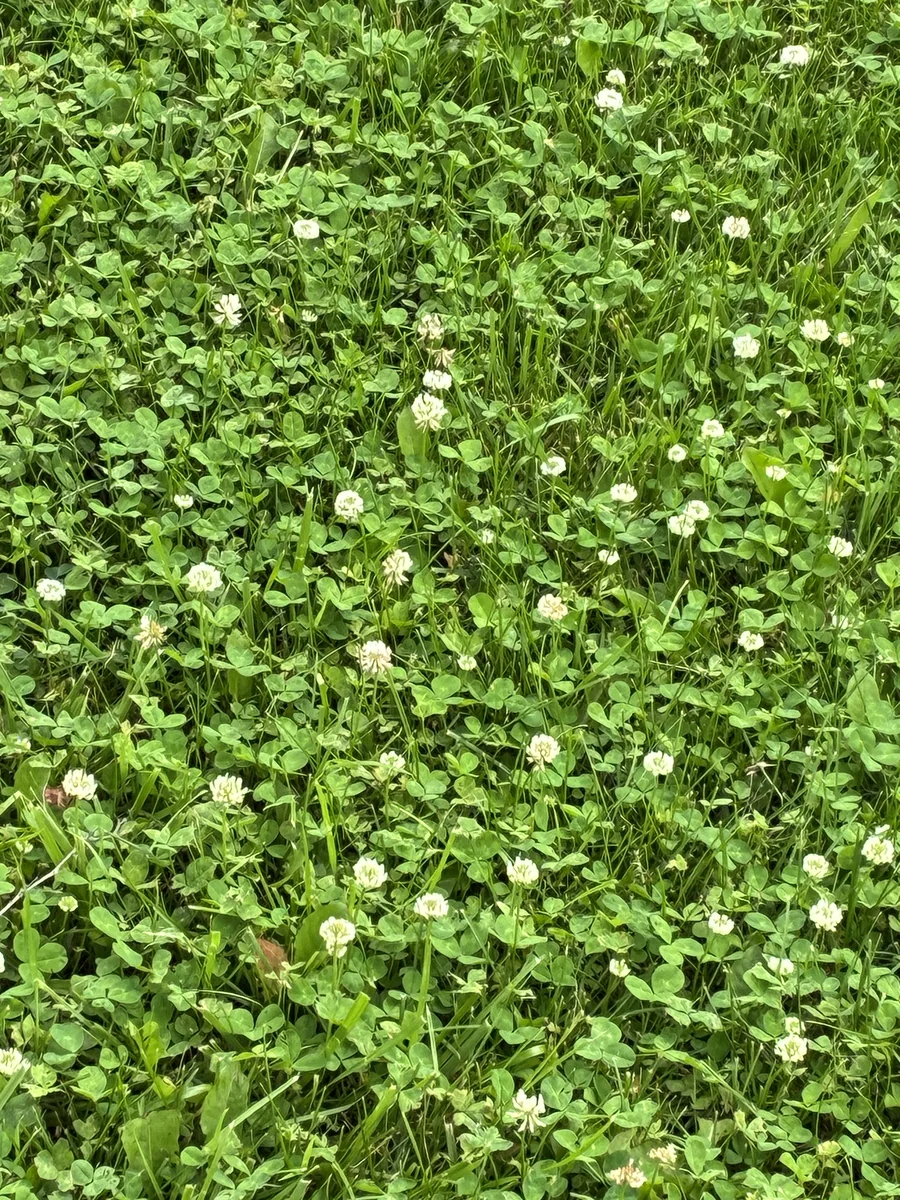
In summer it puts up round white flower heads (sometimes with a faint pink tint) on short stalks that sit just above the leaves. Those flowers are usually what makes a homeowner finally notice how much clover is in the lawn. The patch below had quietly spread across a wide area before the flowers gave it away.
Why You Have Clover
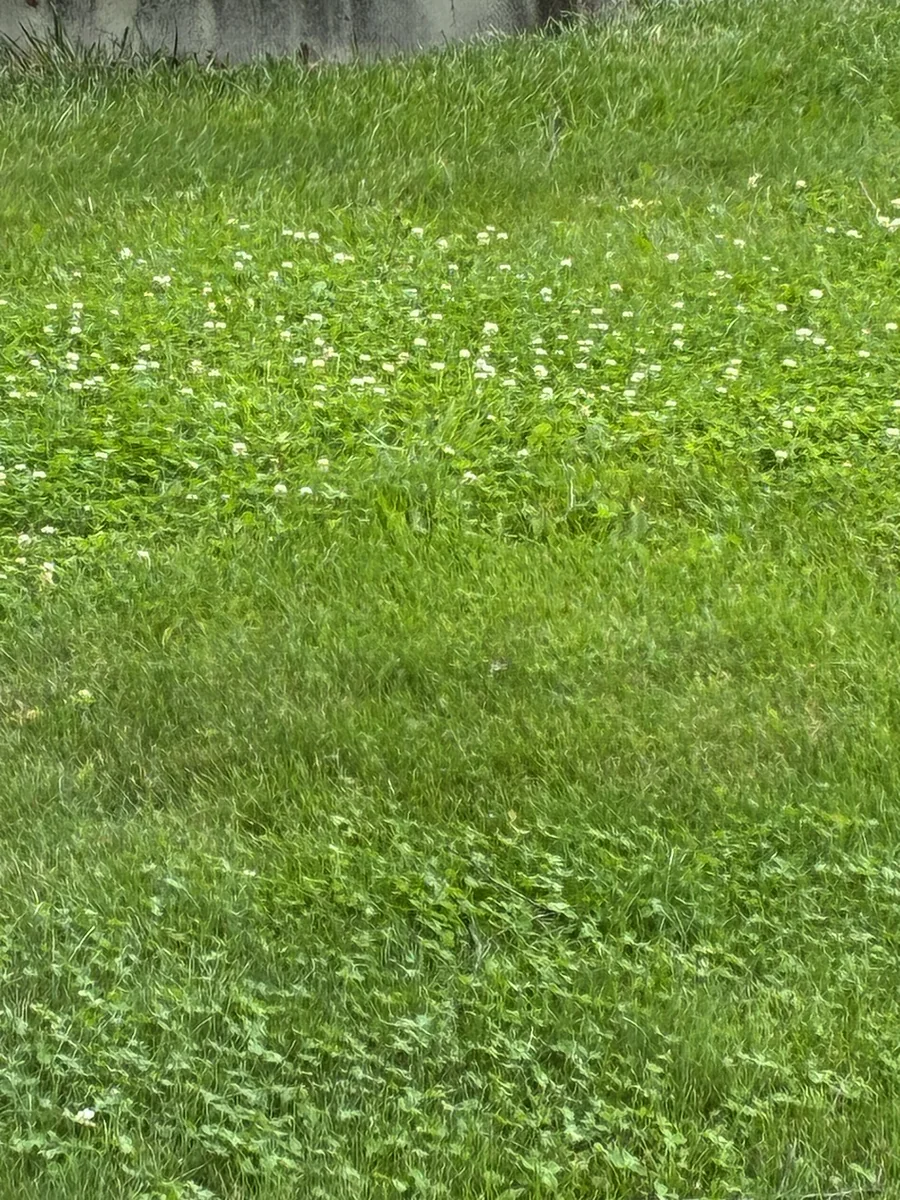
Clover is a legume, which means it makes its own nitrogen by pulling it out of the air. That's the whole story behind why it's in your lawn. Clover thrives exactly where grass struggles: in soil that's low on nitrogen. Your grass needs nitrogen from the soil to grow thick and compete. Clover doesn't. So when a lawn is underfed or thin, clover moves into the gaps and takes over because it has a food source the grass can't reach.
A clover problem is almost always a sign of an underfed, thin lawn. It also handles compacted soil and summer drought better than turf, which is why it often greens up and spreads during the same July and August stretch when an unfed lawn is going pale and thin.
Why Pulling Clover Doesn't Work
Clover spreads by creeping above-ground stems called stolons that run along the surface and root down at each node. When you pull a clover patch by hand, you tear off the top growth but leave rooted runners behind, and those regrow within days. You also open up bare soil, which is an invitation for more clover and other weeds to move in. Hand-pulling a spreading, stolon-rooted plant is a losing battle, the same way it is with creeping ground-cover weeds.
What Actually Gets Rid of Clover
A selective broadleaf herbicide is what reliably kills clover. It targets broadleaf weeds like clover while leaving the grass unharmed. Clover is tougher than some weeds, so a heavy infestation can take more than one application to fully knock out, but a properly timed treatment kills it down rather than just burning off the top.
At Sprout, we treat clover as a weed and control it as part of our standard fertilization and weed control program. The weed control side of the program handles clover along with dandelions, plantain, and the other broadleaf weeds in your lawn in the same visit, so it's not a separate add-on you have to think about.
The Real Fix: Feed the Lawn
Killing the clover you have is only half the job. Because clover moves in wherever the lawn is starved for nitrogen, the long-term fix is a lawn that's fed well enough to crowd it out. That means a consistent fertilization program so the grass has the nitrogen clover would otherwise exploit, proper mowing height (we mow around four inches, not scalped short) so the turf stays dense, and fall aeration and overseeding to thicken the thin and compacted spots where clover sets up first.
Do that, and you fix the condition that let clover in to begin with. A thick, well-fed lawn simply doesn't leave clover the room or the nitrogen advantage it needs.
FAQ
What does clover look like in a lawn?
Low, spreading growth with three rounded leaflets per leaf (often with a pale crescent on each), and round white flower heads in summer. Clover patches feel softer and look darker green than the surrounding grass.
Why do I have clover in my lawn?
Clover makes its own nitrogen, so it thrives where the lawn is underfed and thin. A clover problem usually means the lawn needs feeding and thickening.
Does pulling clover get rid of it?
No. It spreads by rooting runners, so pulling leaves pieces behind that regrow and opens bare soil for more to move in.
How does Sprout treat clover?
We control it with selective broadleaf weed control as part of our standard fertilization and weed control program. Heavy patches may take more than one application.
Get Ahead of the Clover
If clover is taking over your lawn in Noblesville, Carmel, Westfield, Fishers, or anywhere in Hamilton County, the answer is a program that kills the clover and feeds the lawn so it doesn't come back. Call us at (317) 900-7151 or get instant pricing online.
For the full rundown of the weeds we see most often around here, see our Hamilton County weed identification guide.