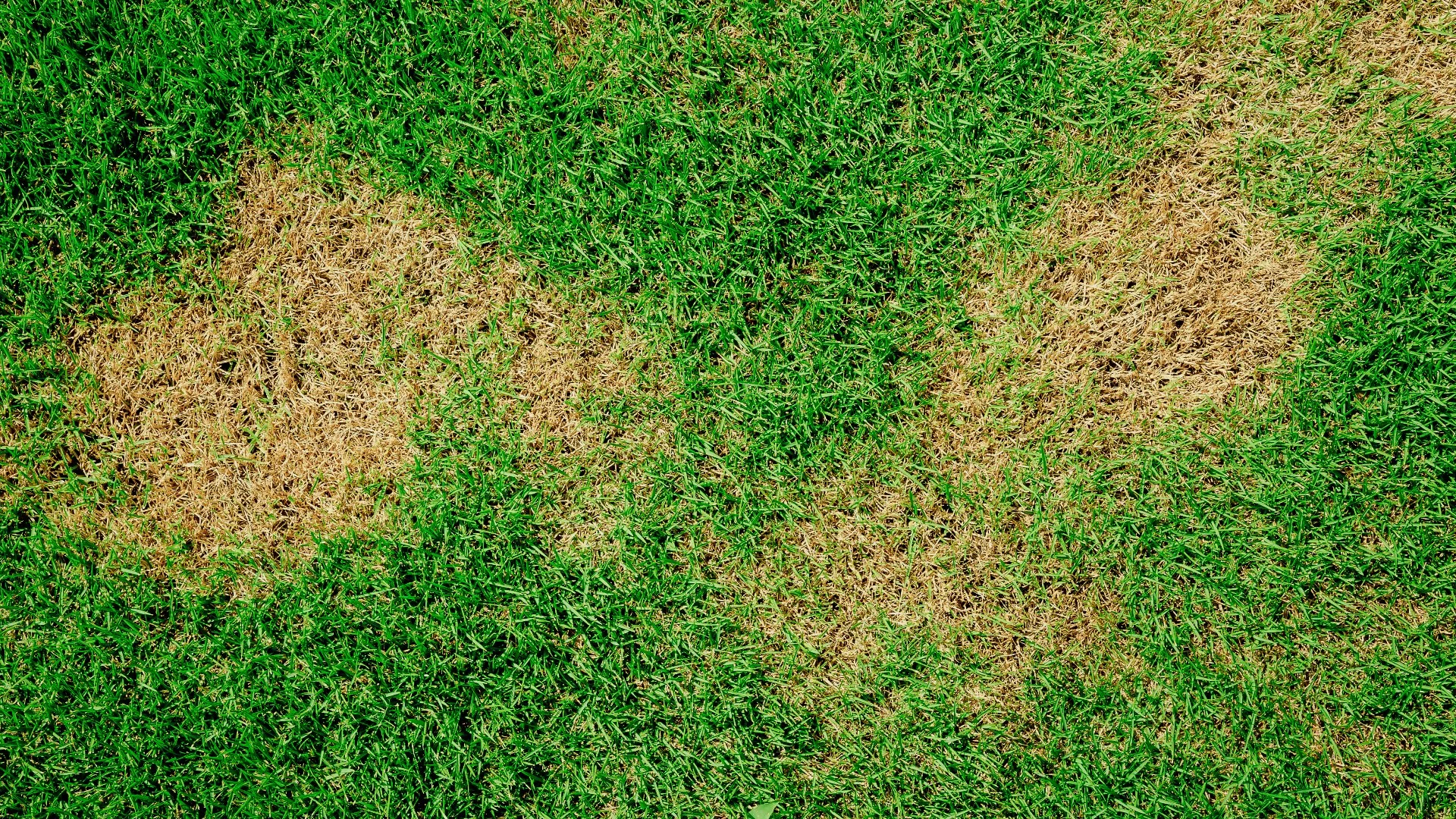
You're watering. You're mowing. You're doing everything right. And yet there are expanding circles of dead-looking grass spreading across your lawn. That's almost certainly a fungal disease, and in Hamilton County's warm, humid summers, it's more common than most homeowners realize.
Lawn diseases don't just look bad. They kill turf. The longer an infection goes untreated, the more grass you lose and the more expensive the recovery becomes. We identify the specific disease, apply the right fungicide treatment to stop the spread, and help you address the underlying conditions that made your lawn vulnerable in the first place.
Indiana's cool-season grasses are susceptible to several fungal diseases, especially during the hot, humid stretches from June through August. Here are the three we see most often.
The most common lawn disease in our area. Brown patch creates large, irregular circular patches of brown or tan grass, often with a darker "smoke ring" border around the edge. It thrives when nighttime temperatures stay above 65 degrees and humidity is high. Tall Fescue and Perennial Ryegrass are especially susceptible, but it can affect any cool-season grass. Brown patch typically appears in July and August and can spread rapidly if untreated.
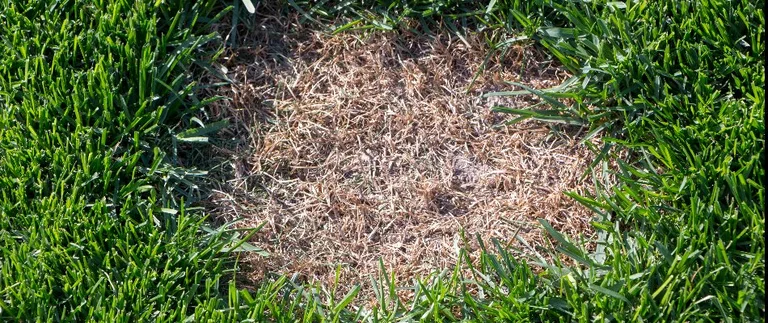
Dollar spot produces small, straw-colored patches roughly the size of a silver dollar that can merge into larger damaged areas. It's most common on under-fertilized lawns, which is why a good fertilization program is one of the best preventive measures. Dollar spot tends to appear from late spring through fall when mornings are dewy and the grass stays wet into the day.
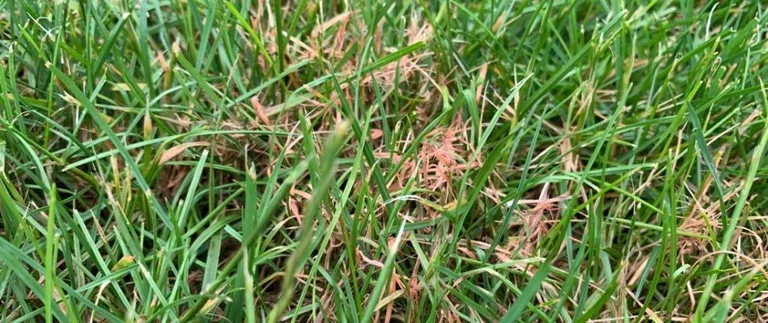
Red thread is easy to identify once you know what to look for: pinkish-red threadlike strands visible on the tips of grass blades, usually in irregular patches. It shows up during cool, wet weather in spring and fall, and it favors nitrogen-deficient lawns. Red thread rarely kills grass outright but it looks terrible and indicates your turf needs more nutrition.
Treating a lawn disease is a two-step process. First, we stop the active infection with a targeted fungicide application. Second, we look at why the disease took hold and recommend changes to prevent it from coming back.
Common contributing factors include compacted soil that traps moisture, poor air circulation from overcrowded landscaping, mowing too short (which stresses the grass and weakens its defenses), watering at night instead of early morning, and under-fertilization that leaves turf without the nutrients it needs to fight off infection.
The fix usually involves a combination of approaches: proper mowing height (3.75 to 4 inches for most Hamilton County grasses), a consistent fertilization schedule to keep the turf well-fed, fall aeration to relieve compaction and improve drainage, and watering early in the morning so the grass has time to dry before nightfall.
If the disease has killed significant sections of turf, overseeding in the fall will fill in the bare areas with fresh grass. In severe cases, sod installation or new lawn seeding may be the faster path back to a full lawn.
Brown patch, dollar spot, and red thread are the three most common in Hamilton County. All are fungal diseases that thrive in the warm, humid conditions Indiana experiences during summer. Other diseases like necrotic ring spot and leaf spot can also appear depending on your grass type and lawn conditions.
Look for distinct visual patterns that differ from normal drought stress. Brown patch creates large circular patches with a darker border. Dollar spot produces small straw-colored spots. Red thread leaves pinkish-red threads on grass blade tips. If you see any of these patterns, especially during hot or humid weather, disease is likely the cause. Give us a call and we can take a look.
Some mild infections resolve when weather conditions change, but many fungal diseases will keep spreading and cause permanent turf loss without treatment. The earlier you catch and treat a lawn disease, the less damage it does and the faster the recovery. Don't wait to see if it goes away on its own.
We identify the specific disease, then apply the appropriate fungicide treatment to stop the infection from spreading. We also evaluate the conditions that contributed to the disease, such as compacted soil, improper mowing, or under-fertilization, and recommend corrective steps. Severely damaged areas may need aeration and overseeding in the fall to fill back in.
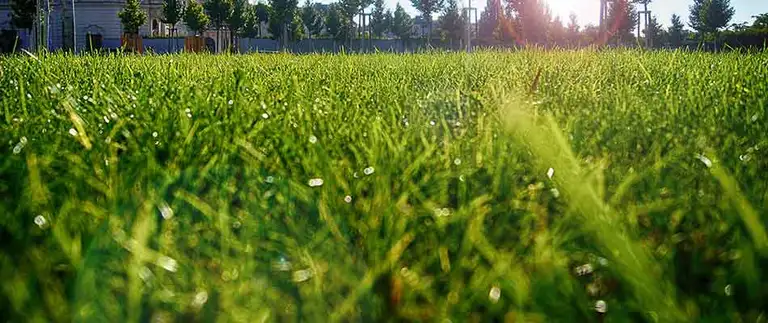
The best prevention is a healthy, well-maintained lawn. That means proper mowing height (3.75 to 4 inches), consistent fertilization, fall aeration to relieve compaction, and watering in the early morning so the grass dries before nightfall. A thick, well-fed lawn with good drainage is far more resistant to fungal diseases than a stressed, thin one.
Don't wait for the damage to spread. Contact us for a diagnosis and treatment plan. We serve residential and commercial properties across Noblesville, Carmel, Westfield, Fishers, Geist, and surrounding Hamilton County communities.