February 28, 2026 · Lawn Care
You installed a sprinkler system so you wouldn't have to think about watering. Set it and forget it. But "forgetting it" is exactly where the problems start. We see this constantly on properties across Carmel and Fishers: a homeowner has a sprinkler system, the lawn still looks terrible, and they can't figure out why. Nine times out of ten, the system itself is the culprit.
Overwatering Is More Common Than Underwatering
Most sprinkler systems are set to water too much, too often. Daily watering for 20 minutes per zone might sound responsible, but it's doing real damage. Frequent, shallow watering trains grass roots to stay near the surface instead of growing deep. Those shallow roots can't access moisture during dry stretches, which means the lawn that's getting watered every day actually handles drought worse than a lawn that's watered less often but more deeply.
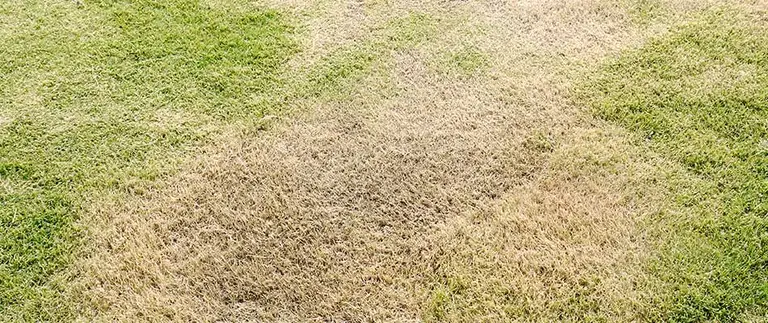
Overwatering also creates the perfect conditions for fungal diseases. Brown patch, dollar spot, and pythium all thrive when the soil stays constantly damp. If your lawn has circular brown or yellow patches that keep showing up despite regular watering, the watering itself is probably the problem.
For the clay soil across Hamilton County, the ideal schedule is 2 to 3 times per week, putting down about an inch of water total. Each watering should run long enough for the water to soak 4 to 6 inches into the soil. That deeper, less frequent approach forces roots down and builds a tougher lawn.
Watering at the Wrong Time
Timing matters more than most people realize. If your system is set to run in the evening, the lawn stays wet all night. Grass blades sitting in moisture for 8 to 10 hours is exactly how fungal infections start. It's the same reason you don't leave a wet towel bunched up in a gym bag.
The ideal watering window is between 4 AM and 8 AM. Early morning watering lets the grass blades dry as the sun comes up, which minimizes disease risk. The soil absorbs the water before the day heats up, so less is lost to evaporation. If your controller is still set to the default evening schedule, changing the start time to early morning is one of the simplest things you can do to improve your lawn's health.
Uneven Coverage Creates Uneven Results
Walk your yard while the sprinklers are running. You'll probably notice that some areas are getting drenched while others are barely getting hit. Heads that have shifted, clogged nozzles, low pressure zones, and poor original design all contribute to uneven coverage. The overwatered spots get disease and shallow roots. The underwatered spots turn brown in summer while the rest of the yard stays green.
Sprinkler heads also get knocked out of alignment by mowing equipment and foot traffic. A head that was pointing at the lawn six months ago might now be spraying the driveway or the side of the house. Regular audits of each zone, running them one at a time and watching the coverage, catch these issues before they cost you turf.
Not Adjusting for the Season
Indiana's rainfall varies wildly. April might dump 5 inches of rain across Noblesville. July might give you half an inch the entire month. But many sprinkler systems run the same schedule from April through October without a single adjustment. In a rainy spring, you're watering a lawn that's already saturated, which wastes water and promotes disease. In a dry August, the same schedule might not be enough.
If your controller has a rain sensor, make sure it's actually working. Many sensors fail after a few years and nobody notices. A functioning rain sensor pauses irrigation after rainfall and is one of the cheapest ways to prevent overwatering. Smart controllers that adjust based on local weather data take this a step further and are worth the investment if your system is due for an upgrade.
The Sprinkler System Supports the Program
A good sprinkler system makes lawn care easier, but it doesn't replace it. Your turf still needs fertilization, proper mowing, and aeration to stay thick and healthy. The sprinkler handles one piece of the puzzle. When it's set correctly, everything else works better. When it's set wrong, it undermines every other investment you're making in the lawn.
If your lawn isn't responding the way it should despite having irrigation, give us a call. We can evaluate what's happening and build a program around it. (317) 900-7151 or request an estimate online.