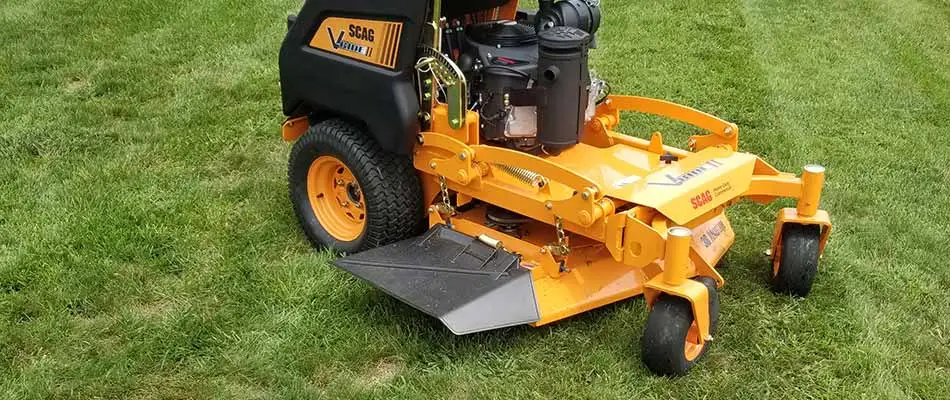
October 30, 2024 · Lawn Mowing
There's no magic date on the calendar that says "stop mowing." It depends on when the grass actually stops growing, and in Hamilton County that varies by a couple weeks depending on the fall weather. Here's how to handle the end of the mowing season the right way so your lawn goes into winter set up for a strong spring.
Watch the Growth, Not the Calendar
Cool-season grasses in central Indiana slow their growth significantly once daytime temperatures consistently stay below 50 degrees. For most Hamilton County properties, that means mowing tapers off in late October and stops entirely sometime in November. Some years the grass is still pushing growth in early November after a warm fall. Other years, a cold October shuts things down by the last week of the month.
The practical rule: keep mowing as long as the grass is growing enough to need it. When you go 10 to 14 days without the lawn looking noticeably taller, you're done for the season.
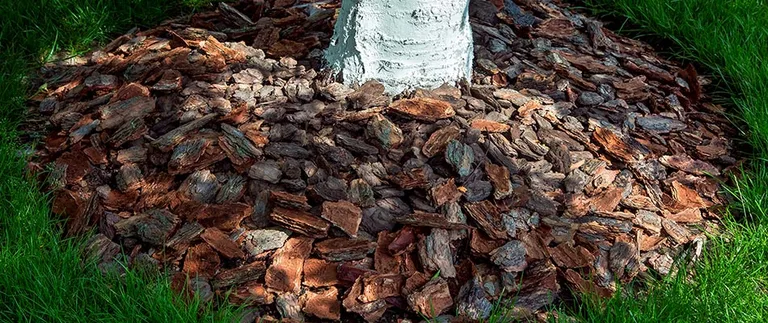
The Final Mow: Drop the Height Slightly
For the last mow of the season, lower your cutting height to about 3 inches, down from the 3.75 to 4 inches we maintain during the growing season. This isn't a scalp. It's a slight reduction that serves a specific purpose: reducing the risk of snow mold.
Snow mold is a fungal disease that develops under snow cover on tall, matted grass. When the grass is too tall going into winter, the blades fold over and create a moist, insulated layer at the soil surface that's perfect for gray and pink snow mold. You see the damage as circular matted patches on the lawn when the snow melts in March. A slightly shorter final cut reduces the canopy density and lets the grass go into dormancy without creating that mold-friendly environment.
Don't go below 3 inches though. Scalping the lawn before winter exposes the crown of the grass plant to cold temperatures and desiccation, which can kill it outright. The goal is shorter than summer height but still tall enough to protect the plant.
Don't Forget the Leaves
The end of mowing season overlaps with peak leaf removal time. If you're doing your last mow in late October or early November, there are probably leaves on the lawn. A light scattering of leaves can be mulch-mowed during the final pass, which chops them fine enough to decompose into the turf. But if there's a heavy layer, get them off before the final mow. Mowing through a thick leaf layer doesn't actually remove the leaves. It just chops them into a mat that still smothers the grass.
For heavy leaf cover, professional removal followed by the final mow is the right sequence. Then a fall cleanup to clear the beds and hard surfaces, and your property is set for winter.

After the Last Mow
Once you've made the final cut, there are a few things to button up for winter. If you haven't applied winterizer fertilizer yet, get it down before the ground freezes. This is the application that builds root reserves and determines how fast your lawn greens up in spring. Make sure no leaves, tarps, equipment, toys, or other objects are sitting on the lawn going into winter. Anything left on the grass will kill the turf underneath by spring, and you'll be staring at dead patches in April.
If you need snow removal for your driveway or commercial property, sign up before the first snowfall. The same crew that handled your mowing all season handles your snow removal in winter, so the transition is seamless.
We serve Noblesville, Carmel, Westfield, Fishers, and surrounding Hamilton County communities. Call (317) 900-7151 or get pricing online.