August 22, 2023 · Fertilization
The short answer is yes. It matters a lot. Too much fertilizer burns your grass, wastes your money, and can contaminate local waterways. Too little does almost nothing. The right amount, applied at the right time, transforms a struggling lawn into a thick, green one.
Here's what Hamilton County homeowners need to know about getting fertilizer rates right.
What Happens When You Apply Too Much
Over-fertilizing is the most common mistake homeowners make. The logic seems reasonable: if some fertilizer is good, more must be better. But nitrogen, the primary growth nutrient in lawn fertilizer, is essentially a salt. Apply too much and it pulls moisture out of the grass roots through osmosis, causing what's known as fertilizer burn.
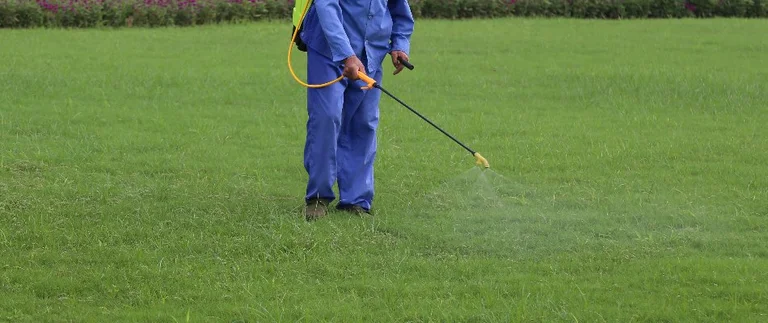
Fertilizer burn shows up as yellow or brown streaks across the lawn, often in the exact pattern you walked while spreading. In severe cases, the grass dies and needs to be reseeded. Even in mild cases, the excess nitrogen promotes rapid top growth at the expense of root development, leaving you with grass that looks green for a week but is actually weaker than before.
Over-fertilization also feeds weeds. Crabgrass and other annual weeds thrive on excess nitrogen. You may end up with greener grass and greener weeds.
What Happens When You Apply Too Little
Under-fertilizing produces a lawn that's thin, pale green or yellow-green, and susceptible to weed invasion, disease, and insect damage. Cool-season grasses in Indiana need consistent nutrition to maintain the density that crowds out problems. Without it, thin spots develop, weeds fill in, and the lawn slowly declines.
Many homeowners who only fertilize once a year (typically in spring) wonder why their lawn looks good in May and terrible by August. One application isn't enough to sustain the grass through an entire growing season of mowing, heat, foot traffic, and weather stress.
Why Soil Testing Matters
The bag of fertilizer at the hardware store has a ratio printed on it (like 24-0-4 or 10-10-10). Those numbers represent the percentage of nitrogen, phosphorus, and potassium. But which ratio does your lawn actually need? Without a soil test, you're guessing.
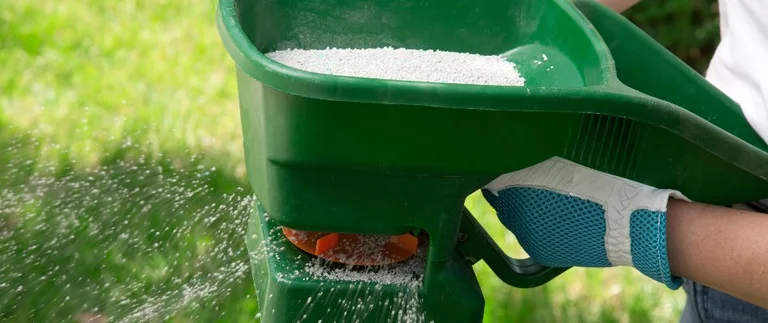
Indiana soils vary significantly even within a single neighborhood. One property in Noblesville might be deficient in phosphorus while the one next door has plenty. A yard in Westfield built on stripped construction fill has completely different needs than an established Carmel property with 30 years of organic matter in the topsoil. A soil test tells you exactly what your specific soil has and what it's missing, so you can apply the right nutrients at the right rates instead of dumping a generic blend and hoping for the best.
At Sprout Lawn & Landscape, we soil test before we treat. That test drives the custom blend we apply to your lawn. It's more work than pulling a bag off the shelf, but the results speak for themselves.
How Much Does an Indiana Lawn Actually Need?
For cool-season grasses in Hamilton County, the general guideline is 3 to 4 pounds of nitrogen per 1,000 square feet per year, split across 5-7 applications from early spring through late fall. Each individual application delivers a fraction of that total, timed to match the growth cycle of the grass.
The specifics depend on your soil test results, grass type, shade exposure, and how you use the lawn. A property with heavy foot traffic and full sun needs more than a lightly used yard with significant shade.
The Bottom Line
Yes, it matters. The difference between a lawn that looks mediocre and one that looks great often comes down to the right amount of the right fertilizer at the right time. If you've been guessing with off-the-shelf products and not seeing the results you want, a professional soil-tested program is probably the answer.
We serve Noblesville, Carmel, Westfield, Fishers, and surrounding Hamilton County communities. Learn more about our fertilization programs or get instant pricing online.