June 12, 2024 · Lawn Disease
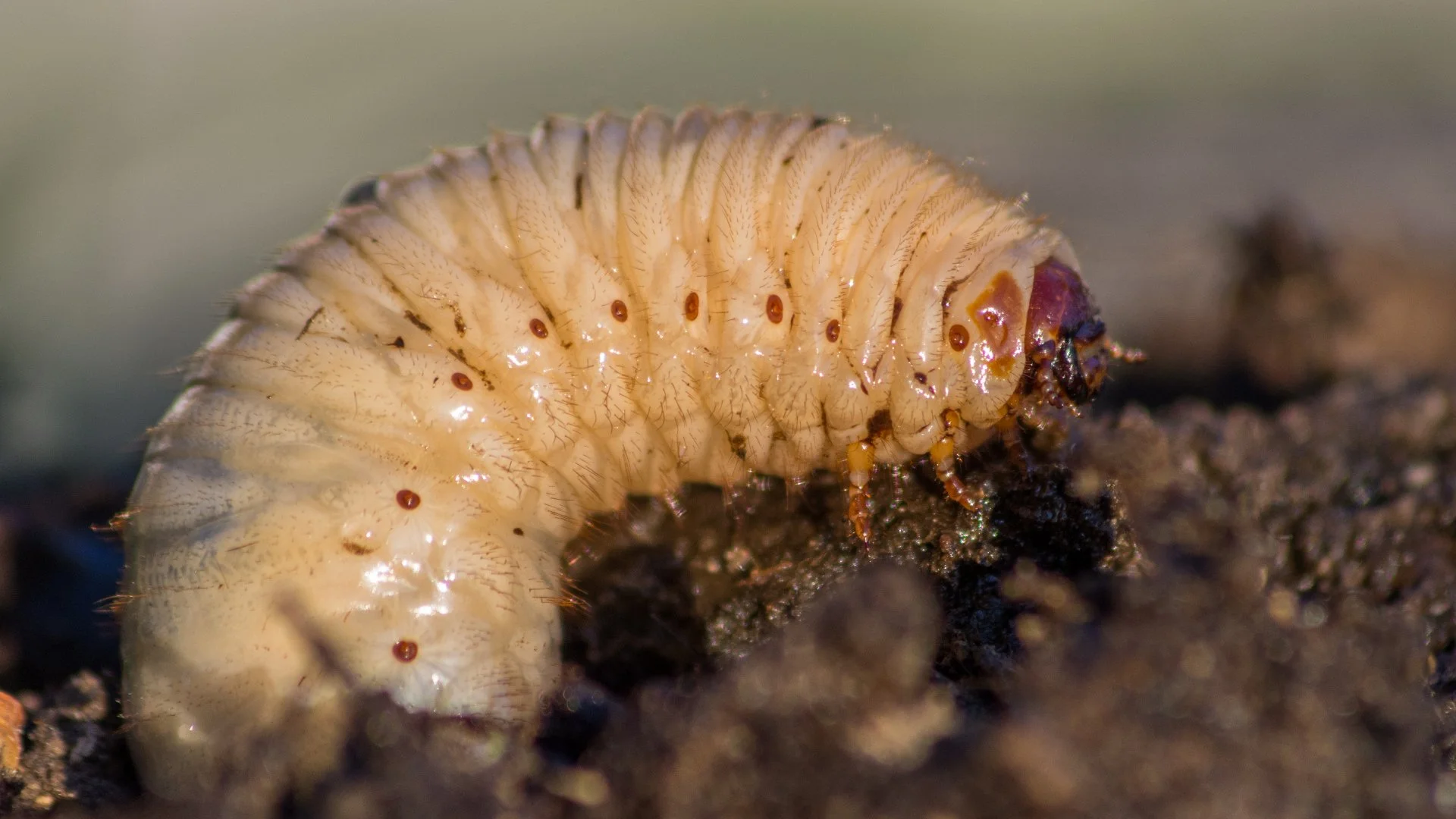
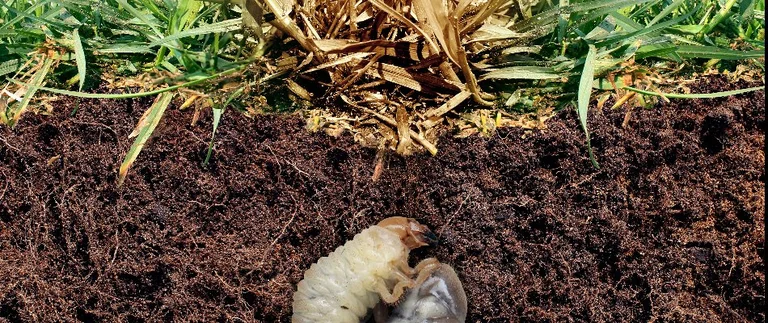
Grubs are the larvae of Japanese beetles, June bugs, and European chafers. They live in the soil just below the surface of your lawn and feed on grass roots. A few grubs per square foot is normal and won't cause visible damage. But when populations spike, they can destroy entire sections of turf in a matter of weeks.
Here's how to tell if your Hamilton County lawn has a grub problem and what to do about it. Grub damage is most common on well-irrigated lawns (the beetles prefer to lay eggs in moist soil) and properties near wooded or agricultural areas in Fortville, McCordsville, and CiceroGeist where beetle populations tend to be heaviest.
The Tug Test
This is the definitive test. Grab a section of brown or struggling turf and pull up on it. If it peels away from the soil like a loose carpet with no resistance, grubs have eaten the roots underneath. Healthy grass, even dormant or stressed grass, stays anchored. Grub-damaged grass has nothing holding it down.
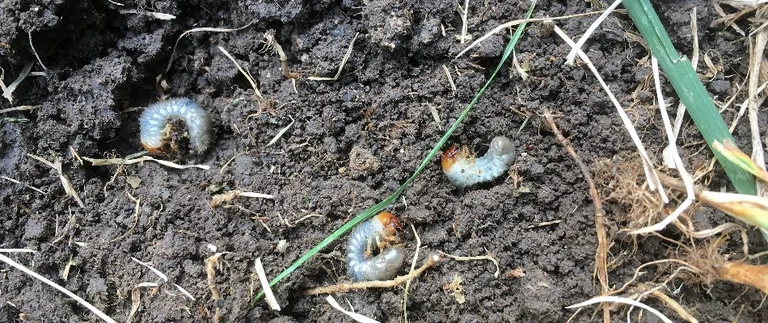
Pull back the loose turf and you'll likely see the grubs themselves: white, C-shaped larvae about 1/2 to 1 inch long with brown heads. If you count more than 5-10 per square foot, you have an infestation that needs treatment.
Brown Patches That Don't Respond to Watering
Grub damage looks a lot like drought stress at first: irregular brown patches that appear in late summer or early fall. The difference is that drought-stressed grass responds to watering within a few days. Grub-damaged grass doesn't, because the problem isn't water. It's that the roots are gone.
The brown patches tend to expand over time as the grub population grows and moves through the soil. If you see brown areas that are getting bigger despite regular watering, grubs are a likely culprit.
Animals Digging Up Your Lawn
Raccoons, skunks, and crows dig up lawns to eat grubs. If you wake up to torn-up patches of turf that look like someone went at your lawn with a pitchfork, animals are almost certainly feeding on a grub population underneath. The animal damage is frustrating, but it's actually a secondary problem. Fix the grubs and the animals stop coming.
When Grubs Are Active in Indiana
In Hamilton County, the grub lifecycle follows a predictable pattern. Adult beetles lay eggs in your lawn in June and July. Those eggs hatch into tiny grubs that begin feeding on roots in August. The feeding intensifies through September and October as the grubs grow. When the soil temperature drops in late fall, grubs move deeper into the ground to overwinter. They resume feeding briefly in spring before pupating into adult beetles and starting the cycle again.
The most visible damage occurs in late August through October, when grubs are at their largest and eating the most.
Preventive vs. Curative Treatment
Preventive treatment is applied in late spring to early summer (June through mid-July) before eggs hatch. It kills young grubs as they emerge. This is the most effective and least expensive approach. One properly timed application prevents the entire fall damage cycle.
Curative treatment is applied in late summer or early fall when you're already seeing damage. It kills active grubs but the damage that's already done needs to be repaired with overseeding, reseeding, or sod patching.
Prevention is always better. If your property has had grub issues in the past, or if your neighbors have, a preventive application should be part of your annual lawn care program.
Sprout Lawn & Landscape offers grub prevention and curative treatments for properties across Noblesville, Carmel, Westfield, Fishers, and surrounding Hamilton County. Call (317) 900-7151 to get ahead of the problem.