May 15, 2024 · Landscaping
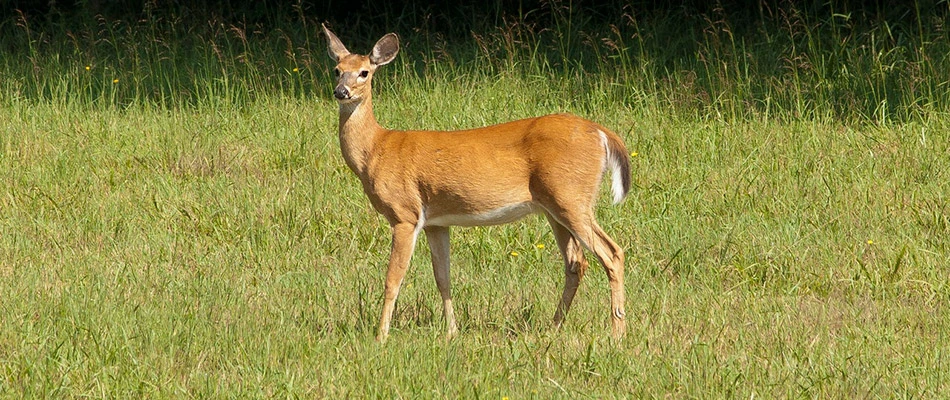
If you live near wooded areas or open space anywhere in Hamilton County, you've watched deer walk through your yard like they own the place, stopping to eat your hostas, daylilies, and freshly planted annuals along the way. It's one of the most frustrating problems for homeowners in Noblesville, Carmel, Fishers, and especially the more rural properties in Fortville and CiceroGeist. There's no magic bullet, but there are strategies that genuinely reduce the damage.
Start With What You Plant
The most reliable long-term strategy is choosing plants that deer tend to avoid. No plant is truly deer-proof when they're desperate, but some are so far down the preference list that deer will walk right past them to eat your neighbor's hostas instead.
Plants deer usually leave alone: Lavender, Russian Sage, Catmint, Salvia, Coneflower (Echinacea), Black-Eyed Susan, Ornamental Grasses, Boxwood, Juniper, Barberry, Daffodils, and most herbs like Rosemary and Thyme. These are either too fragrant, too prickly, or too bitter to be worth the effort.
Plants deer love to destroy: Hostas (their absolute favorite), Daylilies, Tulips, Impatiens, Pansies, Arborvitae, Rhododendron, and most young fruit trees. If you plant these without protection in a deer-active area, expect them to be browsed within the first week.
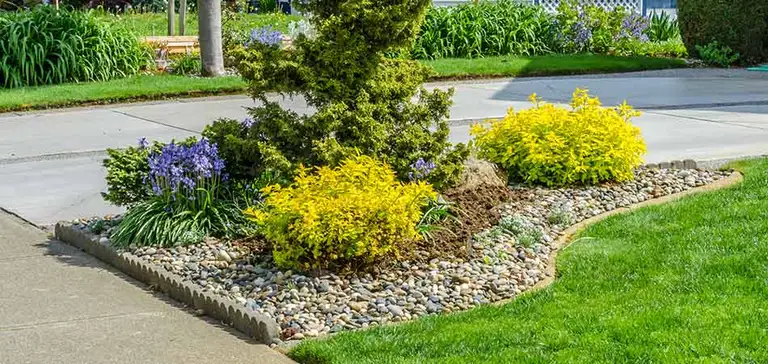
When we do landscape bed renovations for properties with deer pressure, we design around this reality. We can put the deer-resistant varieties front and center and either skip the deer magnets entirely or place them in protected spots close to the house where deer are less comfortable browsing.
Repellent Sprays: Helpful but Not Foolproof
Commercial deer repellents work by making plants taste or smell terrible. Products containing putrescent egg solids, garlic oil, or capsaicin are the most effective. They need to be reapplied after rain and every two to three weeks during the growing season. They're a good supplement on smaller properties where deer have other food options nearby, but on rural properties where deer pressure is extreme, repellents alone won't solve the problem.
Important: you need to start applying repellent before the deer start feeding. Once they've discovered a food source, they're harder to deter. Apply to new plantings immediately after installation.
Physical Barriers
Fencing is the most reliable deterrent, but it needs to be at least 7 to 8 feet tall. Deer can clear a standard 4-foot fence without slowing down. For individual plants or small bed sections, temporary wire cages or netting work well during peak vulnerability (new plantings in spring, tulip emergence, and fall when deer are bulking up for winter).
Fishing line strung at 3 feet and 5 feet between posts around a garden bed can also work. Deer bump into the line, can't see what hit them, and tend to avoid the area. It's not pretty, but it's cheap and surprisingly effective for small spaces.
Design Your Beds to Discourage Browsing
Deer are cautious animals. They prefer to browse from the edge of a bed where they have a clear escape route. Use this to your advantage. Put deer-resistant plants like lavender, catmint, and ornamental grasses on the outer borders of your beds. The strong scent creates a barrier, and the deer favorites (if you insist on having them) go toward the center or closer to the house where deer feel more exposed.
Dense plantings also help. An overstuffed bed with minimal open space is less inviting than a sparse bed with clear walkways between plants. Deer don't like navigating through tight, unfamiliar terrain.

After the Damage Is Done
If deer have already chewed through your beds, most shrubs and perennials will recover if the root system is intact. Give them time and proper fertilization to push new growth. For plants that are destroyed beyond recovery, we can help you replant with more resistant varieties and restructure the bed layout to minimize future damage.
We work with properties across Noblesville, Carmel, Westfield, Fishers, Fortville, McCordsville, and CiceroGeist. Call (317) 900-7151 and we'll take a look at what you're dealing with.