April 12, 2024 · Fertilization & Weed Control · By Mike Harmon, Owner & Licensed Applicator
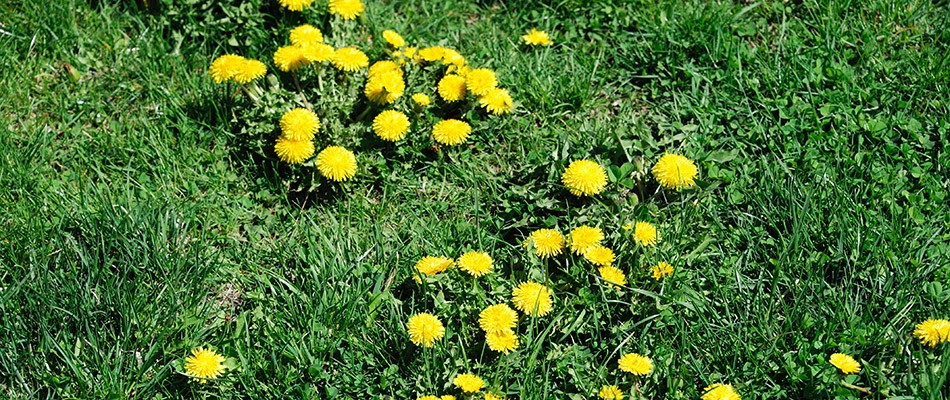
You pulled them last weekend. You can already see new ones. Dandelions are the most frustrating weed in Hamilton County for a reason: they're tough, they spread fast, and half the things homeowners try to do about them don't work. Here's how to spot them, what actually works to kill them, and why the "pull them out" strategy is a losing battle.
How to Identify a Dandelion
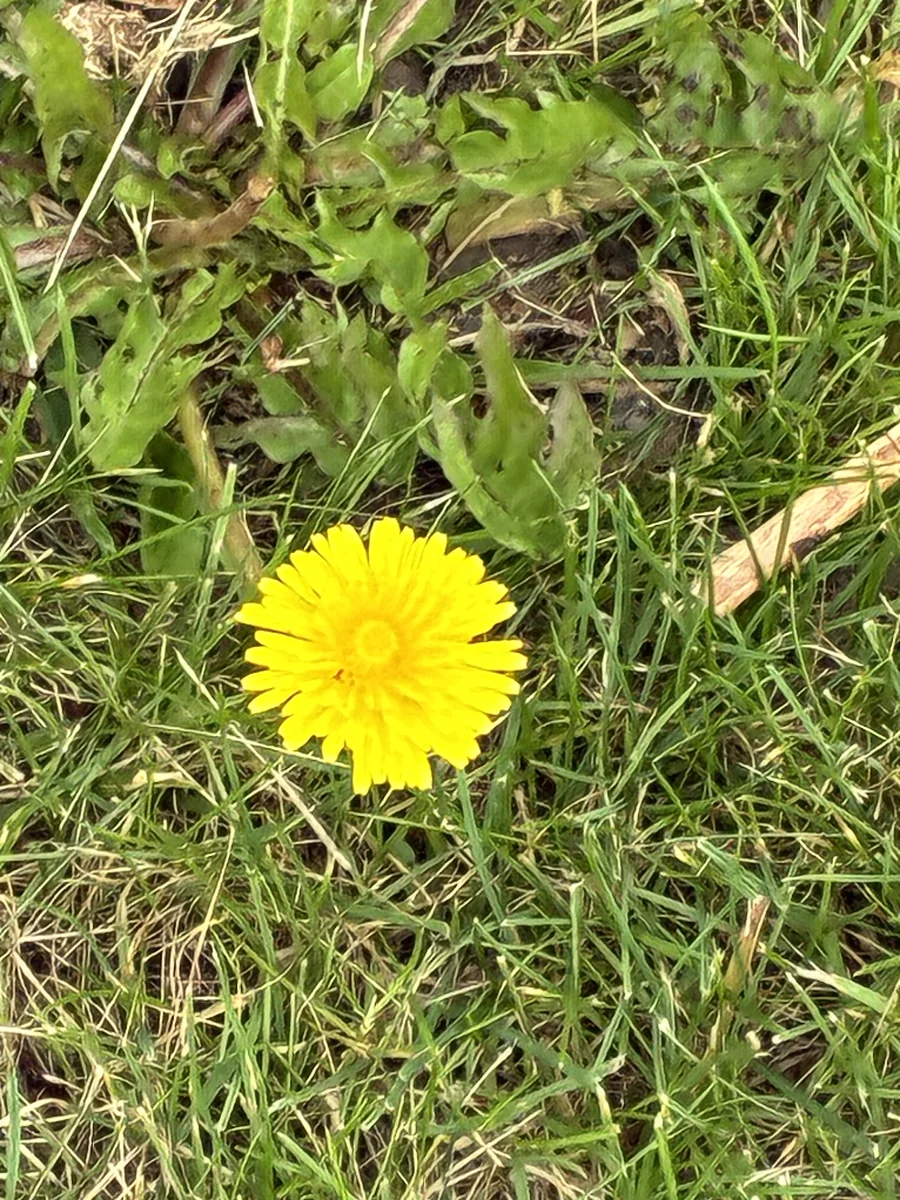
Most people know the bright yellow flower and the white seed puff that follows. But the part that matters for control is at the base of the plant. Dandelion leaves grow in a flat rosette right at ground level, and each leaf is deeply lobed and jagged. The name comes from the French dent de lion, meaning lion's tooth, after those tooth-like leaf edges. Below the rosette is a single thick taproot that can run 6 to 18 inches deep into Indiana clay.
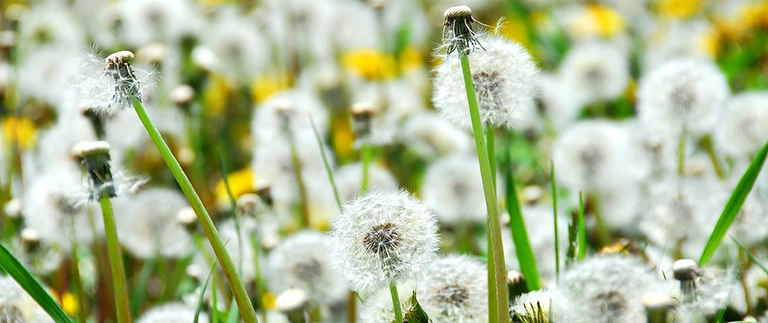
You will find them two main places in a Hamilton County yard: scattered through thin or stressed sections of the lawn, and packed along the edges of driveways, sidewalks, and curbs where the turf is weakest and the soil heats up fastest. The photo below shows a typical cluster along a pavement edge, with the lobed leaves and multiple flowers from a single established root system.
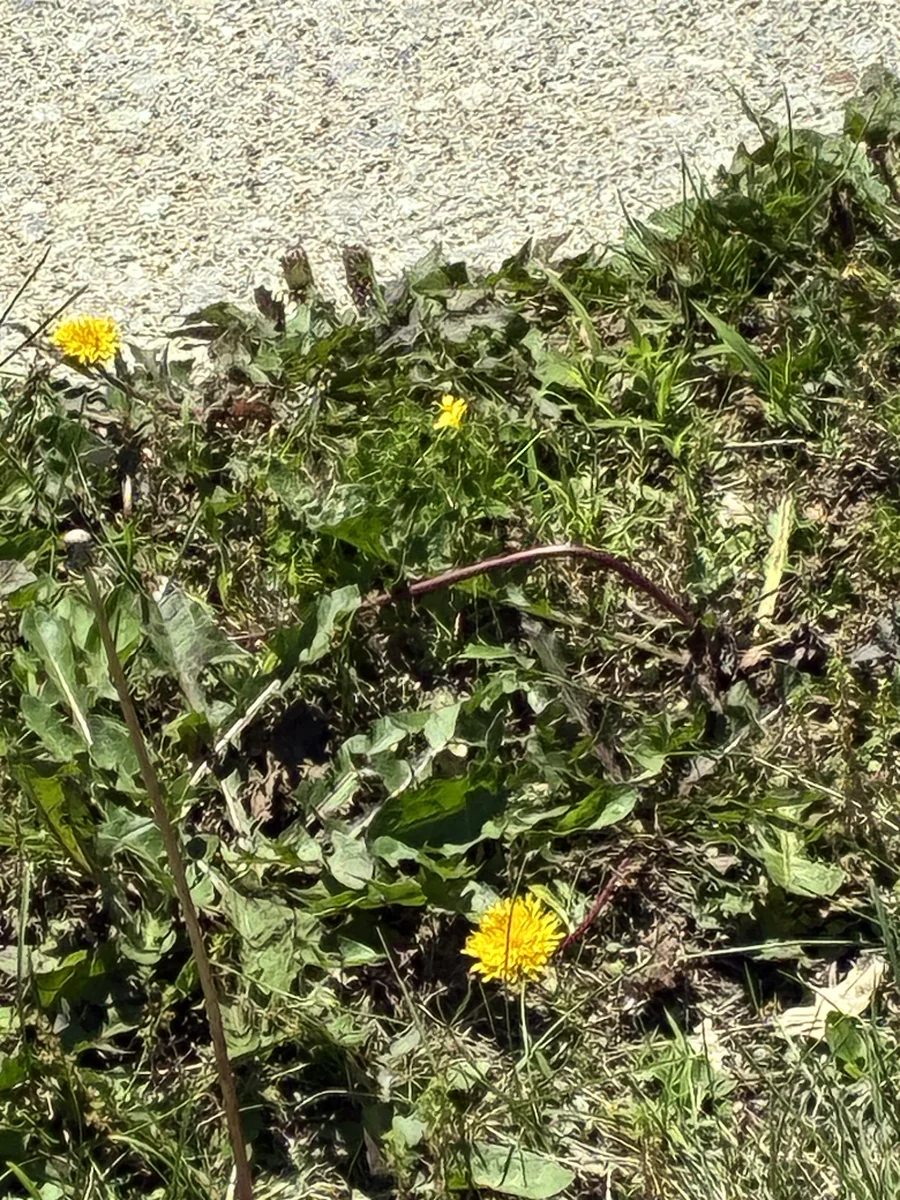
If you can see the yellow flowers, the plant is already mature and the seed heads are not far behind. That timing matters, which is the next thing to understand.
Why Pulling Dandelions Doesn't Work
Remember that deep taproot. When you pull the plant out by the leaves, the root almost always snaps off underground. That remaining root grows a new plant within days. You didn't remove the dandelion. You pruned it.
Even if you get the whole root out with a weeding tool, you've left a hole in the turf that's now prime real estate for the next dandelion seed that blows in. And a single dandelion head produces up to 15,000 seeds, each one floating on its own tiny parachute. By the time you see the yellow flowers, the seeds from last month's batch are already germinating across your lawn and your neighbor's.
What Actually Kills Dandelions
Post-emergent broadleaf herbicide — Purdue Extension’s weed control guide covers the proper products and timing. This is the only reliable way to kill established dandelions. A targeted application kills the plant all the way down to the root, which hand-pulling almost never achieves. We use selective herbicides that kill broadleaf weeds like dandelions without harming the grass around them.
Timing matters. Dandelions are most vulnerable to herbicide in early fall (September and October) when the plant is actively pulling nutrients down into the root for winter storage. An herbicide application during this period gets carried deep into the root system and kills the entire plant. Spring applications work too, but fall treatments are more effective at preventing next year's crop.
The Real Fix: a Thick Lawn
Herbicide kills the dandelions you have. But the reason you have them in the first place is almost always a thin, weak lawn with bare patches where weed seeds can germinate. A thick, healthy stand of grass is the best long-term dandelion defense because it physically blocks seeds from reaching the soil.
That means proper mowing height (3.75 to 4 inches, not scalped short), a consistent fertilization program so the grass has the nutrients to grow thick, and fall aeration and overseeding to fill in the bare and thin spots where dandelions love to set up shop.
Pre-Emergent Won't Stop Dandelions
This is a common misconception. The pre-emergent herbicide we apply in early spring targets annual weeds like crabgrass. Dandelions are perennials. They come back from the root every year, not from seed (although new ones do seed in too). Pre-emergent has minimal effect on established dandelion plants. You need post-emergent treatment for that.
Get Ahead of Them This Fall
If dandelions are taking over your yard in Noblesville, Carmel, Westfield, or Fishers, the best time to hit them hard is fall. A targeted post-emergent application combined with aeration and overseeding will knock down the existing plants and thicken the turf so new ones have nowhere to grow.
Get instant pricing for our fertilization and weed control program or call us at (317) 900-7151.