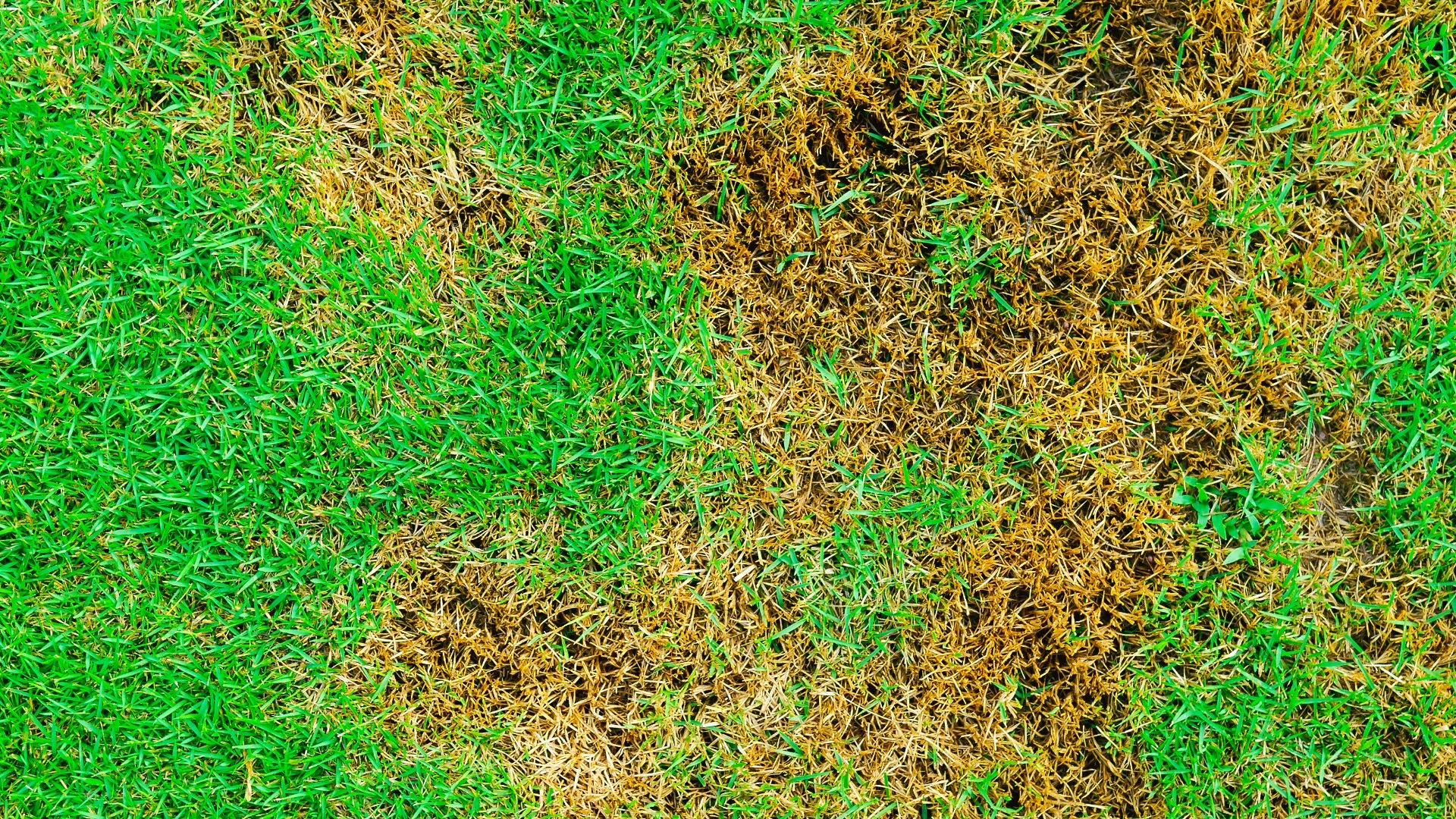
March 20, 2024 · Lawn Disease
You water your lawn, you mow it every week, and you put down fertilizer in the spring. Then one morning you walk outside and there are brown, yellow, or pink patches spreading across the turf. That's lawn disease, and it's more common in central Indiana than most homeowners realize.
The cool-season grasses that grow in Fishers, Noblesville, Carmel, and the surrounding Hamilton County area are susceptible to several fungal diseases, especially during periods of high humidity, heat stress, or prolonged moisture. Here are four of the most common ones and what you can do about them.
1. Brown Patch
Brown patch is the most common lawn disease in Indiana. It shows up as large, circular brown areas that can be a few inches to several feet across. The edges of the patch are often darker than the center, creating a "smoke ring" appearance in the early morning when dew is present.
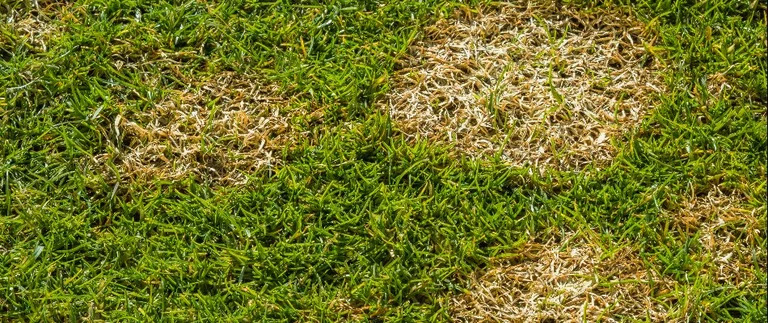
Brown patch thrives when nighttime temperatures stay above 65 degrees and humidity is high. In the Fishers area, that typically means June through September. Over-fertilizing with nitrogen during summer and watering in the evening (which keeps grass wet overnight) both make brown patch worse.
What to do: Reduce nitrogen applications during summer. Water in the early morning so grass dries before nightfall. Improve air circulation by keeping surrounding shrubs trimmed. For active infections, professional fungicide treatments can stop the spread.
2. Dollar Spot
Dollar spot shows up as small, silver-dollar-sized bleached or straw-colored patches scattered across the lawn. Look closely at the grass blades and you'll see tan lesions with reddish-brown borders. In the morning, you may notice white cobweb-like mycelium on the affected areas.
Dollar spot is most active in late spring through early fall when temperatures are between 60 and 85 degrees. It's especially common in lawns that are under-fertilized. The fungus attacks nutrient-deficient grass that doesn't have the energy to fight it off.
What to do: Maintain a proper fertilization program. A well-fed lawn can grow through dollar spot on its own. Water deeply and infrequently rather than frequent light watering. Mow regularly and remove clippings from affected areas.
3. Red Thread
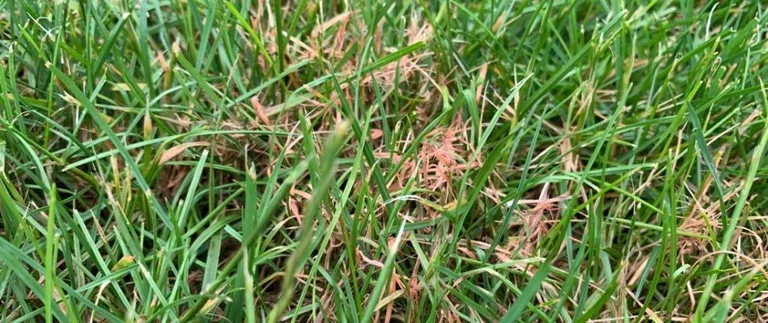
Red thread gets its name from the pinkish-red threads that extend from the tips of grass blades. From a distance, affected areas look pink or reddish-tan. It typically appears in irregular patches from a few inches to a couple feet across.
This disease is most common in spring and fall when temperatures are between 40 and 70 degrees with high humidity. Like dollar spot, it tends to hit lawns that are low on nitrogen. Perennial Ryegrass and Fine Fescue are particularly susceptible.
What to do: A nitrogen application in early spring often clears up red thread on its own. The disease rarely kills grass, and a well-fertilized lawn will grow out of it. Improve drainage in chronically wet areas and avoid overwatering.
4. Snow Mold
Snow mold appears in early spring as matted, circular patches of gray or pink fungal growth on the lawn. You'll see it as soon as the snow melts. Gray snow mold and pink snow mold are the two types, and both are caused by fungus that thrives under snow cover on unfrozen ground.
Snow mold is especially common when heavy snow falls on ground that hasn't fully frozen yet, or when thick layers of leaves are left on the lawn going into winter. The trapped moisture under the snow creates perfect conditions for the fungus.
What to do: Prevention is the best approach. Remove leaves in the fall before they get buried by snow. Avoid heavy nitrogen fertilization in late fall (though a proper winterizer treatment is still recommended). Mow slightly shorter on the last cut of the season to reduce the grass canopy that traps moisture. In spring, lightly rake affected areas to promote air circulation and drying.
When to Call a Professional
Most lawn diseases can be managed with proper cultural practices: correct mowing height, appropriate fertilization timing, smart watering habits, and good fall cleanup. But when disease pressure is heavy or you're dealing with recurring problems year after year, professional diagnosis and targeted fungicide treatment make the difference between a slow recovery and a fast one.
In the Fishers area specifically, we see the heaviest disease pressure in the established neighborhoods around 116th Street and near Geist where mature tree cover creates the shaded, humid conditions that fungal diseases love. Newer developments with full sun and better air circulation tend to have less disease, but they're not immune, especially during the hot, humid stretches in July and August that hit all of Hamilton County.
At Sprout Lawn & Landscape, we serve Fishers, Noblesville, Carmel, Westfield, and surrounding Hamilton County communities. If your lawn is showing signs of disease, learn more about our lawn disease control service or call us at (317) 900-7151.